
Madurai After Dark:Exploring the Authentic Food Culture of Tamil Nadu’s Temple City
When Madurai Begins to Wake Up
Madurai changes character after sunset.
As the evening heat slowly softens, the temple city begins moving to a different rhythm, one shaped by roadside tea stalls, smoky griddles, neon-lit eateries, jasmine-filled streets, and the steady movement of people gathering around food counters that remain active deep into the night.
Near the illuminated streets surrounding Meenakshi Amman Temple, conversations spill onto pavements beside stainless steel tumblers of tea, while the scent of pepper, curry leaves, charcoal smoke, and slow-cooked gravies drifts through the air.
Small eateries continue serving workers, families, students, pilgrims, and travellers long after many Indian cities begin shutting down for the evening.
Food in Madurai is not simply about restaurants or popular dishes. It is deeply connected to the identity of the city itself, woven into its markets, temple streets, social gatherings, and everyday routines.
The city’s culinary culture survives not through trend-driven dining, but through repetition, familiarity, and recipes that continue to move quietly between homes, roadside kitchens, and family-run establishments across generations.
For travellers seeking authentic Tamil food culture rather than curated dining experiences alone, Madurai offers one of South India’s most atmospheric and deeply rooted culinary landscapes.
Why Food Shapes the Identity of Madurai
In Madurai, food functions as far more than a daily necessity. It shapes social interaction, late-night routines, neighbourhood identity, and even the rhythm of the city itself.
Unlike many destinations where dining revolves around tourists, Madurai’s food culture continues to operate primarily for its own residents.
Workers gather around tea stalls after long evenings, families head toward late-night eateries after temple visits, and roadside vendors continue cooking well into the night beneath glowing signboards and streetlights.
This late-night dining culture has long been part of Madurai’s urban character. The city rarely slows down early, particularly around older neighbourhoods and temple streets where food counters, parotta stalls, and tea shops remain active until midnight and beyond.
The atmosphere surrounding these spaces often feels intensely local. Conversations move quickly between Tamil slang, political discussions, family gossip, cricket debates, and everyday city life while cooks work continuously over steaming tawas and iron pans.
For many visitors, this social energy becomes just as memorable as the food itself.
Unlike heavily commercialised food destinations, Madurai still retains a sense of culinary continuity. Many recipes continue to follow older Tamil cooking traditions built around black pepper, curry leaves, slow-cooked gravies, organ meats, tamarind, and spice-forward preparations that remain deeply tied to the interior regions of southern Tamil Nadu.
This gives Madurai’s food culture a character that feels rooted, unapologetically local, and closely connected to the everyday life of the city.
Kari Dosa, Bun Parotta & Madurai’s Night Streets
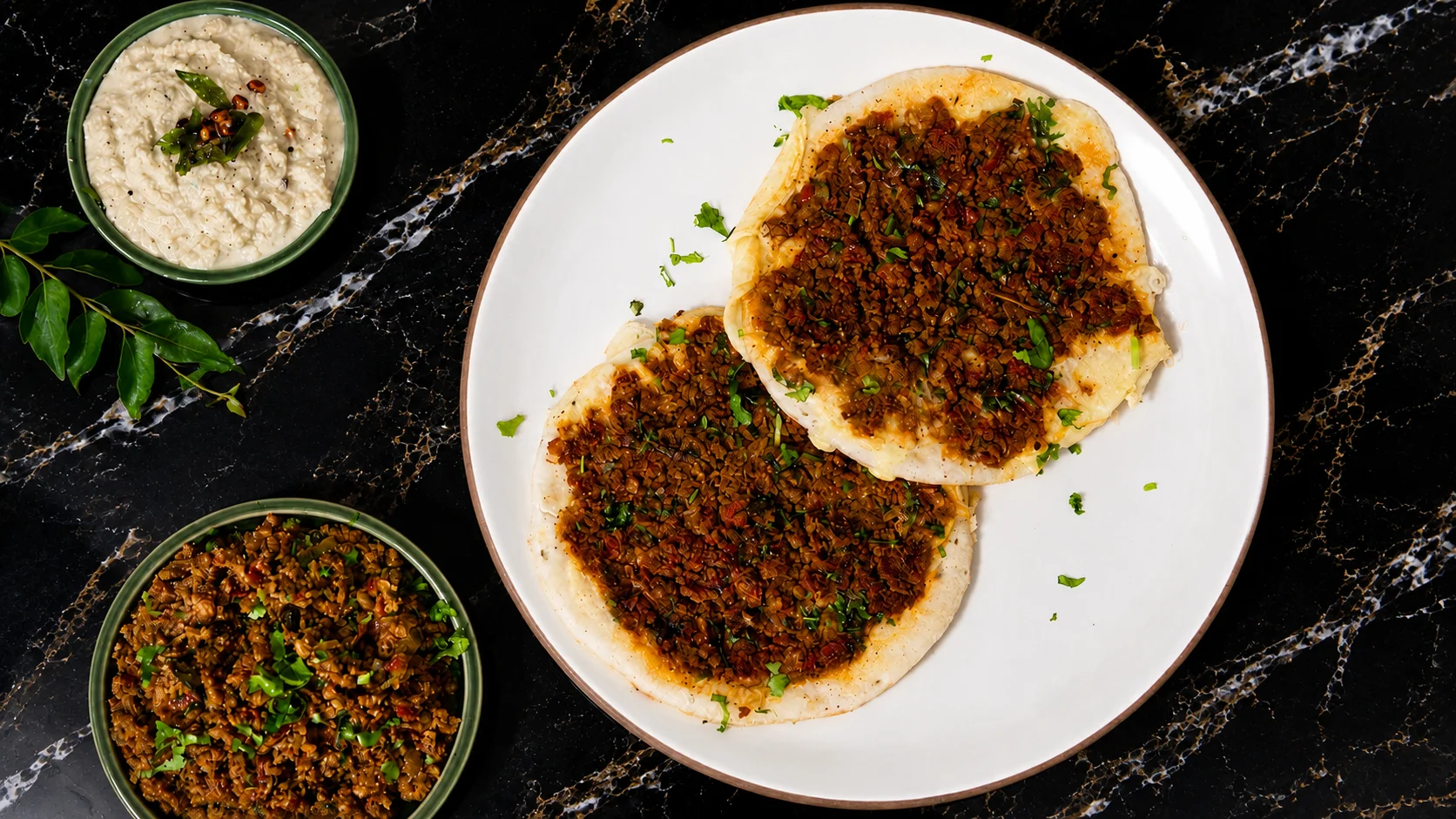
Few dishes are as closely associated with Madurai’s night food culture as kari dosa.
Prepared on large hot griddles across crowded roadside stalls, the dish combines dosa batter with minced mutton, eggs, spices, onions, and pepper, creating a heavier and intensely flavourful variation of the traditional dosa found elsewhere in South India.
The sound of metal spatulas striking the tawa, rising steam beneath harsh white lights, and crowds gathering around late-night counters all form part of the experience itself.
Kari dosa is rarely eaten in silence. It belongs to noisy streets, crowded evenings, and food stalls where orders are shouted over the sound of sizzling oil and passing traffic.
Nearby, stacks of bun parotta continue arriving from layered iron skillets, their crisp outer texture giving way to softer interiors designed to absorb thick gravies and spicy meat preparations.
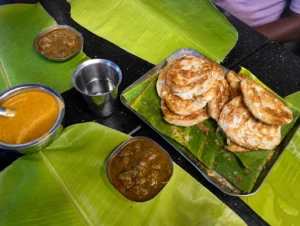
Unlike the more delicate parottas served in some parts of Tamil Nadu, Madurai’s versions often feel heavier, richer, and built for late-night dining.
Many eateries continue serving mutton chukka, kari idli, paaya, omelettes, and spicy side dishes alongside parotta counters that remain busy well after dark.
Walking through these streets after sunset reveals a side of Madurai that feels entirely different from its daytime temple atmosphere.
Smoke rises above crowded food stalls, tea glasses clink against steel counters, and the city’s night-time culinary rhythm unfolds through movement, sound, and aroma rather than polished dining spaces.
For many travellers, these late-night food streets become one of the most immersive ways to experience the living culture of Madurai.
The Deeper Flavours of Madurai’s Non-Vegetarian Cuisine
Beyond the better-known kari dosa stalls and roadside parotta counters, Madurai’s culinary culture also preserves older non-vegetarian cooking traditions deeply rooted in the interior regions of southern Tamil Nadu.
Many of these dishes are defined not by presentation, but by flavour, spice balance, and slow preparation techniques that continue to survive through family kitchens and long-established local eateries.
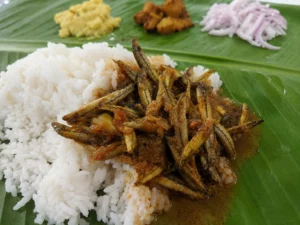
Among them, Ayira Meen Kulambu (Spined loach gravy) remains one of the most distinctive traditional preparations associated with Tamil cuisine.
Made using tiny freshwater fish cooked in tamarind-based gravy with spices, curry leaves, and pepper, the dish carries an earthy depth that reflects older rural cooking traditions from the region.
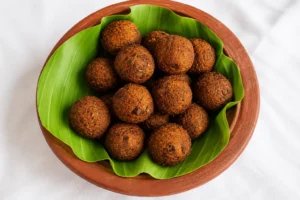
Equally important are preparations such as Kola Urundai, spiced minced mutton balls fried until crisp outside while remaining soft within.
Closely associated with Chettinad and southern Tamil culinary traditions, the dish continues to appear across homes and smaller restaurants where recipes are often preserved through generations rather than formal kitchens.
Dishes such as Boti and mutton chukka reflect another layer of Madurai’s food culture, one shaped by working-class dining traditions, spice-heavy preparations, and the efficient use of every part of the animal.
Slow-cooked organ meat dishes seasoned with black pepper, shallots, and curry leaves continue to remain central to many local dining experiences despite rarely appearing in polished restaurant narratives.
Across Madurai, these dishes are often paired with idiyappam, parotta, dosa, or simple rice meals served on banana leaves.
The flavours themselves tend to be bold and unapologetically Tamil, built around pepper heat, roasted spices, tamarind sharpness, curry leaf aroma, and slow-cooked gravies that feel deeply connected to the region’s culinary identity.
Rather than functioning as curated “food experiences,” these dishes remain part of Madurai’s everyday food culture, continuing to preserve the older flavours of southern Tamil Nadu within ordinary streets and local kitchens.
Jigarthanda, Tea Shops & Madurai’s Drinking Culture
If kari dosa represents the intensity of Madurai’s night streets, Jigarthanda captures another side of the city’s culinary identity altogether.
Served cold and layered with milk, almond gum, ice cream, reduced syrup, and traditional ingredients, Jigarthanda has become one of Madurai’s most recognisable beverages.
Originally influenced by North Indian cooling drinks, the Madurai version gradually evolved into something entirely local, now deeply associated with the city itself.
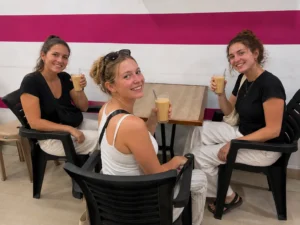
During warmer evenings, crowds continue gathering around small Jigarthanda shops where large steel containers remain filled with chilled mixtures prepared throughout the day.
Tea culture in Madurai, however, extends far beyond beverages alone.
Small tea stalls scattered across the city operate as informal social spaces where conversations continue late into the night. Drivers, workers, students, shopkeepers, and travellers gather beside boiling milk pans and steaming kettles while tea is repeatedly poured between steel tumblers to create its familiar frothy texture.
Many of these stalls also serve paruthi paal, strong filter coffee, biscuits, buns, and smaller evening snacks.
The atmosphere surrounding these spaces often feels deeply human, conversations unfolding beneath fluorescent lights while traffic continues moving through the night outside.
For visitors, these quieter moments around tea stalls often reveal Madurai most authentically, far removed from curated tourism experiences and polished dining environments.
Banana Leaf Meals & Traditional Tamil Dining
Despite the popularity of Madurai’s night food culture, traditional banana leaf meals continue to remain central to Tamil dining identity across the city.
Meals are often served with rice placed at the centre of the leaf, surrounded gradually by gravies, vegetables, pickles, meat preparations, rasam, and curd depending on the household or eatery.
Eating with hands remains an important part of the experience, shaping not only how food is consumed but also how flavours are combined and balanced together.
Unlike highly structured dining formats, Tamil meals often unfold rhythmically, gravies mixed gradually with rice, side dishes shared across the table, and meals extending through conversation rather than speed.
Non-vegetarian meals in Madurai frequently include mutton gravies, fish curries, chicken preparations, pepper-heavy side dishes, and slow-cooked meat recipes served alongside rice and parotta.
Many smaller eateries continue preserving these traditions without dramatic reinvention, allowing the food itself to remain deeply connected to local tastes rather than adapting heavily toward tourist expectations.
This continuity gives Madurai’s dining culture a sense of authenticity that feels increasingly rare in rapidly commercialising food destinations elsewhere.
Temple Streets, Markets & the Aromas of Madurai
Food in Madurai cannot be separated from the atmosphere of the city itself.
Around temple streets and older neighbourhoods, the aromas of jasmine flowers, incense, frying oil, black pepper, curry leaves, charcoal smoke, and simmering gravies gradually merge into the sensory rhythm of the city after dark.
Near roadside stalls, cooks move continuously beside hot iron pans while customers gather around narrow counters beneath brightly lit signboards.
Scooters pass through crowded intersections, flower vendors continue working beside temple entrances, and tea stalls remain active as conversations stretch late into the night.
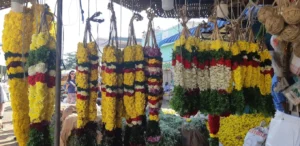
In market areas, steel vessels clatter against counters while stacks of bananas, spices, flowers, and vegetables continue moving through narrow lanes shaped by generations of trade and routine.
This combination of food, commerce, spirituality, noise, heat, and movement gives Madurai a distinctly lived-in energy that feels very different from more curated tourist destinations.
For many travellers, the city becomes memorable not because of a single dish alone, but because of the atmosphere surrounding the experience of eating itself.
Beyond Restaurants: Madurai’s Living Culinary Heritage
What makes Madurai’s food culture particularly compelling is the way it continues to survive through ordinary life rather than performance.
Many of the city’s most memorable culinary experiences still unfold through roadside eateries, inherited family recipes, tea stalls, market streets and local establishments shaped more by consistency than branding.
Unlike destinations increasingly redesigned around tourism aesthetics, Madurai’s food culture continues to feel intensely functional, local, and connected to the people who live there daily.
Recipes survive because communities continue eating them. Tea stalls remain active because conversations continue gathering there every evening. Night food streets stay alive because Madurai itself still moves to a late-night rhythm shaped by work, worship, trade, and social life.
This continuity is one reason Madurai’s food culture extends beyond dining alone. Like many of South India’s enduring cultural practices, culinary traditions remain active parts of everyday life rather than preserved relics of the past.
Recipes, techniques, and food rituals continue passing between generations, reflecting the same living heritage that can be seen in the region’s music, dance, craftsmanship, festivals, and wellness traditions.
This continuity gives the city a culinary authenticity that extends far beyond restaurant recommendations or trending dishes.
In Madurai, food remains part of the city’s living cultural identity, woven into its streets, routines, and everyday human interactions long after the crowds surrounding the temple begin thinning for the night.
Madurai Is Best Experienced Through Its Streets & Flavours
Madurai reveals itself slowly through aroma, conversation, spice, movement, and the rhythm of its streets after dark.
The city’s food culture is not built around polished dining experiences alone, but around tea stalls that never seem to empty, smoky roadside kitchens, banana leaf meals shared across crowded tables, and recipes that continue carrying the flavours of southern Tamil Nadu through generations.
Whether sitting beside a late-night kari dosa stall, sipping tea from a steel tumbler beneath fluorescent lights, or walking through temple streets filled with the scent of jasmine and charcoal smoke, Madurai leaves behind memories shaped as much by atmosphere as by food itself.
For travellers seeking deeper cultural journeys beyond monuments and itineraries, Madurai remains one of South India’s most vivid and authentic culinary cities.
Related Blogs
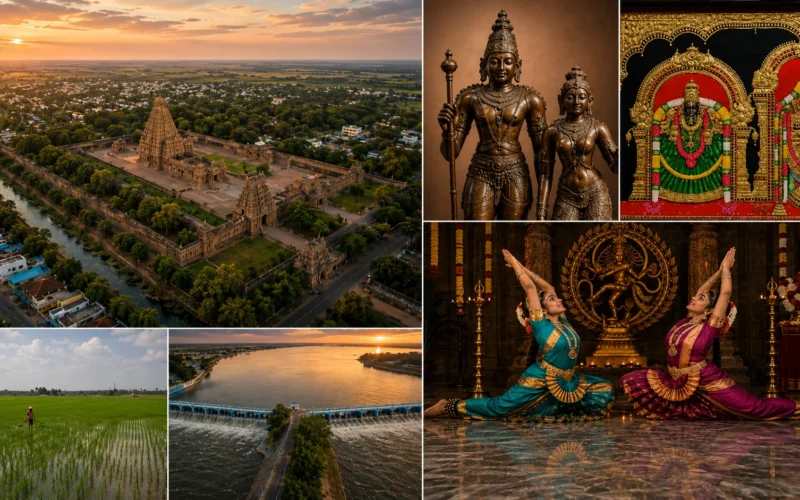
Thanjavur Beyond Brihadeeswara Temple: Exploring the Cultural Heart of the Cauvery Delta
More Than a Temple City For many travellers, Thanjavur begins and ends with Brihadeeswara Temple. The soaring vimana, vast courtyards,…
Read More ›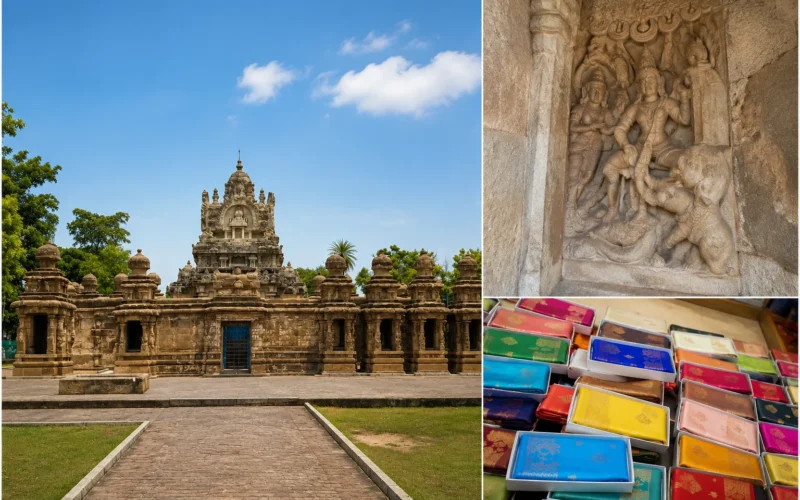
Kanchipuram: Sacred Architecture and Living Traditions
More Than the City of a Thousand Temples Kanchipuram is often introduced as the “City of a Thousand Temples.” While…
Read More ›