
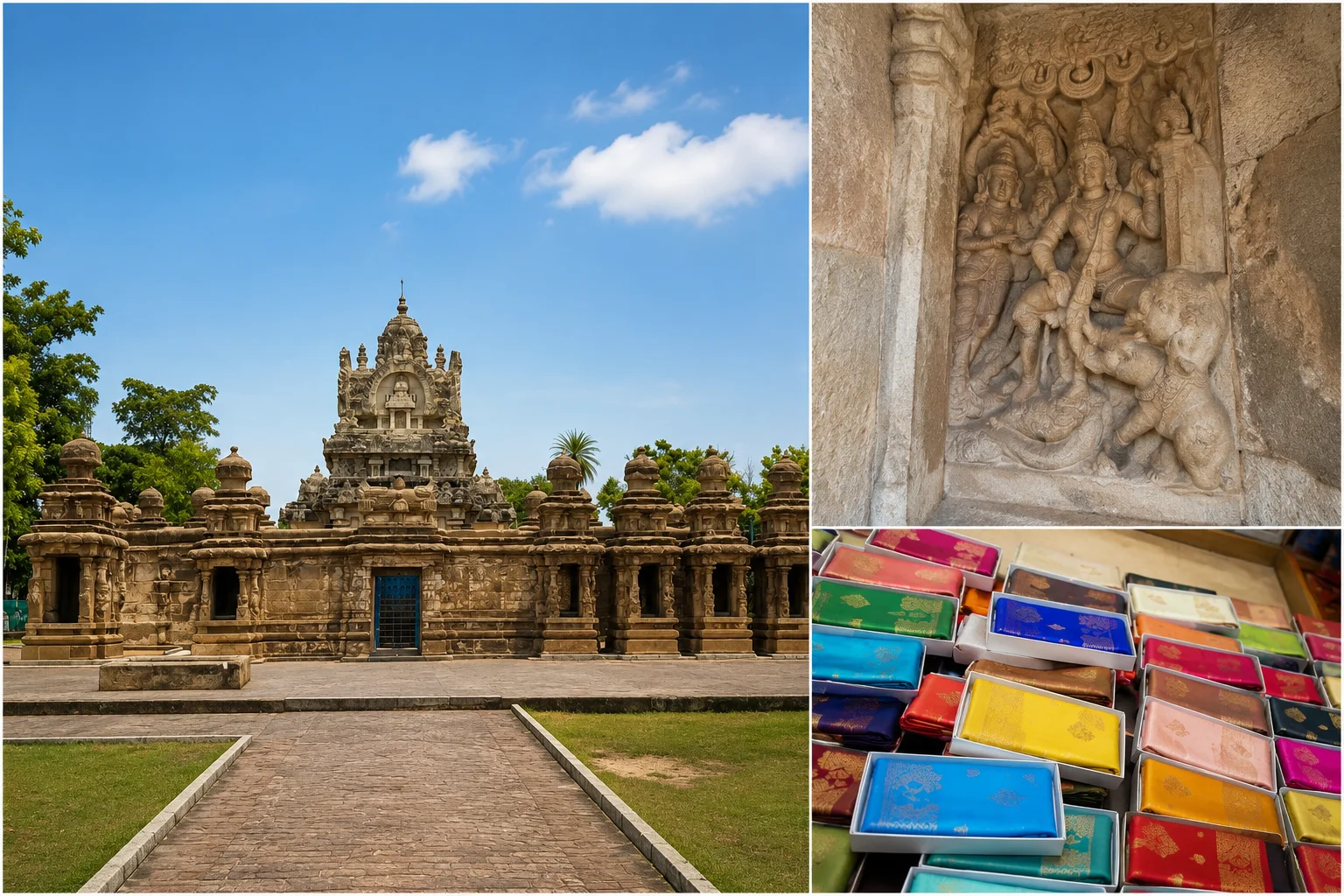
Kanchipuram: Sacred Architecture and Living Traditions
More Than the City of a Thousand Temples
Kanchipuram is often introduced as the “City of a Thousand Temples.” While its temple towers and sacred monuments certainly define the skyline, this description captures only part of the city’s significance.
For more than fifteen centuries, Kanchipuram has been one of South India’s most important centres of religion, learning, craftsmanship, and culture.
Dynasties rose and fell, kingdoms expanded and declined, yet the city continued to attract scholars, pilgrims, artisans, and rulers who contributed to its remarkable cultural legacy.
Today, Kanchipuram remains a place where ancient traditions continue to shape everyday life. Temple rituals unfold alongside bustling markets, handloom weavers preserve centuries-old techniques, and historic neighbourhoods still reflect the rhythms of a city deeply connected to its past.
For travellers interested in understanding South India beyond monuments and sightseeing itineraries, Kanchipuram offers a rare opportunity to experience a cultural landscape where history remains a living presence.
Kanchipuram Through the Centuries
One of South India’s Oldest Historic Cities
Few cities in India can trace their importance as far back as Kanchipuram. References to the city appear in ancient Tamil literature, religious texts, and historical records, highlighting its significance as a centre of culture and spirituality long before many of South India’s great temple cities emerged.
Its strategic location and religious importance helped establish Kanchipuram as a major urban centre, attracting traders, scholars, and pilgrims from across the region.
The Rise of the Pallavas
Kanchipuram reached new prominence under the Pallava dynasty between the sixth and ninth centuries. The Pallavas transformed the city into a thriving capital and became some of the most influential patrons of architecture and art in South Indian history.
Many of the architectural innovations associated with Dravidian temple design began during this period. The city’s temples became laboratories of artistic experimentation, laying foundations that would later influence the Cholas, Vijayanagara rulers, and subsequent dynasties.
Chola and Vijayanagara Contributions
The Cholas expanded many of Kanchipuram’s religious institutions and strengthened its position within South India’s sacred geography. Later, the Vijayanagara rulers contributed monumental gopurams, mandapams, and temple complexes that continue to define the city’s architectural landscape.
Rather than replacing earlier traditions, each dynasty added new layers to Kanchipuram’s cultural identity.
A City Shaped by Successive D ynasties
The result is a city where different periods of South Indian history coexist. Pallava foundations, Chola additions, Vijayanagara architecture, and later developments collectively tell a story of continuity rather than interruption.
Sacred Architecture That Shaped South India
Kailasanatha Temple: Where Dravidian Architecture Took Shape
Among Kanchipuram’s many monuments, Kailasanatha Temple holds a special place in the history of South Indian architecture.
Built during the Pallava period, it is widely regarded as one of the earliest and most important examples of structural Dravidian temple architecture.
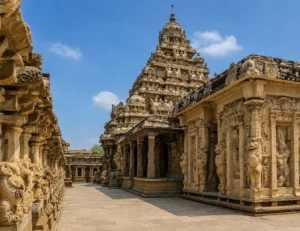
Unlike later temple complexes known for their towering gateways, Kailasanatha impresses through proportion, detail, and artistic refinement.
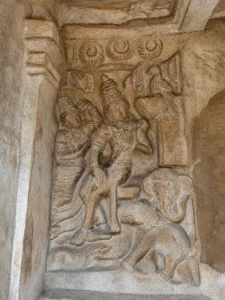
Its sandstone walls are adorned with intricate carvings depicting deities, mythological narratives, and decorative motifs.
Walking through the temple reveals an architectural language that would later reach monumental expression in cities such as Thanjavur and Madurai.
For anyone interested in understanding the evolution of South Indian temple design, Kailasanatha Temple is indispensable.
Ekambareswarar Temple and the Sacred Geography of Kanchipuram
If Kailasanatha represents architectural origins, Ekambareswarar Temple demonstrates the monumental scale achieved by later periods.
Dedicated to Lord Shiva, the temple is among the largest in Tamil Nadu and serves as one of the city’s most important pilgrimage sites.
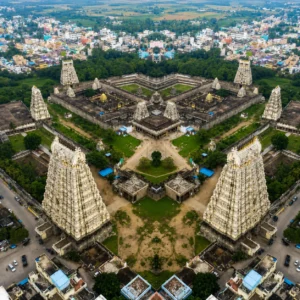
Its towering gopuram dominates the surrounding landscape, while vast courtyards and pillared halls reflect centuries of architectural development.
The temple is also associated with an ancient mango tree that occupies an important place in local religious traditions, reinforcing the relationship between sacred geography and spiritual belief.
Varadaraja Perumal Temple and Vaishnavite Heritage
Kanchipuram’s significance extends beyond Shaivite traditions. The city is equally important within the Vaishnavite tradition, and Varadaraja Perumal Temple stands among its most revered religious sites.
The temple’s architecture reflects the artistic achievements of multiple dynasties, while its rituals and festivals continue to attract devotees from across India.
Its importance illustrates the religious diversity that helped shape Kanchipuram’s identity over centuries.
Beyond Individual Monuments
Although individual temples attract most visitors, the true significance of Kanchipuram lies in the way these monuments collectively form a sacred urban landscape.
Temples are not isolated attractions. They are connected through centuries of religious practice, pilgrimage routes, festivals, scholarship, and community life that continue to influence the city today.
A Centre of Learning and Spiritual Thought
Scholarship and Philosophy
For centuries, Kanchipuram was recognised as a major centre of learning. Scholars gathered here to study philosophy, literature, theology, grammar, and religious texts.
The city became a meeting point for intellectual traditions that shaped both Tamil and Sanskrit scholarship.
Monastic Institutions and Religious Orders
Religious institutions played a central role in preserving and transmitting knowledge. Monastic centres, temples, and educational establishments contributed to a vibrant intellectual culture that extended far beyond the city’s boundaries.
Pilgrimage and Sacred Knowledge
Pilgrims visiting Kanchipuram often came not only for worship but also to engage with teachers, scholars, and religious communities.
The city’s reputation as a place of learning enhanced its importance throughout South India.
Continuing Traditions of Faith
Even today, spiritual practice remains woven into daily life. Rituals, festivals, temple ceremonies, and devotional traditions continue to shape the city’s character, preserving a sense of continuity that links the present with the past.
Kanchipuram Silk: Craftsmanship Woven Through Generations
The Origins of Kanchipuram Silk
If temples define Kanchipuram’s skyline, silk weaving defines much of its cultural identity.
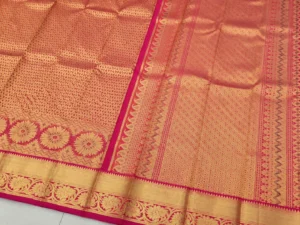
For centuries, weaving communities have produced some of India’s most celebrated silk sarees, creating textiles renowned for their craftsmanship, durability, and artistic beauty.
The development of this tradition reflects the city’s long association with trade, patronage, and skilled craftsmanship.
The Art of Handloom Weaving
Producing a Kanchipuram silk saree requires remarkable expertise. Weavers combine fine silk threads with intricate designs, often incorporating motifs inspired by temple architecture, mythology, and nature.
The process demands patience, precision, and technical skill developed over generations.
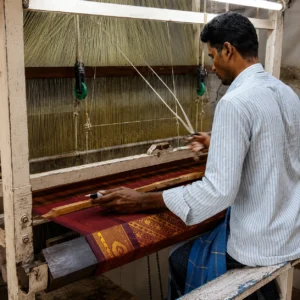
Families and Communities Behind the Craft
The weaving tradition survives because of families and artisan communities that continue to pass knowledge from one generation to the next.
Behind every saree lies a story of craftsmanship, dedication, and cultural continuity.
Why Kanchipuram Silk Remains Globally Renowned
Today, Kanchipuram silk is recognised far beyond Tamil Nadu. Its reputation rests not only on quality but also on the preservation of a heritage craft that remains closely connected to the city’s identity.
Living Traditions Beyond Monumental Heritage
Temple Rituals and Everyday Life
Unlike many historic cities where monuments exist primarily as reminders of the past, Kanchipuram’s heritage remains deeply woven into everyday life.
From the early hours of the morning, temple bells, devotional chants, and religious rituals shape the rhythm of the city. Pilgrims arrive carrying offerings, priests move between temples, and flower vendors prepare garlands destined for shrines across the city.
Religion here is not simply preserved as heritage; it remains an active and visible part of daily life.
Historic Streets and Agraharams
Beyond the temple complexes lie neighbourhoods that offer another perspective on Kanchipuram’s cultural identity.
Traditional agraharams, historic residential streets associated with temple communities, continue to preserve elements of the city’s architectural and social character. Rows of houses with verandahs, tiled roofs, and modest facades create streetscapes that feel connected to an earlier era.
While modern development has inevitably altered parts of the city, these neighbourhoods still provide glimpses into the cultural environment that evolved around Kanchipuram’s religious institutions.
Festivals and Community Celebrations
Throughout the year, festivals transform the city into a vibrant centre of collective celebration.
Temple processions, music performances, cultural events, and religious gatherings reinforce social bonds while preserving traditions that have been passed down through generations.
These occasions reveal how heritage functions as a living and evolving part of community life rather than as a static relic of the past.
A City Where Heritage Remains Active
What makes Kanchipuram particularly distinctive is the continuity between its historic monuments and contemporary culture.
The temples remain places of worship, silk weaving continues as a living craft, festivals draw active participation, and traditional practices remain visible in everyday routines. This continuity gives the city a cultural depth that extends far beyond architecture alone.
Culinary Traditions of Kanchipuram
The Story of Kanchipuram Idli
Kanchipuram’s cultural heritage extends to its culinary traditions as well.
Among the city’s most distinctive foods is the famous Kanchipuram Idli, a variation of the familiar South Indian staple that reflects local temple traditions and regional tastes.
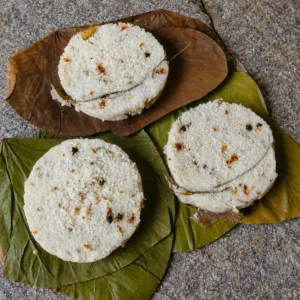
Prepared with ingredients such as pepper, cumin, ginger, and occasionally cashews, the dish differs noticeably from the softer idlis commonly served elsewhere. Traditionally associated with temple kitchens, it remains one of the region’s most recognisable culinary specialties.
Temple Food and Regional Cuisine
Food in Kanchipuram often reflects the close relationship between religion, agriculture, and community life.
Many traditional dishes draw upon ingredients that have long been cultivated across Tamil Nadu’s fertile landscapes. Temple offerings, festive meals, and local recipes preserve culinary practices that have evolved over generations.
Food as Cultural Memory
Like architecture and craftsmanship, cuisine carries stories of place, tradition, and identity.
Sampling local food offers travellers another way to engage with the city’s cultural landscape and understand how everyday practices contribute to its unique character.
Experiences Beyond the Major Temples
Walking Through Historic Neighbourhoods
While the major temples attract most visitors, some of Kanchipuram’s most rewarding experiences come from simply exploring the city at a slower pace.
Historic streets reveal layers of everyday life often missed by travellers moving quickly between landmarks.
Visiting Silk Weaving Workshops
Observing weavers at work provides valuable insight into one of South India’s most respected craft traditions.
The process highlights the skill, patience, and dedication required to preserve a heritage that continues to support communities throughout the region.
Observing Daily Life Around Temple Precincts
Markets, flower stalls, religious gatherings, and neighbourhood interactions create a dynamic environment where culture remains visible in ordinary moments.
These observations often reveal as much about Kanchipuram as its monuments.
Discovering Lesser-Known Shrines
The city contains numerous smaller temples and shrines that receive far less attention than its major landmarks.
Exploring these quieter spaces often provides a deeper appreciation of Kanchipuram’s sacred landscape.
Understanding the City Beyond Sightseeing
For culturally curious travellers, Kanchipuram is best approached not as a collection of attractions but as a living cultural environment shaped by centuries of history, faith, and craftsmanship.
Why Kanchipuram Rewards Slow Cultural Travel
Beyond Pilgrimage and Monument Tourism
Many visitors arrive in Kanchipuram with a checklist of temples to see. While these monuments are undoubtedly important, a deeper understanding of the city requires more than a brief visit.
Understanding Architecture Through Context
The significance of Kanchipuram’s temples becomes clearer when viewed alongside the city’s history, religious traditions, and cultural evolution.
Architecture tells a richer story when understood within the broader landscape that produced it.
Appreciating Craft Traditions
The silk weaving communities of Kanchipuram demonstrate how traditional knowledge continues to shape contemporary life.Spending time learning about these crafts reveals an important dimension of the city’s identity.

Experiencing Living Heritage
Kanchipuram’s greatest strength lies in the continuity between past and present.Its monuments are not isolated historical artefacts but part of a living cultural system that remains active today.
The Value of Spending More Time
Slow travel encourages observation, conversation, and meaningful engagement.
Whether walking through historic neighbourhoods, visiting artisan workshops, or witnessing temple rituals, travellers often discover that Kanchipuram’s most memorable experiences emerge gradually rather than instantly.
Why Kanchipuram Remains One of South India’s Great Cultural Cities
Kanchipuram is often celebrated for its temples, but its significance extends far beyond sacred architecture.
For centuries, the city has served as a centre of learning, spiritual thought, artistic patronage, and skilled craftsmanship.
Pallava rulers laid the foundations of architectural traditions that would influence South India for generations, while later dynasties contributed new layers to the city’s evolving cultural landscape.
Today, temple rituals continue alongside silk weaving workshops, historic agraharams remain part of the urban fabric, and culinary traditions preserve connections to the past. This remarkable continuity is what makes Kanchipuram unique.
For travellers seeking a deeper understanding of South India, Kanchipuram offers more than monuments and pilgrimage sites. It presents an opportunity to experience a living cultural landscape where architecture, spirituality, craftsmanship, and community life continue to intersect.
In a region rich with historic destinations, Kanchipuram remains one of the most enduring and rewarding places to appreciate the depth of South India’s cultural heritage.
Related Blogs
Thanjavur Beyond Brihadeeswara Temple: Exploring the Cultural Heart of the Cauvery Delta
More Than a Temple City For many travellers, Thanjavur begins and ends with Brihadeeswara Temple. The soaring vimana, vast courtyards,…
Read More ›
Kuttanad: Exploring Kerala’s Remarkable Below-Sea-Level Landscape
A Landscape Unlike Anywhere Else in India Kerala is often celebrated for its backwaters, houseboats, beaches, and hill stations. Yet…
Read More ›