Atlantic Goa

Atlantic Goa

Where the Atlantic shaped faith, fortitude, and a distinct coastal civilisation

The Context

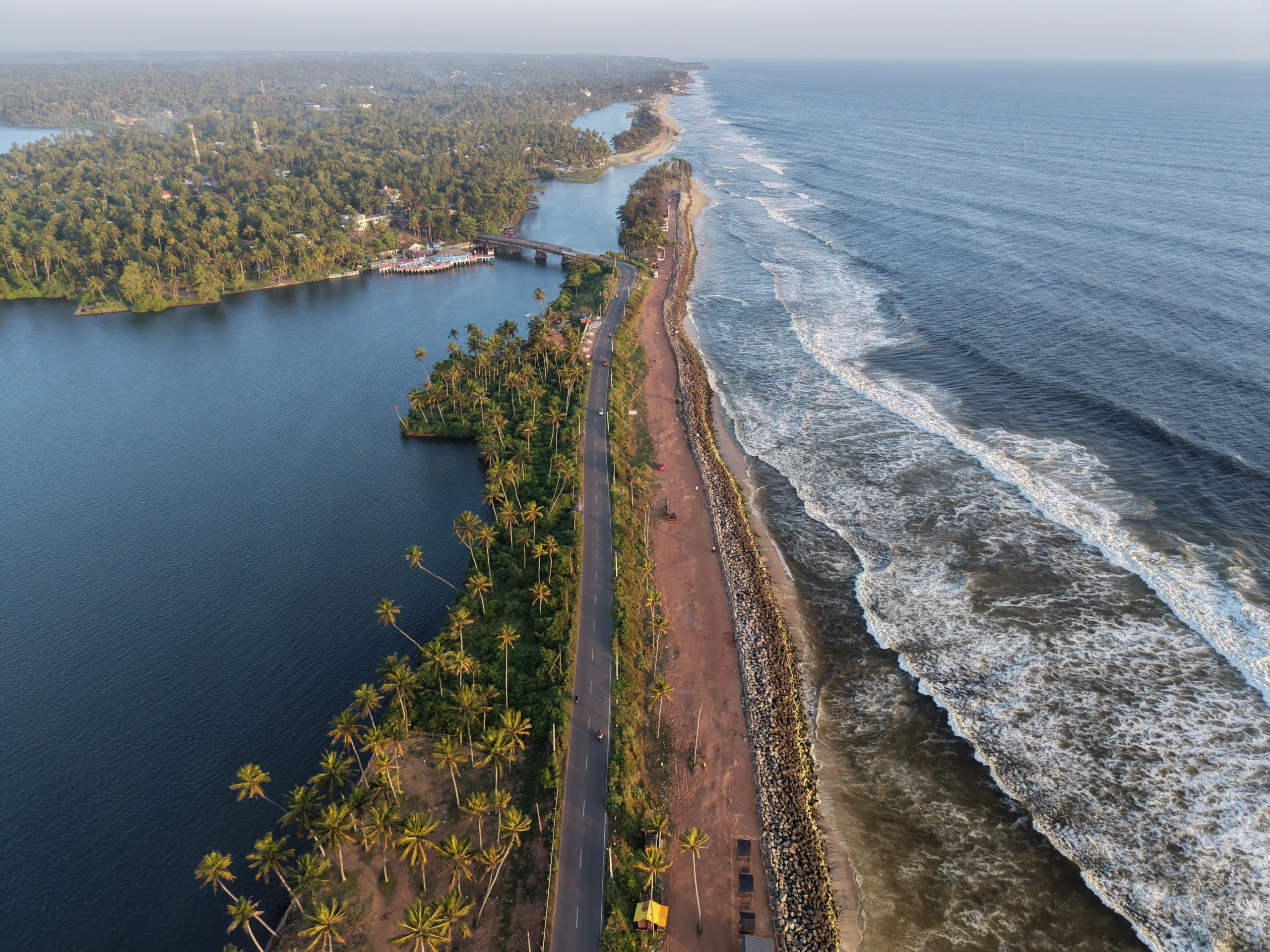
Atlantic Goa represents a coastal cultural landscape shaped by centuries of Atlantic engagement rather than leisure-driven narratives. It is a world formed through maritime exchange, ecclesiastical power, riverine trade, and lived Indo-Portuguese urban life. Here, the Atlantic was not a backdrop, but a defining force—structuring belief systems, civic organisation, architecture, and everyday rhythms along the coast and inland waterways.
This landscape reflects a civilisation where forts guarded sea routes, rivers carried commerce and culture, and faith shaped both monumental spaces and domestic life. Urban quarters, river corridors, and coastal strongholds together reveal a society oriented outward to the Atlantic world while remaining deeply rooted in local tradition.
Atlantic Goa is best understood not as a destination of beaches, but as a layered cultural continuum—where sacred art, maritime governance, and vernacular life coexist. Experienced through guided interpretation and selective access, it offers a refined engagement with Goa’s Atlantic legacy, foregrounding depth, continuity, and cultural intelligence over spectacle.

The Context

Cultural Landscape

Old Goa Core
Latin Panaji
River Mandovi–Zuari
Atlantic Fort Line
Goan Hinterland
Old Goa Core
The Old Goa Core represents the ceremonial and administrative heart of Atlantic Goa, where religious authority, civic governance, and imperial ambition converged to shape one of Asia’s most influential colonial capitals. Conceived as the centre of Portuguese Asia, Old Goa was structured not as a port town alone, but as a carefully planned ecclesiastical and administrative city. Churches, convents, and institutional buildings articulated power through ritual, spatial order, and architectural grandeur rather than military dominance. This realm reflects a society where faith governed public life and urban form, and where sacred art, liturgy, and learning became instruments of continuity across continents. The Mandovi River anchored the city’s orientation, connecting it to maritime routes while sustaining everyday movement and exchange. Today, the Old Goa Core is best approached through contextual interpretation rather than surface sightseeing. It offers insight into how belief systems, governance, and Atlantic networks combined to create a cultural landscape of enduring influence and institutional depth.
Latin Panaji
Latin Panaji reveals the lived, residential expression of Indo-Portuguese culture, shaped less by imperial display and more by everyday continuity. Unlike Old Goa’s monumental scale, this realm reflects civic life as it evolved through neighbourhoods, streets, and homes designed for climate, community, and ritual routine. Colourful façades, narrow lanes, and elevated quarters embody an urban culture that remains inhabited rather than preserved. Here, culture is expressed through domestic architecture, foodways, language, and social rhythms that bridge past and present. Catholic traditions coexist seamlessly with contemporary life, reflecting adaptation rather than nostalgia. Latin Panaji illustrates how colonial heritage endured not as a relic, but as a living urban identity shaped by repetition, memory, and daily practice. This realm is experienced best through walking, observation, and guided interpretation, allowing travellers to understand Goa beyond its monuments. Latin Panaji offers intimacy and authenticity—revealing how Atlantic influence embedded itself into everyday life and continues quietly, without spectacle.
River Mandovi–Zuari
The Mandovi–Zuari river system forms the connective tissue of Atlantic Goa, shaping movement, trade, and settlement far beyond the coastline. These rivers functioned as cultural arteries, linking ports to hinterlands and sustaining agrarian, mercantile, and civic life across centuries. Along their banks emerged ferry towns, market centres, religious institutions, and residential communities tied together by waterborne exchange. This realm highlights how rivers structured Goa’s spatial logic, enabling the circulation of goods, ideas, and people while softening boundaries between coastal and inland worlds. The river corridors reveal a landscape where maritime and agrarian economies coexisted, and where daily life unfolded in relation to tides, crossings, and seasonal rhythms. Approached as cultural geography, the Mandovi–Zuari realm offers insight into Goa’s internal coherence as a coastal civilisation. It shifts attention from monuments to movement, illustrating how waterways shaped social organisation and sustained Atlantic Goa’s economic and cultural continuity over time.
Atlantic Fort Line
The Atlantic Fort Line reflects the strategic and geopolitical dimension of Goa’s Atlantic identity, where coastal strongholds asserted control over sea routes and territorial access. Positioned on headlands and river mouths, these forts were instruments of surveillance, defence, and navigation rather than decorative architecture. Their placement reveals a calculated relationship between land, sea, and power. This realm illustrates how maritime dominance was secured through visibility, elevation, and spatial command. Forts operated as part of a connected defensive network, guarding both oceanic approaches and riverine entry points. Their austere design speaks to function over ornament, reinforcing authority through presence and position. Interpreted selectively, the Atlantic Fort Line offers insight into Goa’s role within wider Atlantic geopolitics. It provides contrast to ecclesiastical and civic realms, highlighting how security, navigation, and territorial control underpinned the cultural systems that flourished inland and along the rivers.
Goan Hinterland
The Goan Hinterland represents the quieter, sustaining landscape that supported Atlantic Goa’s coastal civilisation. Inland villages, paddy fields, and agrarian settlements formed the social and economic foundation upon which urban and maritime life depended. This realm reflects continuity through domestic architecture, land use, and community organisation shaped by generations of adaptation.Here, cultural identity is expressed through food systems, village rituals, and shared labour rather than monumental structures. The hinterland maintained close ties with rivers and towns, supplying produce, manpower, and cultural continuity while remaining distinct from coastal centres. It demonstrates how Goa’s Atlantic orientation remained grounded in local rhythms and rural resilience. Best approached with restraint, the Goan Hinterland adds balance to Atlantic Goa’s narrative. It reveals the everyday landscapes that sustained the region’s outward-looking character, offering depth and authenticity without romanticisation or spectacle.
Stewardship by Design

Stewardship by Design

Sustainability at Lux Crafter is embedded into how we choose partners, shape journeys, and operate on the ground. Our approach prioritises responsible destination management, respect for local communities, and long-term environmental stewardship—delivered with the same discipline, reliability, and precision that define our operations.