
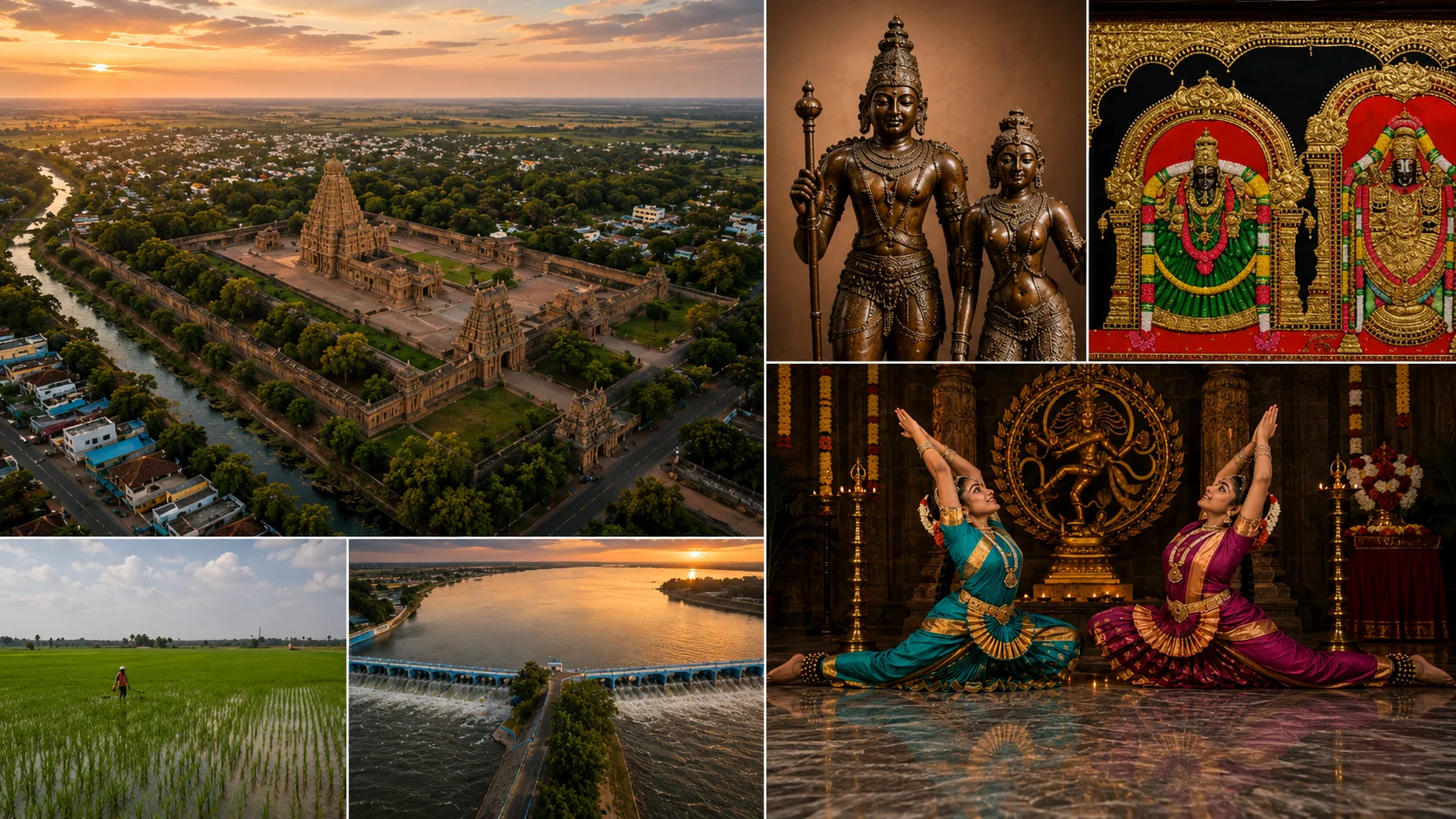
Thanjavur Beyond Brihadeeswara Temple: Exploring the Cultural Heart of the Cauvery Delta
More Than a Temple City
For many travellers, Thanjavur begins and ends with Brihadeeswara Temple. The soaring vimana, vast courtyards, and monumental scale of this UNESCO World Heritage monument have made it one of India’s most celebrated architectural achievements and a defining symbol of Tamil Nadu’s cultural heritage.
Yet to understand Thanjavur solely through its most famous temple is to overlook the wider story of a city that shaped South Indian civilisation for centuries.
Once the capital of the mighty Chola Empire, Thanjavur was not only a political centre but also a place where art, literature, music, architecture, craftsmanship, and scholarship flourished under royal patronage. The city’s influence extended far beyond its walls, helping shape cultural traditions that continue to define southern India today.
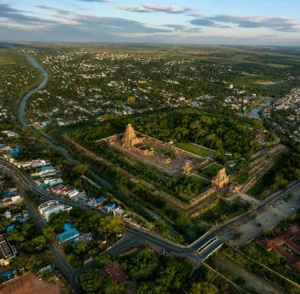
Situated within the fertile Cauvery Delta, Thanjavur emerged as a centre of prosperity, learning, and creativity. Its temples, libraries, artisan communities, and performing arts traditions reflect a cultural legacy that has evolved across centuries while remaining deeply connected to its historical roots.
For travellers interested in understanding South India beyond monuments and sightseeing checklists, Thanjavur offers one of the most rewarding cultural journeys in the region.
Brihadeeswara Temple: The Monument That Defines Thanjavur
No exploration of Thanjavur can begin anywhere other than Brihadeeswara Temple.
Commissioned by Rajaraja Chola I in the early eleventh century, the temple represented far more than a religious structure.
It was a statement of imperial ambition, artistic achievement, engineering excellence, and cultural confidence at a time when the Chola Empire was expanding across much of South India and extending its influence into Southeast Asia.
Built primarily from granite, a material not readily available in the immediate vicinity, the temple remains an extraordinary accomplishment.
Its towering vimana rises dramatically above the surrounding landscape, while intricate carvings, inscriptions, and sculptural details reveal the sophistication of Chola craftsmanship.
More than a thousand years after its construction, Brihadeeswara Temple remains an active place of worship, demonstrating the continuity of traditions that have survived generations of political and social change.
Yet the temple is best understood not as an isolated monument but as the centrepiece of a wider cultural landscape. The prosperity, artistic patronage, and intellectual activity that flourished during and after the Chola period shaped many of the traditions that continue to define Thanjavur today.
The Capital of a Great Civilization
The rise of Thanjavur is closely linked to the remarkable achievements of the Chola dynasty.
From the ninth to the thirteenth centuries, the Cholas built one of the most influential empires in Indian history.
Their territory extended across much of southern India, while their naval expeditions established connections with Sri Lanka, Southeast Asia, and important maritime trade networks throughout the Indian Ocean.
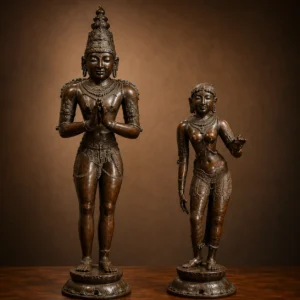
Under Chola rule, temples became centres of administration, education, economic activity, and artistic production. Royal patronage supported sculptors, architects, scholars, musicians, and craftsmen whose work would influence generations to come.
Thanjavur’s strategic position within the fertile Cauvery Delta contributed significantly to its rise. Agricultural prosperity created wealth, and that wealth funded ambitious building projects, religious institutions, artistic patronage, and centres of learning.
Although political power eventually shifted elsewhere, the cultural foundations established during the Chola period continued to shape the city long after the empire itself declined.
The Cauvery Delta: Landscape Behind the Culture
The story of Thanjavur cannot be separated from the landscape that surrounds it.
The Cauvery River and its extensive network of distributaries have nourished the delta for centuries, transforming the region into one of South India’s most productive agricultural zones.
Often referred to as the rice bowl of Tamil Nadu, the delta’s fertile soils supported large populations and generated the resources necessary for cultural and economic growth.
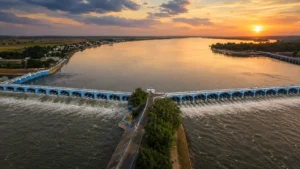
This abundance helped sustain temples, educational institutions, artisan communities, and royal courts. In many ways, the artistic and architectural achievements of the region were built upon the stability provided by the river.
Even today, journeys through the Cauvery Delta reveal a landscape where agriculture, water management, village life, and sacred geography remain closely intertwined.
Temple towers rise above paddy fields, village festivals continue ancient traditions, and the rhythms of rural life remain connected to seasonal cycles shaped by the river.
Understanding this relationship between landscape and culture provides a deeper appreciation of why the region became one of the great centres of South Indian civilisation.
Thanjavur Palace and the City’s Layered History
Although the Cholas established Thanjavur’s importance, subsequent dynasties also left significant cultural contributions.
The Thanjavur Palace complex reflects this layered history. Developed under the Nayak rulers and later expanded by the Marathas, the complex serves as a reminder that the city’s story extends far beyond a single dynasty.
Within the palace grounds, visitors encounter a fascinating collection of structures including audience halls, towers, museums, and galleries that illustrate the evolution of political and cultural life in the region.
The palace also reflects the continued patronage of arts, literature, and scholarship that characterised Thanjavur across different periods of its history.
Rather than replacing earlier traditions, successive rulers often contributed to a cultural environment that valued preservation, adaptation, and artistic development.
Today, the palace stands as an important link between the city’s medieval past and its later cultural achievements.
Saraswathi Mahal Library: A Treasury of Knowledge
Among Thanjavur’s most remarkable institutions is the Saraswathi Mahal Library, one of India’s oldest surviving libraries and an enduring symbol of the city’s intellectual heritage.
Established under the Nayak rulers and significantly expanded during the Maratha period, the library houses an extraordinary collection of palm-leaf manuscripts, rare books, maps, illustrations, and historical documents.
The collection spans subjects as diverse as literature, medicine, astronomy, philosophy, mathematics, music, and religion.
The library’s significance extends beyond the preservation of manuscripts. It reflects a long tradition of scholarship that flourished alongside the region’s artistic and religious achievements.
At a time when knowledge was painstakingly recorded by hand and carefully transmitted across generations, institutions like the Saraswathi Mahal Library played a crucial role in safeguarding cultural memory.
For culturally curious travellers, the library offers a reminder that Thanjavur was not only a city of temples but also a centre of learning and intellectual exchange.
The Art of Bronze Casting: A Living Chola Tradition
Few artistic traditions illustrate the continuity of Thanjavur’s heritage more clearly than bronze casting.
A short distance from the city lies Swamimalai, a town renowned for its master craftsmen who continue to create bronze sculptures using the ancient lost-wax method. This technique, perfected during the Chola period, remains largely unchanged after centuries of practice.
The process is both intricate and time-consuming. Each sculpture begins with a handcrafted wax model, which is encased in clay before molten metal is poured into the mould. Once the clay is removed, artisans spend days refining the details by hand.
The resulting sculptures are not merely works of art; they are sacred objects that continue to play an important role in religious and cultural life.
Visiting artisan workshops offers valuable insight into how traditional skills have been preserved through generations. In an age of industrial production, the survival of these handcrafted techniques reflects the enduring importance of craftsmanship within the cultural landscape of the Cauvery Delta.
Thanjavur Paintings and Sacred Art
Another enduring artistic legacy associated with the city is the tradition of Thanjavur paintings.
Characterised by vibrant colours, rich ornamentation, and the use of gold foil, these paintings emerged under the patronage of royal courts and religious institutions. Their distinctive style combines artistic refinement with spiritual symbolism, creating works that remain instantly recognisable today.
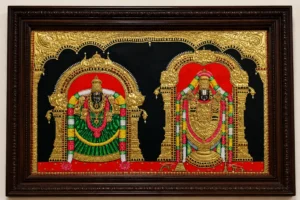
Traditionally depicting Hindu deities, saints, and mythological themes, Thanjavur paintings were intended not only as decorative objects but also as expressions of devotion.
The use of gold leaf, embossed surfaces, and intricate detailing gives them a unique visual richness that distinguishes them from other Indian painting traditions.
Contemporary artists continue to practise and adapt the art form, ensuring that this centuries-old tradition remains part of the region’s living cultural heritage.
Music, Dance and Cultural Patronage
Thanjavur’s contribution to South Indian culture extends far beyond architecture and visual arts.
The city occupies a significant place in the history of Carnatic music and Bharatanatyam, two of India’s most respected classical traditions. For centuries, royal courts, temples, and cultural institutions provided patronage to musicians, composers, dancers, and scholars.
Among the most influential figures associated with the region were the Thanjavur Quartet, whose contributions helped shape the structure and repertoire of Bharatanatyam as it is performed today. Their work established artistic standards that continue to influence dancers across the world.
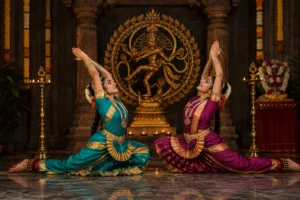
Similarly, the broader Cauvery Delta region produced many of the composers and musicians who form the foundation of Carnatic music. The relationship between temple culture, devotional traditions, and artistic expression created an environment in which music and dance could flourish.
Even today, these traditions remain deeply embedded within the cultural identity of the region.
Beyond the City: The Wider Chola Landscape
While Thanjavur serves as an important cultural centre, its influence extends across a wider landscape shaped by centuries of history and sacred geography.
Airavatesvara Temple, Darasuram
Located near Kumbakonam, Airavatesvara Temple is one of the finest examples of later Chola architecture. Though smaller than Brihadeeswara Temple, its sculptural detail and artistic refinement are exceptional.
The temple forms part of the UNESCO-listed Great Living Chola Temples and rewards visitors who take time to appreciate its intricate carvings and elegant proportions.
Gangaikonda Cholapuram
Founded by Rajendra Chola I following successful military campaigns, Gangaikonda Cholapuram served as a new imperial capital and symbol of Chola power.
Its magnificent temple reflects both continuity and innovation within Chola architecture, offering valuable insight into the evolution of the dynasty’s artistic vision.
Kumbakonam and Sacred Geography
The temple town of Kumbakonam occupies an important place within the cultural landscape of the Cauvery Delta. Its dense concentration of temples, water tanks, festivals, and pilgrimage traditions highlights the enduring significance of sacred geography in Tamil culture.
Together, Thanjavur, Kumbakonam, Darasuram, Swamimalai, and Gangaikonda Cholapuram form a remarkable cultural region that rewards deeper exploration.
Experiences Beyond the Monument Trail
While monumental architecture often attracts the most attention, some of Thanjavur’s most memorable experiences lie beyond its famous landmarks.
Walking through local markets reveals the rhythms of everyday life shaped by agriculture, trade, and tradition. Artisan workshops provide opportunities to observe skills passed through generations. Village roads winding through paddy fields offer glimpses into landscapes that have sustained communities for centuries.
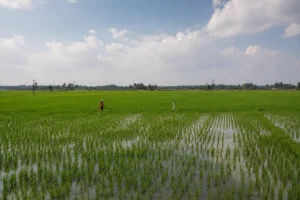
Local cuisine also reflects the agricultural abundance of the Cauvery Delta. Traditional meals, seasonal ingredients, and regional culinary practices provide another way to understand the cultural identity of the region.
For travellers willing to move beyond a checklist of attractions, these experiences often create the strongest connections to place.
Why Thanjavur Rewards Slow Cultural Travel
Many visitors arrive in Thanjavur to see Brihadeeswara Temple and depart within a few hours. While the monument alone justifies a visit, this approach misses much of what makes the city remarkable.
Thanjavur is best experienced as part of a wider cultural landscape where architecture, scholarship, craftsmanship, music, agriculture, and sacred traditions intersect. The city’s significance lies not only in its monuments but also in the relationships between these various elements.
A slower approach allows travellers to understand how the prosperity of the Cauvery Delta supported artistic patronage, how royal courts nurtured music and learning, and how traditional skills continue to survive in contemporary communities.
Rather than simply visiting historic sites, slow cultural travel encourages a deeper engagement with the forces that shaped them.
Why Thanjavur Remains One of South India’s Great Cultural Centres
Brihadeeswara Temple may be the landmark that draws travellers to Thanjavur, but the city’s cultural significance extends far beyond its most famous monument.
From the manuscript collections of the Saraswathi Mahal Library and the bronze workshops of Swamimalai to the traditions of Carnatic music, Bharatanatyam, and Thanjavur painting, the city continues to preserve and celebrate a remarkable legacy.
Equally important is the landscape that surrounds it. The fertile Cauvery Delta provided the prosperity that enabled centuries of artistic, intellectual, and architectural achievement, creating one of South India’s most influential cultural regions.
For travellers interested in understanding the depth and continuity of Tamil heritage, Thanjavur offers far more than a temple visit. It provides an opportunity to experience a living cultural world where history remains deeply connected to everyday life.
Related Blogs
Kanchipuram: Sacred Architecture and Living Traditions
More Than the City of a Thousand Temples Kanchipuram is often introduced as the “City of a Thousand Temples.” While…
Read More ›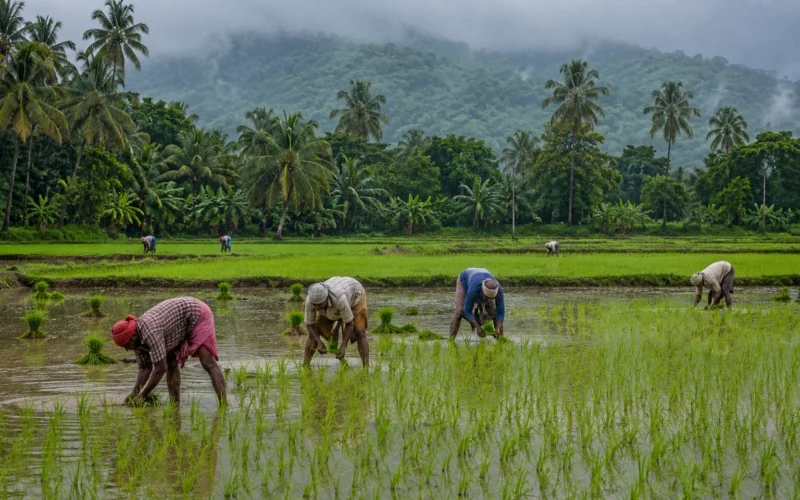
Kuttanad: Exploring Kerala’s Remarkable Below-Sea-Level Landscape
A Landscape Unlike Anywhere Else in India Kerala is often celebrated for its backwaters, houseboats, beaches, and hill stations. Yet…
Read More ›