
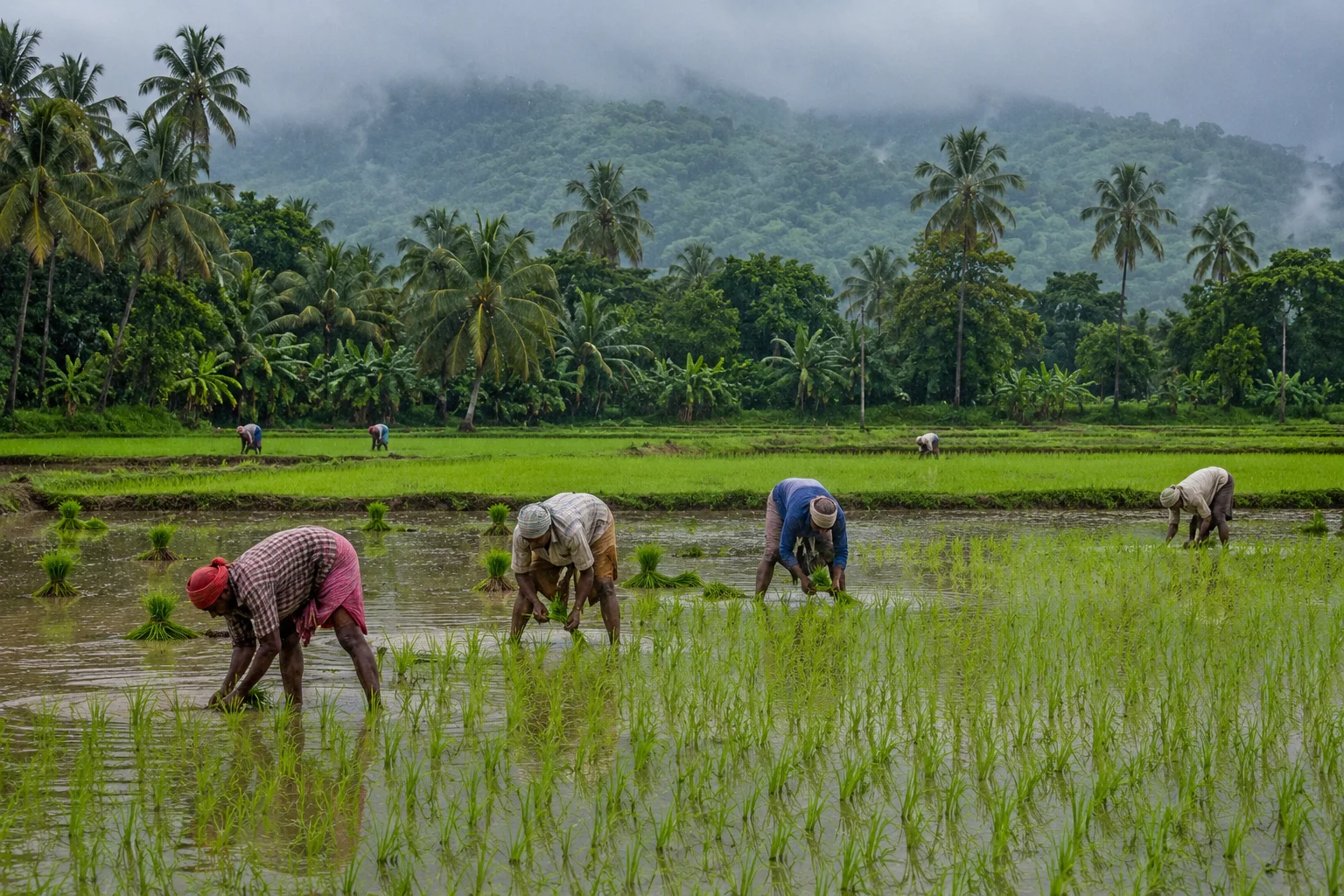
Kuttanad: Exploring Kerala’s Remarkable Below-Sea-Level Landscape
A Landscape Unlike Anywhere Else in India
Kerala is often celebrated for its backwaters, houseboats, beaches, and hill stations.
Yet hidden within the vast network of waterways that surround Vembanad Lake lies one of India’s most remarkable cultural landscapes: Kuttanad, Known as the Rice Bowl of Kerala, Kuttanad is unlike anywhere else in the country.
Large parts of the region lie below sea level, creating a unique environment where farming, fishing, transportation, and daily life have evolved in close relationship with water.
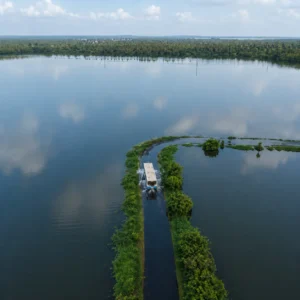
Rivers, canals, lakes, and paddy fields shape both the landscape and the lives of the communities that call this region home.
While many travellers pass through Kuttanad on a houseboat cruise, few fully appreciate its significance. This is not simply a scenic destination.
It is a living agricultural landscape, a globally recognised farming system, and one of the best places in Kerala to experience the principles of slow travel.
For those willing to look beyond conventional sightseeing, Kuttanad offers a deeper understanding of Kerala’s relationship with water, agriculture, and community life.
Where Is Kuttanad?
Kuttanad stretches across parts of Alappuzha, Kottayam, and Pathanamthitta districts in central Kerala. Situated within the basin of Vembanad Lake, the region is defined by an intricate network of waterways that connect villages, farms, and settlements.
The landscape is shaped by several rivers, including the Pamba, Meenachil, Achankovil, and Manimala, all of which eventually drain into Vembanad Lake.
Over centuries, these waterways deposited fertile sediments that helped create one of Kerala’s most productive agricultural regions.
What makes Kuttanad particularly distinctive is that much of its cultivated land lies below sea level. This extraordinary feature has shaped the region’s identity and continues to influence how people live and work.
A Landscape Shaped by Water
To understand Kuttanad, one must first understand water. Unlike many agricultural regions where water is controlled and confined, water is ever-present in Kuttanad.
Rivers flow alongside villages, canals serve as transport corridors, and vast stretches of paddy fields exist in close proximity to lakes and wetlands.
For generations, waterways functioned as the region’s primary transportation network. Long before roads connected many villages, boats carried people, agricultural produce, schoolchildren, and essential supplies across the landscape.
Even today, water remains central to daily life.Fishing boats move through narrow canals. Small ferries connect communities. Farmers navigate waterways to access fields.
In many parts of Kuttanad, life continues to follow rhythms dictated by water levels, seasonal cycles, and the changing conditions of the backwaters.
This close relationship between people and water is one of the defining characteristics of the region.
Understanding Kerala’s Below-Sea-Level Farming System
Perhaps the most fascinating aspect of Kuttanad is its agricultural landscape.
Much of the region’s paddy cultivation takes place on reclaimed land situated below sea level. Over generations, local communities developed sophisticated techniques to make farming possible in an environment where water naturally seeks to reclaim the land.
Large earthen bunds were constructed to protect agricultural fields from flooding. Water was carefully managed through canals, drainage systems, and pumps that allowed excess water to be removed during cultivation periods.
These reclaimed agricultural zones, often referred to as polders, demonstrate remarkable engineering and community cooperation.
The result is a landscape where rice cultivation thrives despite conditions that would seem impossible for conventional agriculture.
This system represents centuries of accumulated knowledge and adaptation, passed down through generations of farming communities.
Kuttanad’s Globally Recognised Agricultural Heritage
Kuttanad’s significance extends far beyond Kerala.
Recognising the uniqueness of its farming traditions, the Food and Agriculture Organization (FAO) designated the Kuttanad Below Sea Level Farming System as a Globally Important Agricultural Heritage System (GIAHS).
This recognition acknowledges not only the technical achievement of cultivating land below sea level but also the cultural, environmental, and social systems that support it.
Unlike modern industrial agriculture, Kuttanad’s farming practices evolved through a deep understanding of local ecosystems.
Communities learned to work with water rather than against it, developing techniques that balanced productivity with environmental realities.
Today, Kuttanad stands as one of the world’s most distinctive examples of traditional agricultural adaptation.
Life Along the Waterways
One of the most rewarding aspects of visiting Kuttanad is observing how daily life continues to unfold along the waterways.
In many villages, boats remain an essential part of everyday mobility. Small vallams, traditional boats that have served local communities for generations, can still be seen navigating canals and narrow water channels.
Children travel to school. Fishermen leave before sunrise. Farmers move between fields. Local ferries connect settlements separated by water.
Unlike the tourist-focused houseboat experience, these everyday journeys reveal a deeper layer of Kuttanad’s identity.
Life here is not organised around tourism. It is organised around community, agriculture, and the rhythms of the landscape itself.
Kainakary: Experiencing Village Life at Water Level
Among the most authentic places to experience this relationship with water is Kainakary, a village surrounded by canals, paddy fields, and backwaters.
Historically connected more closely by waterways than roads, Kainakary offers visitors a glimpse into a slower pace of life that continues to define much of Kuttanad.
Traditional toddy tapping, farming activities, and boat-based transport remain part of the everyday landscape.
For travellers seeking to understand how communities have adapted to living with water, Kainakary provides one of the most compelling examples in Kerala.
Rice Bowl of Kerala
Kuttanad’s fertile soils have earned it the title of Kerala’s Rice Bowl.
For generations, rice cultivation has formed the backbone of the local economy and cultural identity. Vast paddy fields stretch across the landscape, creating scenes that change dramatically throughout the agricultural cycle.
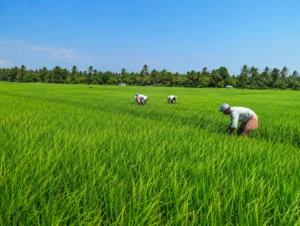
During planting seasons, fields shimmer with water and newly transplanted rice seedlings.
As crops mature, the landscape transforms into expansive green plains.
At harvest time, golden fields dominate the horizon, creating some of the region’s most striking visual spectacles.
Beyond its agricultural importance, rice cultivation has shaped local customs, food traditions, and community life for centuries.
The landscape itself tells the story of a region whose prosperity has long been linked to the cultivation of rice.
Wildlife and Wetland Ecosystems
Pathiramanal Island: A Sanctuary for Birdlife
Situated within the vast expanse of Vembanad Lake, Pathiramanal Island is one of the most important ecological sites associated with the Kuttanad region.
Accessible only by boat, this small uninhabited island is covered in dense vegetation and provides habitat for numerous resident and migratory bird species.
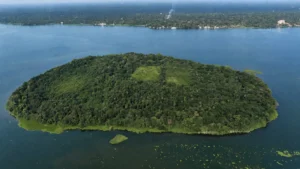
Birdwatchers frequently visit the island to observe seasonal visitors arriving from distant parts of Asia and beyond.
Beyond its ornithological significance, Pathiramanal highlights the ecological richness of the wetlands that sustain both biodiversity and local livelihoods throughout the Vembanad-Kuttanad landscape.
Cultural and Historical Layers of Kuttanad
While Kuttanad is best known for its waterways and agricultural landscapes, the region also preserves fascinating cultural and historical stories that reveal the diversity of Kerala’s past.
Karumadi Kuttan and Kerala’s Buddhist Heritage
One of Kuttanad’s most intriguing historical sites is Karumadi Kuttan, a black granite statue of Lord Buddha believed to date back to the 10th century. The statue stands as an important reminder of the Buddhist traditions that once flourished in parts of Kerala.
Although much of that history has faded from public memory, Karumadi Kuttan remains a significant cultural landmark and offers insight into the region’s layered religious heritage.
Champakulam: Faith, River Culture and Community Life
Situated along the banks of the Pampa River, Champakulam is one of Kuttanad’s oldest settlements. The village reflects the close relationship between waterways, faith, and community life that has shaped the region for centuries.
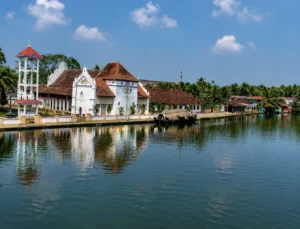
Quiet riverbanks, traditional homes, and local agricultural landscapes combine to create an atmosphere that rewards slow exploration.
Champakulam is also home to St. Mary’s Forane Church, widely regarded as one of the oldest Christian churches in India. The church remains an important centre of faith while reflecting Kerala’s long history of cultural exchange and religious coexistence.
Chavara Bhavan
Located in Champakulam, Chavara Bhavan preserves the ancestral home of Saint Kuriakose Elias Chavara, one of Kerala’s most influential spiritual and social reformers.
Today, the preserved residence offers visitors an opportunity to learn about his life, contributions to education and social development, and the broader Christian heritage of central Kerala.
Experiencing Kuttanad Through Slow Travel
Kuttanad is not a destination that rewards rushing.
Its greatest appeal lies in the opportunity to slow down and observe.
A leisurely boat ride through narrow canals reveals scenes of daily life unfolding along the water’s edge. Village walks provide insight into local communities. Conversations with residents often offer perspectives that guidebooks cannot.
Rather than focusing on attractions, slow travel encourages travellers to engage with place.
In Kuttanad, this might mean watching fishermen cast their nets at sunrise, observing agricultural work in the fields, or simply sitting beside a canal and appreciating the quiet rhythm of village life.
These experiences may seem simple, yet they often become the moments travellers remember most.
Beyond the Houseboat Experience
Houseboats have become synonymous with Kerala’s backwaters, and they undoubtedly offer a memorable way to experience the region.
However, Kuttanad’s story extends far beyond the houseboat.
Many visitors see only the wider waterways while missing the smaller canals, agricultural landscapes, and village communities that define the region’s true character.
Smaller boats often provide a more intimate perspective. They can navigate narrow waterways inaccessible to larger vessels and allow travellers to experience the landscape at a more personal scale.
For those seeking a deeper understanding of Kuttanad, looking beyond the traditional houseboat route is highly rewarding.
The most meaningful experiences often occur in the quieter corners of the backwaters where daily life continues largely unchanged.
When Is the Best Time to Visit Kuttanad?
Kuttanad can be visited throughout the year, though each season offers a different perspective on the landscape.
The period between October and February is generally considered the most comfortable, with pleasant temperatures and relatively dry weather.
The monsoon months transform the region dramatically. Water levels rise, vegetation becomes more vibrant, and the landscape takes on a distinctive atmosphere that many travellers find particularly appealing.
Agricultural seasons also influence the visual character of Kuttanad. Depending on the time of year, visitors may encounter flooded fields, vibrant green cultivation, or harvest-ready golden landscapes.
Each season reveals a different side of the region.
Responsible Travel in Kuttanad
As tourism continues to grow across Kerala’s backwaters, responsible travel becomes increasingly important.
Travellers can contribute positively by choosing locally owned experiences, supporting community-based initiatives, and respecting the agricultural landscapes that sustain local livelihoods.
It is equally important to minimise environmental impact by avoiding litter, reducing plastic use, and selecting operators committed to responsible tourism practices.
The health of Kuttanad’s waterways, wetlands, and farming systems depends on careful stewardship.
By travelling thoughtfully, visitors can help preserve the very qualities that make the region so distinctive.
Why Kuttanad Represents the Soul of Kerala’s Slow Travel Experience
In an age of increasingly fast-paced travel, Kuttanad offers something different.
It invites travellers to slow down, observe, and engage more deeply with place.
Its waterways tell stories of generations shaped by water. Its paddy fields reflect centuries of agricultural ingenuity. Its villages reveal traditions that continue to thrive despite rapid change elsewhere.
More than a destination, Kuttanad is a living cultural landscape where nature, agriculture, and community remain closely intertwined.
For travellers seeking a deeper understanding of Kerala, few places offer a richer or more rewarding experience.
To explore Kuttanad is not simply to visit another destination. It is to discover one of India’s most remarkable relationships between people, land, and water.
Related Blogs
Thanjavur Beyond Brihadeeswara Temple: Exploring the Cultural Heart of the Cauvery Delta
More Than a Temple City For many travellers, Thanjavur begins and ends with Brihadeeswara Temple. The soaring vimana, vast courtyards,…
Read More ›
Kanchipuram: Sacred Architecture and Living Traditions
More Than the City of a Thousand Temples Kanchipuram is often introduced as the “City of a Thousand Temples.” While…
Read More ›