
Luxury South India Journeys Through Culture, Landscapes & Ayurveda Wellness
From Temple Shores to Rainforest Valleys
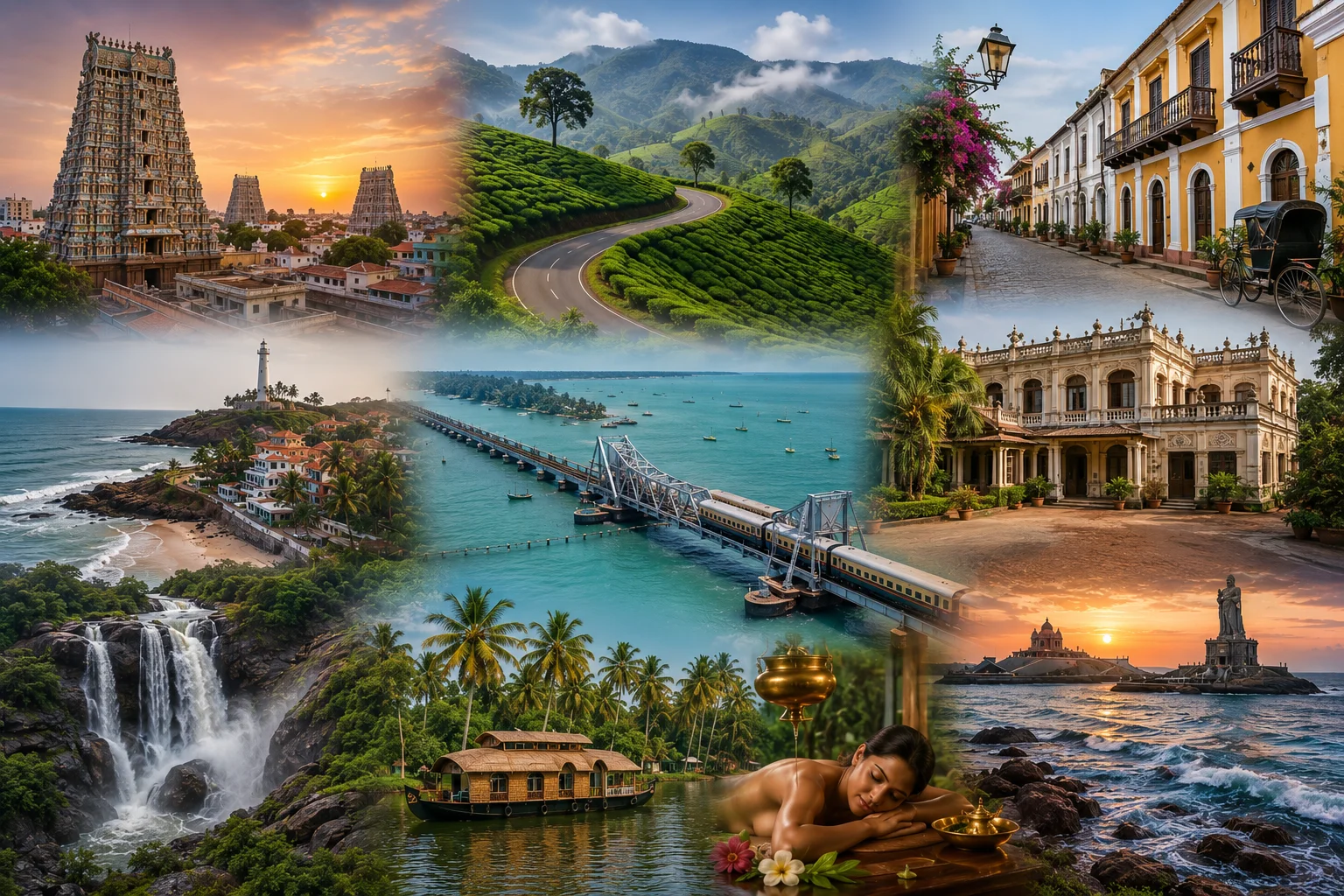
South India unfolds less like a conventional itinerary and more like a gradual movement through changing cultures, climates, landscapes, and rhythms of life. Temple towns rise from fertile river plains, French colonial quarters open toward quiet coastal promenades, ancient dynasties leave behind monumental stone architecture, and mountain roads slowly disappear into mist-covered tea hills and rainforest valleys.
Unlike rushed multi-city travel, a slower journey through South India reveals how deeply connected its regions remain through trade, spirituality, cuisine, ecology, and centuries of cultural continuity.
The experience shifts gradually from the coastal heritage of Tamil Nadu toward the tea-covered mountains of the Western Ghats, Kerala’s rainforest landscapes, sacred island shores, and restorative wellness traditions rooted in Ayurveda.
For travellers seeking more than sightseeing, South India offers an unusually layered form of travel where architecture, food, ritual, nature, and wellness become part of one continuous experience. Ancient temples remain active places of worship, tea plantations continue shaping mountain communities, and traditional healing systems such as Ayurveda still influence everyday life across Kerala.
This journey moves through some of South India’s most immersive cultural and ecological landscapes beginning from the temple shores of Mahabalipuram and Pondicherry’s slower coastal atmosphere before continuing through the Chola heartlands, Chettinad’s merchant heritage, Madurai’s cultural intensity, and onward toward Kerala’s tea hills, rainforest valleys, sacred coastlines, and optional Ayurveda wellness retreats.
Rather than presenting South India as isolated destinations, this route reveals it as an interconnected experiential landscape shaped by history, geography, climate, spirituality, and the slower rhythms of meaningful travel.
The Cultural Spine of Tamil Nadu
Tamil Nadu forms the cultural foundation of this journey. Across the state, temple architecture, culinary traditions, artisan communities, sacred geography, and classical heritage continue influencing everyday life in ways that remain deeply visible to travellers moving slowly through the region.
Unlike destinations built entirely around tourism, many of Tamil Nadu’s historic towns remain living cultural environments where rituals, markets, festivals, and local traditions continue functioning within ordinary daily rhythms.
Ancient temple corridors still echo with devotional chants, flower markets begin operating before sunrise, and traditional recipes continue passing through generations within homes and local communities.
Travelling through Tamil Nadu also reveals striking regional variation. Coastal landscapes gradually transition into temple towns, arid interiors, merchant settlements, agricultural plains, and sacred urban centres. Each region introduces distinct architectural styles, cuisines, dialects, and atmospheres while still remaining connected through broader Tamil cultural identity.
This cultural spine forms the heart of the South India journey before the itinerary gradually branches toward Kerala’s wellness landscapes, rainforest corridors, and sacred coastal routes further south.
Mahabalipuram: Temple Shores & Stone Heritage
Positioned along the Bay of Bengal coastline, Mahabalipuram introduces the journey through one of South India’s most historically significant coastal heritage landscapes. Once an important port city of the Pallava dynasty, the town remains known for its monumental stone architecture, rock-cut temples, and sculptural traditions shaped by centuries of maritime trade and artistic patronage.
The Shore Temple, rising beside the sea against constantly changing coastal light, remains one of the defining visual symbols of South Indian temple architecture. Nearby, massive monolithic carvings, cave sanctuaries, and granite relief sculptures continue preserving the artistic sophistication of the Pallava period.
Yet Mahabalipuram feels most immersive during quieter moments beyond the monuments themselves. Early mornings bring fishermen returning toward the shore while sea winds move through narrow streets lined with stone workshops where sculptors continue practising traditional carving techniques passed through generations.
The town’s slower coastal rhythm creates an ideal beginning for the larger South India journey. The atmosphere feels open, spacious, and transitional, where temple heritage, sea landscapes, artisan culture, and coastal life naturally intersect beside the Bay of Bengal.
Pondicherry: French Quarters & Coastal Slow Living
Further south along the coast, Pondicherry introduces a noticeably different atmosphere shaped by colonial history, spirituality, and slower rhythms of coastal life.
Tree-lined streets within the old French Quarter remain defined by mustard-coloured villas, quiet cafés, bougainvillea-covered walls, and colonial-era architecture facing the sea promenade. Unlike busier urban centres elsewhere in India, Pondicherry often feels calmer and more reflective, particularly during mornings when the town gradually awakens beneath softer coastal light.
Beyond its postcard imagery, the experience of Pondicherry unfolds through lingering café conversations, heritage walks across white-town streets, artisan boutiques, Tamil neighbourhoods, seaside promenades, and slower coastal routines that encourage unhurried exploration. This layered character allows travellers to experience not only French architectural influence, but also the town’s deeper blend of Tamil culture, coastal identity, spirituality, and contemporary creative life.
Pondicherry also became internationally associated with spiritual exploration through Sri Aurobindo Ashram and nearby Auroville. This philosophical and contemplative layer continues attracting artists, writers, long-stay travellers, and wellness-oriented visitors from around the world.
The blend of café culture, heritage streets, spirituality, coastal living, and slow travel creates a unique transition within the broader South India journey. Rather than functioning as a conventional sightseeing stop, Pondicherry often feels designed for observation, immersion, and slower cultural engagement before the route gradually shifts inland toward Tamil Nadu’s temple heartlands and cultural interiors.
Travellers looking to experience more than the French Quarter alone often spend additional time discovering what lies beyond Pondicherry’s postcard charm through heritage walks, café culture, coastal promenades, artisan spaces, and slower rhythms of local life.
The Chola Trail: Sacred Architecture & Temple Landscapes
Moving inland toward the fertile Cauvery Delta, the journey enters the historic Chola region, one of the most culturally significant landscapes in South India.
The Chola dynasty left behind some of India’s greatest achievements in temple architecture, bronze sculpture, irrigation systems, literature, and sacred urban planning. Even today, temple towns such as Thanjavur and Kumbakonam continue preserving this civilisational legacy through living rituals, monumental architecture, and deeply rooted devotional traditions.
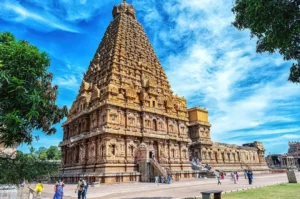
At the centre of the region stands the Brihadeeswarar Temple in Thanjavur, whose towering granite Vimana continues dominating the skyline centuries after its construction. Unlike archaeological ruins separated from daily life, Chola temples remain active spiritual environments where worship, festivals, music, and ritual continue unfolding continuously.
The surrounding landscapes also shape the atmosphere of the region. The fertile plains of the Cauvery basin support agriculture, temple settlements, and traditional artisan communities that remain closely connected to the rhythms of river systems and seasonal cycles.
Travellers gradually begin understanding how the larger Chola temple circuit across the Cauvery Delta forms a connected cultural landscape shaped by dynasty, devotion, craftsmanship, and sacred urban planning.Also travelling slowly through the Chola region reveals how architecture in South India was never simply monumental.
Temples historically functioned as centres of governance, culture, economy, education, and artistic production, influencing entire regional identities that remain visible even today.
Chettinad: Merchant Mansions & Culinary Heritage
The journey gradually shifts again while entering Chettinad, a region historically shaped by the Chettiar merchant community whose international trade networks once extended across Southeast Asia.
Unlike temple-centric landscapes elsewhere in Tamil Nadu, Chettinad is defined by its grand mansions, interior courtyards, intricate tile work, Burmese teakwood, European influences, and remarkably preserved architectural heritage scattered across quiet rural settlements.
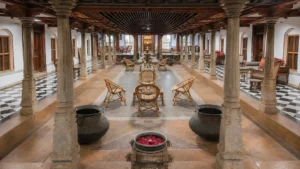
Many of these heritage mansions continue reflecting the wealth, craftsmanship, and cosmopolitan influences accumulated during the height of Chettiar trade activity. Wide verandas, ornate pillars, handcrafted tiles, and expansive courtyards create architectural spaces unlike anywhere else in South India, particularly across heritage settlements such as Kanadukathan where much of the region’s architectural character remains remarkably preserved.
Chettinad is equally renowned for its cuisine, which remains one of Tamil Nadu’s most distinctive culinary traditions. Spice-forward preparations, slow cooking methods, aromatic curries, and regional ingredients create deeply layered flavours that reflect centuries of trade and cultural exchange.
Unlike busier tourist centres, Chettinad rewards slower travel. Village roads, heritage houses, temple corridors, local kitchens, artisan workshops, and quieter community spaces create a more immersive form of cultural exploration where architecture, cuisine, and everyday life remain closely intertwined across the region.
Madurai: Temple Energy & Cultural Continuity
As the journey moves further south, Madurai introduces a completely different atmosphere defined by movement, ritual, sound, colour, and continuous cultural intensity.
Often considered one of the oldest continuously inhabited cities in India, Madurai revolves around the Meenakshi Amman Temple whose towering gopurams dominate the city skyline. Around the temple, streets pulse continuously with flower vendors, pilgrims, jewellery shops, traditional markets, roadside eateries, and devotional activity extending late into the night.
Unlike quieter heritage towns, Madurai feels alive with layered sensory energy. Jasmine flowers perfume crowded temple streets while devotional music, temple bells, market conversations, and the aroma of freshly prepared food merge into the city’s everyday rhythm.
Small eateries serve steaming idlis before sunrise, jigarthanda stalls remain busy through warm afternoons, and local food streets continue operating long after evening temple rituals conclude.
The city’s culinary culture forms an essential part of its identity rather than a separate tourist experience. Madurai’s food traditions remain deeply rooted in Tamil heritage, balancing temple-influenced vegetarian cuisine alongside vibrant street food cultures and robust regional recipes shaped by agriculture, trade routes, and long-standing community traditions. Exploring the city often becomes as much about flavour and atmosphere as architecture and spirituality.
Madurai also remains deeply tied to Tamil literary, artistic, and spiritual traditions. Ancient Sangam poetry, temple festivals, classical arts, and devotional practices continue shaping the city’s cultural identity far beyond its architectural significance alone.
Within the larger South India journey, Madurai functions as both a cultural culmination and an important transition point. From here, the itinerary gradually branches outward toward Kerala’s tea hills, rainforest valleys, Ayurveda wellness landscapes, sacred coastlines, and slower rhythms of travel across the southern peninsula.
Extension Route One: Kerala’s Tea Hills & Wellness Landscapes
Leaving behind the warmer plains surrounding Madurai, the landscapes gradually begin climbing toward the higher elevations of the Western Ghats. The transition into Kerala feels immediate yet gradual at the same time as dry interiors slowly give way to cooler mountain air, mist-covered valleys, tea plantations, rainforest corridors, and slower rhythms of life shaped by monsoon landscapes.
This extension of the journey introduces a softer, greener atmosphere compared to the cultural intensity of Tamil Nadu’s temple cities. Roads wind through mountain passes while forests, reservoirs, spice gardens, and plantation landscapes begin dominating the scenery.
The route also creates a natural transition toward Kerala’s wellness traditions, where Ayurveda, slower living, and restorative environments remain deeply connected to both landscape and lifestyle.
Munnar: Tea Estates Above the Clouds
Positioned high within the Western Ghats, Munnar remains one of South India’s most iconic tea-growing landscapes. Rolling plantations cover the hills in layered shades of green while mist drifts continuously across valleys shaped by changing mountain weather.
Unlike urban destinations focused on activity, Munnar encourages slower movement. Early mornings unfold quietly across tea estates while cooler temperatures, mountain air, and cloud-covered hills gradually reshape the pace of the journey itself.
Tea cultivation continues defining both the economy and atmosphere of the region. Plantation roads wind through valleys lined with tea bushes while estate workers move steadily across the hills beneath constantly shifting weather conditions.
Beyond the tea landscapes, the surrounding region also includes forests, spice gardens, waterfalls, and protected mountain ecosystems that form part of the larger biodiversity network of the Western Ghats.
For many travellers, Munnar introduces a different emotional rhythm within the South India journey, one that feels calmer, more reflective, and increasingly connected to landscape rather than urban movement.
Optional Ayurveda Wellness Extension in Kerala
For travellers seeking a slower and more restorative conclusion to the South India journey, Kerala offers the possibility of extending the experience through Ayurveda wellness retreats and residential healing programmes.
Unlike short spa-style wellness experiences, authentic Ayurveda in Kerala is traditionally rooted in personalised therapies, seasonal balance, and long-term restoration of physical and mental wellbeing. Many travellers visit Kerala specifically for Panchakarma programmes conducted under the supervision of qualified Ayurvedic physicians within rainforest, backwater, or coastal wellness environments.
After moving through temple towns, mountain roads, tea hills, and rainforest landscapes, Kerala’s slower atmosphere naturally creates space for rest, recovery, and reflection.
Ayurveda retreats across the region range from immersive wellness sanctuaries to more medically focused residential Panchakarma centres offering detoxification therapies, yoga, meditation, stress recovery, dietary integration, and longer wellness stays.
For travellers exploring wellness in Kerala for the first time, our Kerala Ayurveda Retreat Guide explains how to choose the right retreat, what to expect from authentic programmes, treatment structures, wellness costs, and how traditional Ayurveda differs from conventional spa tourism.
Rather than feeling separate from the journey itself, Ayurveda wellness often becomes a meaningful continuation of the South India experience, gradually transitioning from cultural exploration into slower rhythms of healing, balance, and restoration.
Extension Route Two: Through the Western Ghats Toward Athirapilly
A second route branches westward through some of the most immersive mountain landscapes of the Western Ghats. Compared to the softer plantation atmosphere surrounding Munnar, this route feels wilder, quieter, and more deeply connected to rainforest ecosystems and ecological transitions between Tamil Nadu and Kerala.
The journey gradually moves through agricultural plains, tea-covered mountains, dense forest corridors, reservoirs, and rainforest valleys before descending toward Kerala’s dramatic waterfall landscapes.
Pollachi: Coconut Landscapes & Rural Tamil Nadu
Near the foothills of the Western Ghats, Pollachi introduces a quieter rural atmosphere shaped by agriculture, coconut groves, open landscapes, and slower village rhythms.
Long roads lined with coconut plantations stretch toward the mountains while warm winds move across the plains beneath distant hill ranges gradually rising toward Valparai.
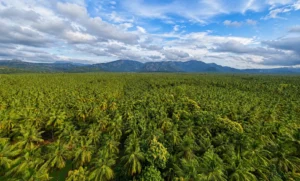
Pollachi often functions as the transition point between Tamil Nadu’s agricultural lowlands and the cooler elevations of the Western Ghats beyond.
Valparai: Tea Hills, Forest Roads & Plantation Landscapes
As the roads begin climbing sharply through mountain hairpin bends, the atmosphere changes dramatically. Coconut groves gradually disappear behind mist-covered slopes while tea plantations begin spreading across rolling hills above the clouds.
Compared to more commercial hill stations, Valparai feels quieter and more immersive. Plantation roads pass through forests, reservoirs, and tea estates while constantly shifting mountain weather reshapes the landscape throughout the day.
The journey through Valparai also reveals one of the Western Ghats’ most striking ecological transitions where plantation landscapes slowly merge into rainforest corridors surrounding the Sholayar region.
Rather than functioning simply as a destination, Valparai becomes part of a larger slow-travel experience through mountain ecosystems, tea culture, and protected forest landscapes.
Athirapilly: Kerala’s Rainforest Waterfalls
Further west, the roads descend gradually toward Athirapilly where Kerala’s rainforest landscapes begin dominating the journey entirely.
Fed by the Chalakudy River, Athirapilly Waterfalls cascade dramatically through dense rainforest valleys surrounded by monsoon-fed vegetation and thick tropical humidity. During the monsoon season, the waterfalls become especially powerful while mist rises continuously above the river and surrounding forest canopy.
The atmosphere here feels entirely different from the cultural interiors of Tamil Nadu earlier in the journey. Rainforest sounds replace urban movement while river systems, waterfalls, and dense vegetation create one of South India’s most immersive ecological landscapes.
For many travellers, the Valparai–Athirapilly route becomes one of the most memorable segments of the broader South India journey because of the way it gradually reveals the environmental transitions of the Western Ghats through movement itself.
Extension Route Three: Toward the Sacred Southern Coast
The third route moves southward from Madurai toward Tamil Nadu’s sacred coastal landscapes where spirituality, mythology, island geography, and ocean environments begin shaping the atmosphere of the journey.
Compared to Kerala’s rainforest routes or Tamil Nadu’s temple interiors, this extension feels more elemental and expansive — defined by sea winds, sacred shores, coastal silence, and dramatic ocean horizons.
Rameshwaram: Sacred Shores & Island Landscapes
Connected to mainland India by the iconic Pamban Bridge, Rameshwaram occupies a deeply important place within India’s sacred geography. The island town revolves around the Ramanathaswamy Temple whose vast corridors and spiritual significance continue attracting pilgrims from across the country.
Yet beyond its religious importance, Rameshwaram also offers striking coastal landscapes shaped by salt air, fishing communities, quiet roads, and island atmospheres unlike anywhere else in Tamil Nadu.
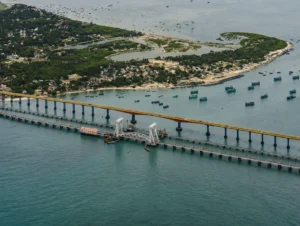
Nearby Dhanushkodi introduces an even more dramatic environment where abandoned ruins, shifting sands, and ocean horizons create a landscape suspended between mythology and natural forces.
The slower pace of island life, combined with the surrounding coastal scenery, gives Rameshwaram a reflective atmosphere that contrasts strongly with the intensity of larger temple cities earlier in the journey.
Kanyakumari: Where Three Seas Meet
At the southernmost edge of mainland India, Kanyakumari brings the South India journey toward a symbolic conclusion where the Arabian Sea, Bay of Bengal, and Indian Ocean converge.
The town is known for its dramatic sunrise and sunset views, oceanfront landscapes, Vivekananda Rock Memorial, and the towering Thiruvalluvar Statue rising from the sea.
Unlike many destinations defined by monuments alone, Kanyakumari feels deeply shaped by geography itself. Ocean winds, shifting light, fishing activity, and expansive coastal horizons create a strong sense of arrival at the southern edge of the Indian subcontinent.
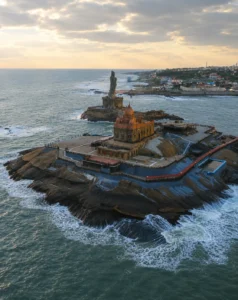
The journey from Madurai toward Kanyakumari also reveals a gradual cultural and geographical transition across Southern Tamil Nadu, where temple cities slowly give way to quieter coastal settlements, sacred shorelines, fishing communities, and slower sea-facing landscapes shaped by both spirituality and everyday coastal life.
As the final point of the journey, Kanyakumari represents more than a destination. It feels like the meeting point of many landscapes experienced throughout South India, temple culture, coastlines, mountains, rainforests, tea hills, and slower rhythms of travel gradually converging beside the sea.
Cuisine Across the Journey
One of the most immersive aspects of travelling through South India is the way cuisine changes continuously across regions while still remaining deeply connected to local landscapes, climate, agriculture, and cultural traditions.
Along the Coromandel Coast, seafood, rice-based meals, and lighter coastal flavours dominate everyday dining. In Chettinad, cuisine becomes richer and more spice-forward, reflecting centuries of trade and culinary evolution within merchant communities. Madurai introduces street food culture, temple-town eateries, and deeply rooted Tamil culinary traditions shaped by both ritual and regional identity.
As the journey enters the Western Ghats, roadside tea stalls, plantation cafés, and mountain cuisine begin shaping the experience while Kerala gradually introduces coconut-based curries, banana chips, seafood, tapioca dishes, and monsoon-influenced flavours closely tied to tropical landscapes and backwater environments.
Food across South India rarely feels disconnected from place. Tea estates influence mountain cuisine, coastal fishing communities shape local recipes, temple traditions influence vegetarian meals, and spice cultivation continues affecting flavour profiles throughout Kerala and Tamil Nadu.
For travellers moving slowly through the region, cuisine becomes far more than dining alone. It becomes part of understanding how geography, trade, agriculture, climate, and cultural continuity continue shaping everyday life across South India’s diverse landscapes.
Slow Travel Through South India
South India reveals itself most meaningfully through slower movement. Unlike itineraries built around rushing between major attractions, immersive journeys through the region allow travellers to experience how landscapes, climates, architecture, cuisine, and cultural rhythms gradually transform across relatively short distances.
The shift from Tamil Nadu’s temple cities toward Kerala’s rainforest valleys is not simply geographical. The atmosphere itself changes continuously throughout the journey. Coastal humidity gives way to drier interiors, temple corridors transition into plantation roads, and mountain forests slowly replace urban movement and traffic noise.
Travelling slowly also creates space for deeper cultural engagement. Morning flower markets in Madurai, tea workers moving across mist-covered hills in Valparai, fishermen returning toward the shores of Mahabalipuram, or banana chips being prepared beside Kerala’s mountain roads become part of the travel experience itself rather than moments passed hurriedly between destinations.
This slower rhythm is especially important in South India because many of its most meaningful experiences are not isolated attractions. They emerge gradually through atmosphere, landscape, food, ritual, weather, and everyday life.
The journey also reveals how deeply connected South India remains through ecological systems and cultural continuity. River basins shape temple towns, spice cultivation influences regional cuisine, monsoon rainfall transforms mountain landscapes, and ancient trade routes continue influencing architecture, language, and culinary traditions across the region.
For travellers seeking more intentional forms of exploration, South India offers something increasingly rare in modern tourism — the ability to experience movement itself as part of the journey rather than simply transportation between destinations.
Who This Journey Is Designed For
This South India journey is especially suited for travellers seeking cultural depth, slower travel rhythms, and immersive experiences beyond conventional sightseeing.
For culturally curious travellers, the route offers a layered introduction to South India’s living heritage through temple architecture, artisan traditions, regional cuisine, sacred geography, and historic towns that remain deeply connected to everyday life.
For wellness-oriented travellers, Kerala’s optional Ayurveda extension introduces the possibility of restorative experiences rooted in authentic healing traditions rather than commercial wellness trends. The gradual movement from cultural exploration into quieter mountain and wellness landscapes also creates a natural emotional transition within the journey itself.
Photographers and landscape-focused travellers are drawn to the route’s remarkable visual variation, from temple corridors and coastal promenades to tea plantations, rainforest valleys, island landscapes, and dramatic ocean horizons.
The journey also suits couples and slow-travel audiences looking for more meaningful forms of travel where atmosphere, immersion, and emotional connection matter more than checklist tourism.
For international travellers in particular, this route provides a broader understanding of South India as an interconnected cultural and ecological landscape rather than fragmented tourist destinations viewed in isolation.
Best Time for the Journey
South India can be explored throughout much of the year, though seasonal variations significantly influence landscapes, climate, and travel atmosphere across different regions.
Between October and March, the weather is generally more comfortable for longer overland journeys through Tamil Nadu and Kerala. Temple towns remain warmer but manageable, while the higher elevations of Munnar, Valparai, and the Western Ghats offer cooler temperatures and clearer mountain views.
The monsoon season, particularly between June and September, transforms Kerala and the Western Ghats into intensely green rainforest landscapes filled with waterfalls, mist-covered hills, flowing rivers, and dense vegetation. Athirapilly Waterfalls become especially dramatic during this period, while tea estates in Munnar and Valparai appear at their most visually immersive.
For Ayurveda wellness programmes, many traditional practitioners consider the monsoon season particularly suitable for Panchakarma and restorative therapies because the body is believed to become more receptive during cooler, humid conditions.
Coastal regions such as Mahabalipuram, Pondicherry, Rameshwaram, and Kanyakumari remain warmer throughout much of the year, though sea winds help moderate temperatures, particularly during mornings and evenings.
Because this itinerary moves through multiple ecological zones, including coastlines, agricultural plains, mountain regions, rainforests, and tropical Kerala landscapes, seasonal variation becomes part of the travel experience itself.
Closing
A journey through South India is rarely defined by a single destination. Instead, it unfolds gradually through changing landscapes, layered histories, sacred traditions, mountain roads, coastlines, cuisines, and slower rhythms of life that continue shaping the region across generations.
From the temple shores of Mahabalipuram and the quiet colonial streets of Pondicherry to the sacred architecture of the Chola heartlands, Chettinad’s merchant heritage, Madurai’s cultural intensity, Kerala’s tea-covered hills, rainforest valleys, and the sacred coastlines of Rameshwaram and Kanyakumari, each region contributes a distinct atmosphere to the larger journey.
What makes South India especially immersive is the continuity between these landscapes rather than their separation. Temple rituals continue within ancient cities, tea plantations shape mountain communities, monsoon forests define ecological transitions, and Ayurveda remains deeply rooted within Kerala’s cultural identity and slower wellness traditions.
For travellers willing to move beyond rushed sightseeing and conventional package itineraries, South India offers something far more enduring, a connected experiential landscape where culture, geography, spirituality, cuisine, and wellness gradually reveal themselves through time, movement, and immersion.
Whether the journey ends beside the rainforests of Athirapilly, within the quieter tea hills of Kerala, or along the ocean horizons of Kanyakumari, the experience ultimately becomes less about ticking destinations off a map and more about understanding how deeply interconnected South India remains through its landscapes, traditions, and slower ways of life.
Related Blogs
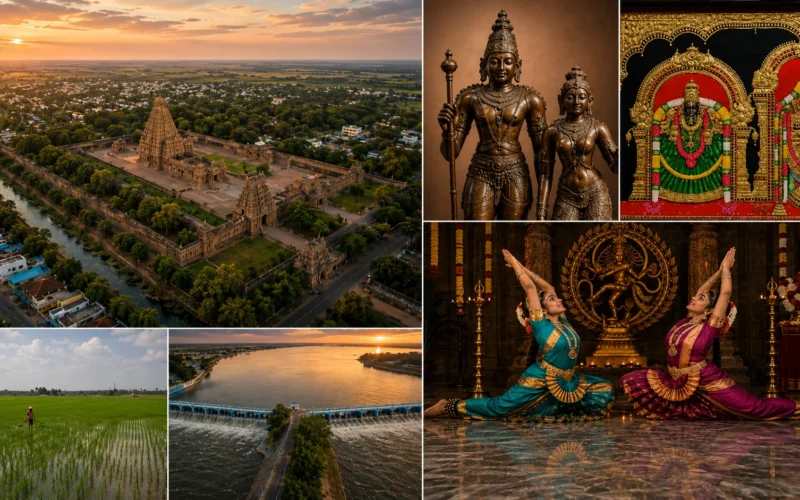
Thanjavur Beyond Brihadeeswara Temple: Exploring the Cultural Heart of the Cauvery Delta
More Than a Temple City For many travellers, Thanjavur begins and ends with Brihadeeswara Temple. The soaring vimana, vast courtyards,…
Read More ›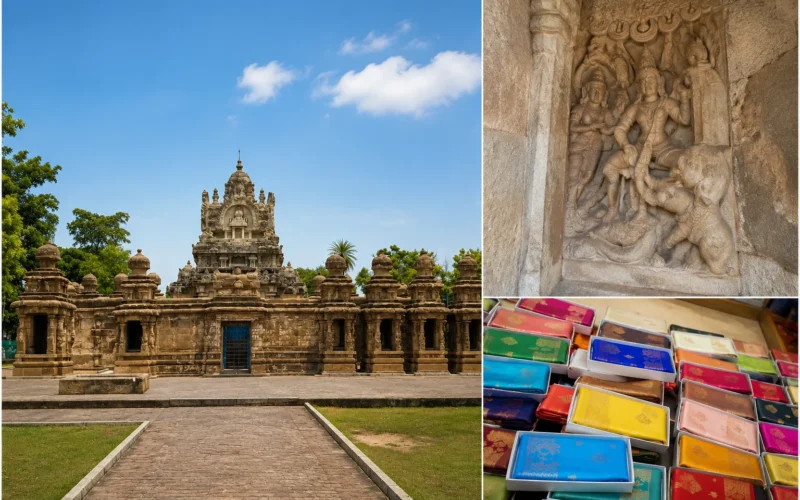
Kanchipuram: Sacred Architecture and Living Traditions
More Than the City of a Thousand Temples Kanchipuram is often introduced as the “City of a Thousand Temples.” While…
Read More ›