
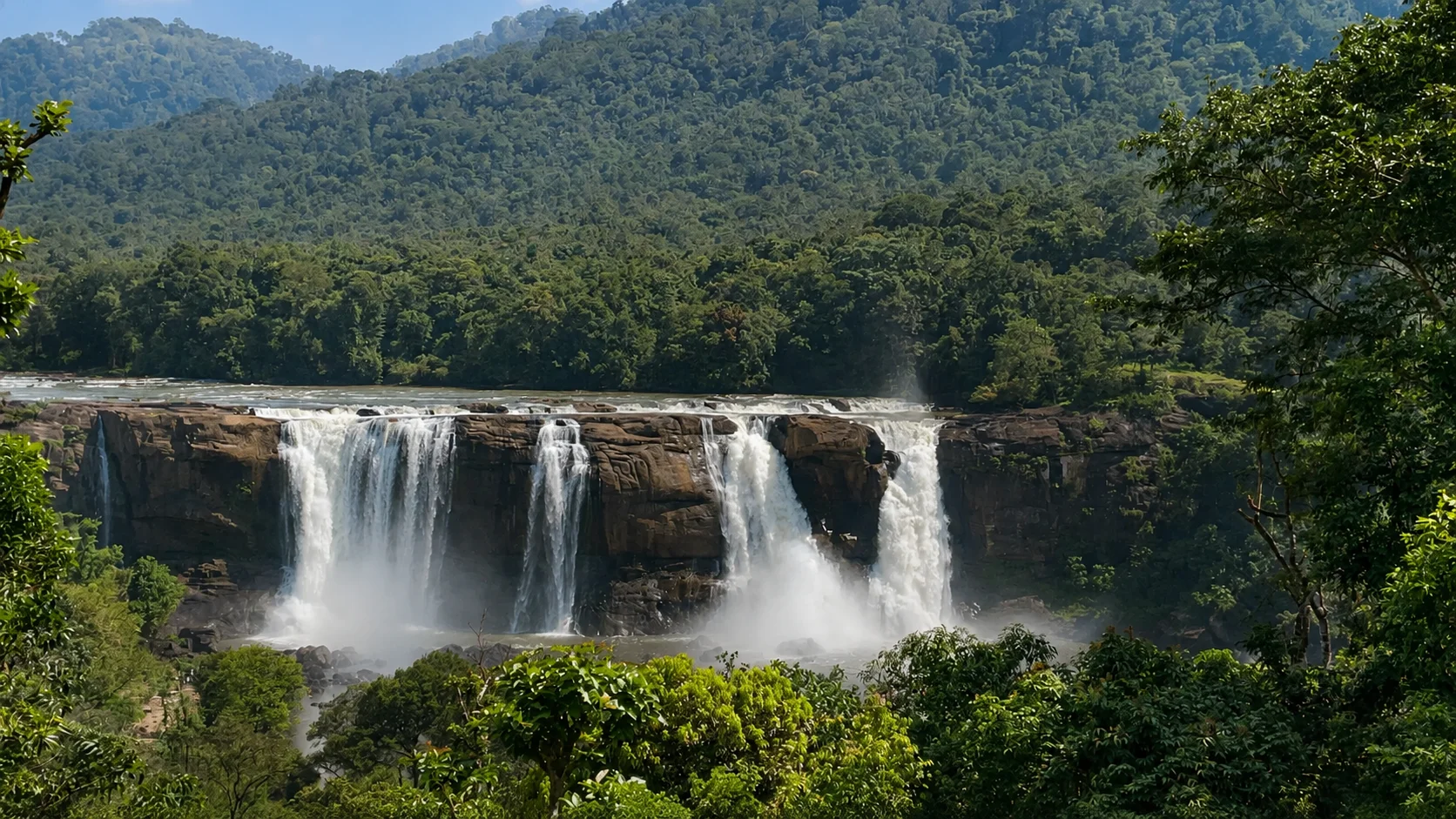
From Valparai to Athirapilly: A Slow Journey Through Tea Hills, Rainforests & the Western Ghats
Through Tea Hills, Rainforests & the Western Ghats
Leaving behind the warmer plains surrounding Pollachi, the roads toward Valparai begin climbing gradually into the higher elevations of the Western Ghats. Coconut groves slowly disappear behind mist-covered slopes while sharp hairpin bends open toward dense forests, tea estates, mountain reservoirs, and cloud-covered valleys stretching across the landscape.
While many travellers cross between Tamil Nadu and Kerala through more familiar mountain routes such as Munnar, Palakkad, or Thenmala, the journey between Valparai and Athirapilly feels quieter, slower, and far more deeply immersed within the rainforest landscapes of the Western Ghats.
The route also creates a natural transition between Tamil Nadu’s cultural and plantation landscapes and Kerala’s river valleys, rainforest ecosystems, and slower wellness-oriented travel experiences.
For travellers exploring broader journeys through South India, the Valparai–Athirapilly route offers one of the most immersive landscape transitions across the southern peninsula, connecting Tamil Nadu’s cultural interiors and plantation regions with Kerala’s rainforest environments, river valleys, and slower rhythms of travel through the Western Ghats.
Unlike faster highway journeys or destination-focused itineraries, the Valparai–Athirapilly route unfolds slowly through changing ecosystems and shifting atmospheres. Tea plantations gradually give way to rainforest corridors, quiet mountain roads descend toward Kerala’s river valleys, and the landscapes steadily transition from the drier eastern slopes of Tamil Nadu into the deep green humidity of Kerala’s forested hills.
Along the way, waterfalls emerge beside winding roads, tea workers move across mist-covered plantations, and long stretches of protected forest continue preserving one of South India’s richest ecological landscapes.
More than a road trip, the journey between Valparai and Athirapilly feels like an immersion into the slower rhythms of the Western Ghats, where forests, rain, mountains, rivers, and plantation landscapes remain deeply connected to everyday life.
Leaving the Plains Behind: The Ascent Toward Valparai
The journey usually begins around Pollachi, where Tamil Nadu’s agricultural plains remain lined with coconut groves, banana farms, and open rural landscapes shaped by irrigation canals and seasonal winds descending from the mountains.
As the roads approach the foothills of the Western Ghats, the terrain begins changing almost immediately. The air gradually cools while the landscape shifts from flat agricultural plains into steep mountain roads climbing through dense vegetation and rocky hill slopes.
The ascent toward Valparai is especially known for its winding hairpin bends, many of which open dramatically toward panoramic valley views overlooking the plains below. During early mornings, moving cloud cover and mist often drift across the roads, particularly during monsoon and post-monsoon months when the mountains remain heavily saturated with rain.
Near the lower sections of the climb, the Aliyar Dam reservoir introduces the first major interruption within the landscape. Surrounded by rocky hills and forested slopes, the reservoir reflects changing weather conditions while long mountain roads continue rising toward the cooler elevations beyond.
Unlike rushed highway travel, the Valparai route naturally encourages slower movement. Vehicles reduce speed through curves while viewpoints, roadside tea stalls, and cooler mountain air gradually reshape the rhythm of the journey itself.
Valparai: Tea Estates Above the Clouds
Higher in the mountains, Valparai emerges through vast plantation landscapes spread across rolling hills and mist-covered valleys. Tea estates dominate the scenery here, covering large stretches of the slopes beneath constantly shifting cloud systems.
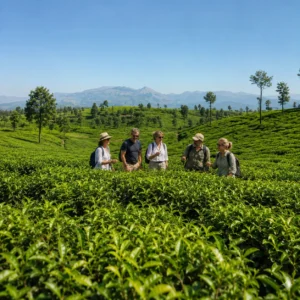
Compared to busier hill stations elsewhere in South India, Valparai feels noticeably quieter and more atmospheric. Long plantation roads cut through the hills while workers move steadily across tea fields carrying baskets beneath cool mountain weather that changes continuously throughout the day.
Many estates surrounding Valparai still retain traces of their colonial plantation history. Old bungalows, factory buildings, narrow estate roads, and weathered stone structures remain scattered across the hills, preserving an older rhythm shaped by tea cultivation and mountain isolation.
Mornings often begin beneath thick fog drifting slowly across the plantations. As sunlight gradually breaks through the mist, the hills reveal layered shades of green extending toward distant valleys hidden beneath clouds.
Rather than feeling designed around tourism activity, Valparai remains deeply connected to climate, plantation work, and surrounding forest systems. Rainfall, mountain weather, and the pace of estate life continue shaping the atmosphere across the region.
For travellers seeking slower journeys through the Western Ghats, Valparai offers an experience defined less by attractions and more by immersion within the landscape itself.
Through the Sholayar Forest Roads
Beyond Valparai, the journey gradually enters some of the most visually dramatic stretches of the Western Ghats. Roads narrow further while plantation landscapes slowly transition into dense rainforest corridors surrounding the Sholayar region.
The reservoirs surrounding Upper Sholayar create an entirely different atmosphere. Large bodies of still mountain water appear between forest-covered slopes while mist frequently hangs low above the reservoirs during mornings and monsoon periods.
The roads here feel quieter and increasingly isolated. Long stretches pass through dense forest landscapes where traffic becomes minimal and the sounds of flowing streams, insects, and distant birds gradually replace urban movement altogether.
Rainfall heavily influences the mood of this section of the route. During monsoon months, waterfalls emerge unexpectedly along roadside cliffs while dense vegetation grows thick enough to partially cover sections of the mountain roads.
The Sholayar landscapes also form part of the larger ecological system of the Western Ghats, one of the world’s richest biodiversity regions. Elephant corridors, rainforest ecosystems, river systems, and protected forest habitats continue shaping the environment across the Anamalai hills and surrounding reserves.
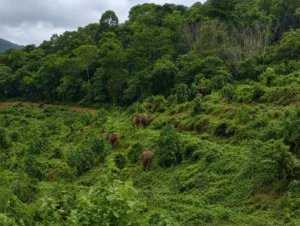
Rather than functioning simply as a transit road, the journey through Sholayar becomes an essential part of the travel experience itself. The changing light, mountain silence, and uninterrupted forest stretches create a feeling of gradual movement through one continuous ecological landscape.
Malakkappara: The Forest Transition Between Tamil Nadu & Kerala
Further west, the route eventually approaches Malakkappara, a small forest settlement positioned near the Tamil Nadu–Kerala border within the rainforest landscapes of the Ghats.
The environmental transition becomes increasingly visible here. Compared to the drier eastern slopes surrounding Pollachi and Valparai, the forests begin appearing denser, wetter, and more tropical as the roads descend gradually toward Kerala.
Humidity rises noticeably while roadside vegetation thickens around streams, forest edges, and river valleys fed by monsoon rainfall. Mist often lingers longer across this region, particularly during early mornings when forests remain covered beneath moving cloud systems drifting across the mountains.
Malakkappara itself feels deeply embedded within the surrounding landscape. Small roadside shops, forest checkposts, tea stalls, and scattered buildings appear quietly between thick stretches of vegetation and mountain roads.
The slower pace of movement through this section reinforces the feeling of travelling through an ecological transition zone rather than simply crossing a state border. Forests, rainfall patterns, and river systems gradually reshape both the visual atmosphere and climatic character of the journey.
Descending Through Kerala’s Rainforest Valleys
After crossing deeper into Kerala, the roads continue descending through rainforest valleys fed by rivers flowing westward from the mountains toward the Arabian Sea.
This section of the journey feels greener, wetter, and increasingly tropical. Dense vegetation surrounds the roads while streams, waterfalls, and river channels begin appearing more frequently throughout the landscape.
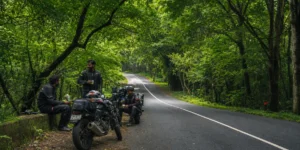
The monsoon influence becomes especially visible here. Heavy rainfall sustains thick rainforest growth across the valleys while fog and low cloud cover continue moving through the hills for much of the year.
Roadside stretches occasionally open toward dramatic valley views where layered forests extend across the hills beneath constantly shifting weather conditions. During quieter moments, the movement of rain, wind, river systems, and forest sounds begins dominating the atmosphere more than traffic or human activity.
Unlike urban travel experiences built around structured itineraries, the Western Ghats encourage a slower relationship with landscape. The journey itself becomes shaped by weather, elevation, forest density, and gradual environmental transitions unfolding continuously along the route.
Athirapilly: Kerala’s Waterfall Landscape
Eventually, the roads descend toward Athirapilly, where the Chalakudy River dramatically widens before plunging over one of Kerala’s most iconic waterfalls.
Unlike smaller seasonal waterfalls hidden within mountain roads, Athirapilly feels expansive and powerful. Large volumes of water move continuously across wide rocky formations while rainforest vegetation surrounds the riverbanks beneath heavy tropical humidity.
During monsoon months, the waterfall becomes especially dramatic as swollen river systems intensify the force and scale of the descending water. Mist rises constantly above the falls while dense forests surrounding the river deepen the atmosphere of immersion within the landscape.
The surrounding rainforest ecosystems remain equally important to the identity of Athirapilly. Thick vegetation, river-fed forest systems, and monsoon-fed biodiversity continue shaping the ecology of the region far beyond the waterfall itself.
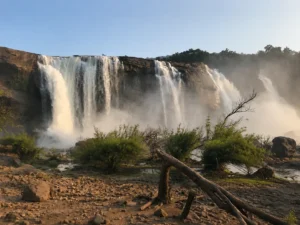
The atmosphere around Athirapilly often feels cinematic yet deeply natural at the same time. The sound of rushing water, drifting mist, and rainforest humidity create a landscape that feels entirely different from the plantation silence of Valparai earlier in the journey.
Together, the route between Valparai and Athirapilly reveals how dramatically the Western Ghats transform across relatively short distances through elevation, rainfall, and ecological variation.
Cuisine Along the Route
The culinary experiences along the Valparai–Athirapilly route also reflect the gradual transition between Tamil Nadu and Kerala.
Near Pollachi and Valparai, meals remain closely tied to Tamil Nadu’s agricultural landscapes. Coconut-based curries, freshly prepared dosas, simple rice meals, and strong South Indian tea continue appearing across roadside eateries and plantation settlements.
Tea stalls become an important part of the journey itself. Small mountain tea shops scattered across the hills provide brief pauses between long stretches of forest roads and reservoir landscapes. Hot tea served beneath cool mountain weather remains deeply connected to the travel experience across the Ghats.
As the roads descend toward Kerala, the cuisine gradually shifts toward stronger monsoon flavours and coastal influences. Kerala-style fish curry, banana chips, tapioca preparations, parotta, and spiced tea begin appearing more frequently in roadside restaurants and local eateries.

The changing food culture along the route quietly mirrors the larger environmental transition unfolding throughout the journey itself.
Best Time for the Journey
The route between Valparai and Athirapilly changes significantly across seasons, with monsoon and post-monsoon months often offering the most visually dramatic landscapes.
Between June and September, heavy rainfall transforms the forests, waterfalls, reservoirs, and tea estates into intensely green landscapes filled with mist, flowing streams, and low cloud cover. Athirapilly waterfalls become especially powerful during this period.
Post-monsoon months between October and January remain equally attractive for travellers seeking cooler weather, clearer views, and dense greenery without continuous rainfall.
Summer months are generally warmer, particularly around Pollachi and the lower elevations, though Valparai itself continues maintaining cooler temperatures compared to the surrounding plains.
Because mountain weather can change rapidly across the Western Ghats, slower driving and flexible travel schedules remain advisable, especially during periods of heavy rain and low visibility.
Why the Valparai–Athirapilly Route Feels Different
Several routes connect Kerala and Tamil Nadu through the Western Ghats, including the more widely travelled roads through Munnar, Palakkad, and Thenmala. Yet the Valparai–Athirapilly route offers a distinctly different atmosphere shaped by rainforest corridors, plantation landscapes, mountain reservoirs, and quieter forest roads with relatively limited urban interruption.
Many journeys across South India focus heavily on destinations. The Valparai–Athirapilly route feels different because the landscapes between the two regions gradually become the most memorable part of the experience itself.
There are long stretches where the roads pass through forests with almost no urban interruption. Weather changes continuously while mist, rain, sunlight, and shifting elevations reshape the atmosphere hour by hour.
For travellers seeking slow travel experiences, the Western Ghats offer something increasingly rare in modern tourism: uninterrupted immersion within landscape.
Rather than encouraging speed, the route rewards patience, observation, and gradual movement through one of India’s richest mountain ecosystems.
Final Thoughts
The journey from Valparai to Athirapilly remains one of South India’s most immersive mountain routes, not because of a single attraction, but because of the continuous transformation of landscape experienced along the way.
Tea-covered hills gradually give way to rainforest valleys while mountain reservoirs, forest roads, waterfalls, and monsoon-fed ecosystems create a route shaped entirely by the rhythms of the Western Ghats.
For travellers interested in slow journeys, ecological landscapes, and immersive travel experiences beyond conventional itineraries, the Valparai–Athirapilly route offers a rare opportunity to experience South India through movement, atmosphere, and landscape itself rather than simply through destinations alone.
Related Blogs
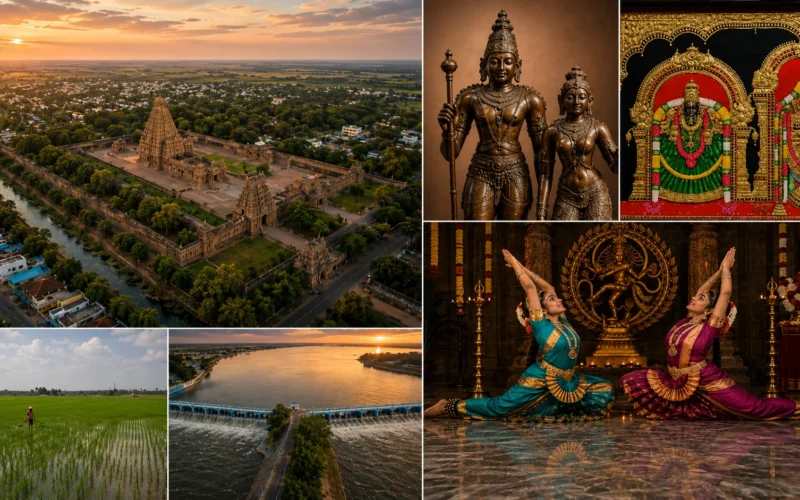
Thanjavur Beyond Brihadeeswara Temple: Exploring the Cultural Heart of the Cauvery Delta
More Than a Temple City For many travellers, Thanjavur begins and ends with Brihadeeswara Temple. The soaring vimana, vast courtyards,…
Read More ›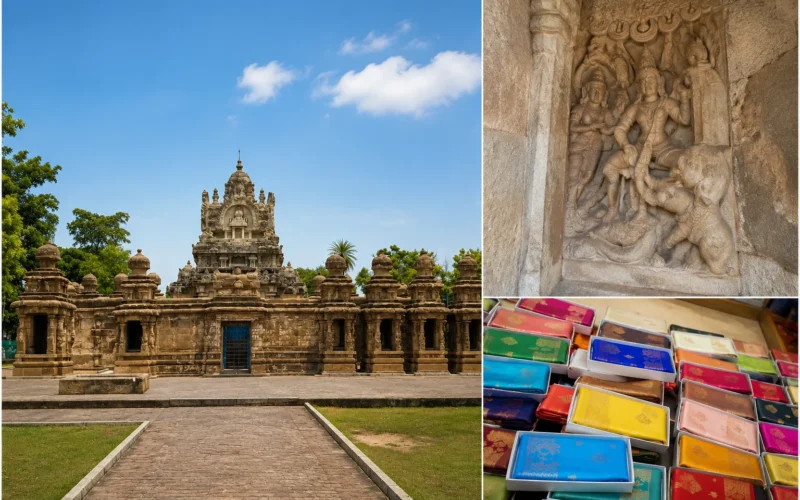
Kanchipuram: Sacred Architecture and Living Traditions
More Than the City of a Thousand Temples Kanchipuram is often introduced as the “City of a Thousand Temples.” While…
Read More ›