
Kumbalangi Village: Kerala’s Quiet Backwater Escape Near Kochi
Introduction to Kumbalangi
While many travellers associate Kerala’s backwaters with large houseboats and busy canal routes, Kumbalangi offers a quieter and more grounded experience shaped by village life, fishing culture, and slower movement through the waterways.
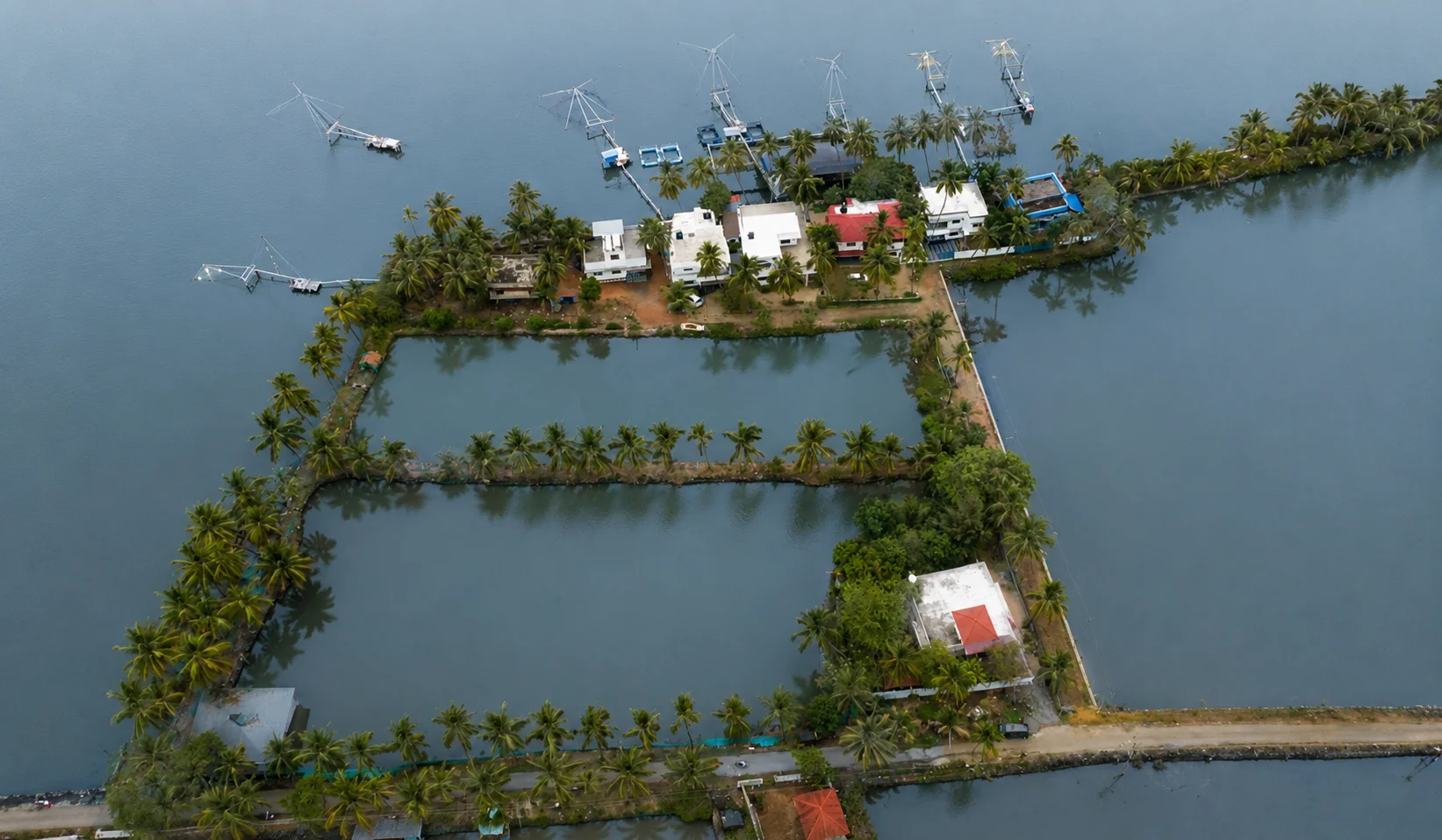
Located on the outskirts of Kochi, Kumbalangi is often described as one of Kerala’s most authentic backwater villages. Surrounded by interconnected canals, mangroves, fishing nets, and narrow village roads, the region reveals a side of Kerala that feels far removed from commercial tourism circuits.
Unlike destinations built primarily around sightseeing, Kumbalangi is best experienced gradually through canoe rides, local interactions, seafood traditions, and the everyday rhythm of life along the water.
For travellers following a broader 10 Days Kerala Itinerary through Kerala’s backwaters, hill stations, and coastal regions, Kumbalangi offers a quieter extension into the state’s ecological and cultural landscapes.
A Different Side of Kerala’s Backwaters
Kumbalangi differs significantly from destinations such as Alleppey or Kumarakom. Rather than wide lake systems or busy houseboat channels, the village is defined by narrow waterways, traditional fishing zones, and smaller community settlements integrated directly into the backwater ecosystem.
The atmosphere here is slower and more intimate. Canoes move quietly through the canals, fishermen work within the shallow waters, and coconut groves stretch along the edges of the village roads.
Kumbalangi also became widely recognised as India’s first model tourism village, focusing on community-based tourism and local participation rather than large-scale resort development. This has helped preserve much of the village’s traditional character and environmental identity.
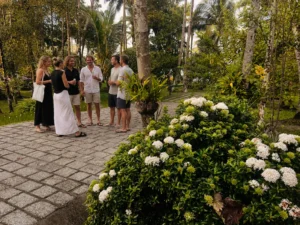
For travellers seeking cultural immersion over structured sightseeing, Kumbalangi offers a more organic experience of Kerala’s backwaters.
The Backwater Experience in Kumbalangi
One of the defining experiences in Kumbalangi is exploring the canals by canoe or small country boat. Unlike the larger houseboats seen across Kerala’s commercial backwater routes, these smaller vessels allow travellers to move deeper into the quieter sections of the waterways.
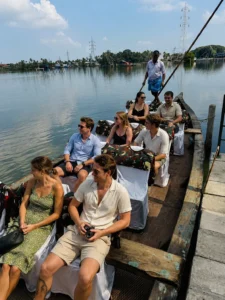
The experience feels less like a cruise and more like entering the daily landscape of the village itself.
As the boat moves through the canals, travellers pass:
- Chinese fishing nets
- Mangrove stretches
- Small fishing homes
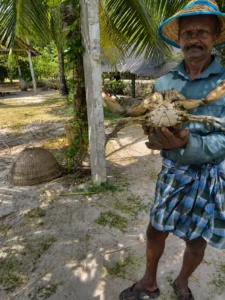
- Crab farms
- Coconut-lined waterways
- Narrow bridges and village paths
The stillness of the canals becomes one of the most memorable aspects of the journey. Early mornings are particularly atmospheric, with soft mist hovering above the water and reflections of coconut trees moving gently across the surface.
Rather than focusing on luxury alone, Kumbalangi’s appeal lies in simplicity, environmental immersion, and proximity to local life.
Traditional Fishing Culture & Village Life
Fishing continues to shape much of Kumbalangi’s identity and economy. Throughout the village, traditional fishing methods remain visible across the waterways, creating a strong connection between the community and the surrounding backwater environment.
Travellers may observe:
- Chinese fishing nets operated along the canals
- Traditional stake-net fishing
- Crab farming zones
- Clam collection
- Small wooden fishing boats navigating through the waterways
The village atmosphere also creates opportunities to understand Kerala’s coastal food culture more closely. Seafood remains central to local cuisine, and many small homestays and village kitchens prepare freshly caught fish, prawns, crab, and shellfish using traditional Kerala cooking styles.
Unlike commercial tourism environments, daily life in Kumbalangi remains visibly active around the waterways, creating a stronger sense of place and authenticity.
Mangroves, Canoes & Ecological Landscapes
Beyond village life, Kumbalangi also represents an important ecological environment within Kerala’s coastal region. Mangrove systems surrounding the canals help stabilise the shoreline, support biodiversity, and create habitats for fish and birdlife.
Canoe rides through these quieter mangrove stretches often become one of the most peaceful experiences within the village.
The landscape changes constantly through the route:
- open backwater sections,
- shaded canal corridors,
- fishing zones,
- narrow village waterways,
- and calm pockets surrounded by dense vegetation.
Birdlife is also common around the wetlands, especially during quieter morning hours.
For photographers and slow travellers, Kumbalangi offers a softer and less crowded visual environment compared to Kerala’s larger tourism hubs.
Kumbalangi at Sunrise & Sunset
The village atmosphere changes significantly during sunrise and sunset.
Early mornings in Kumbalangi are often defined by:
- low mist above the canals,
- fishermen preparing their nets,
- soft golden light across the coconut groves,
- and near-silent waterways before village activity increases.
Evenings create a different mood as the backwaters reflect the fading light and village homes gradually illuminate along the canal edges.
Unlike heavily commercial sunset points, Kumbalangi’s beauty lies in its stillness and simplicity rather than dramatic tourist infrastructure.
For travellers interested in slow photography, reflective landscapes, and quieter environmental experiences, these transition hours often become the most memorable part of visiting the village.
Responsible Tourism & Community-Based Experiences
Kumbalangi is frequently referenced within discussions around responsible tourism in Kerala because much of the visitor experience remains connected to local livelihoods and smaller-scale tourism models.
Many tourism activities here directly involve local communities through:
- canoe operations,
- fishing experiences,
- homestays,
- village meals,
- cultural demonstrations,
- and small-scale guiding services.
This creates a more balanced tourism environment where visitors engage directly with the community rather than remaining isolated within resort spaces.
The slower pace of tourism in Kumbalangi also helps preserve much of the village’s ecological character, especially when compared to more heavily commercialised backwater routes.
For travellers seeking environmentally conscious and culturally grounded experiences, Kumbalangi represents one of Kerala’s more meaningful slow-travel destinations.
Places to Explore Around Kumbalangi
Because of its proximity to Kochi, Kumbalangi can easily be combined with several nearby destinations across central Kerala. Beyond the village canals and fishing landscapes, the surrounding region also reveals quieter coastal stretches, island communities, and lesser-known backwater environments that remain largely untouched by mainstream tourism.
Fort Kochi
Known for colonial architecture, heritage streets, cafés, and the historic Chinese fishing nets along the coast, Fort Kochi offers a slower cultural atmosphere shaped by centuries of maritime trade and layered colonial history.
Mattancherry
Located close to Fort Kochi, Mattancherry is known for its spice trading heritage, old merchant warehouses, traditional streets, and landmarks such as the Paradesi Synagogue and Mattancherry Palace.
Marine Drive Kochi
Marine Drive introduces a more urban waterfront setting, offering views of Kochi’s harbour activity, ferries, and city skyline along the backwater edge.
Cherai Beach
Situated north of Kochi, Cherai Beach provides a quieter coastal escape with long stretches of shoreline, fishing activity, and a more relaxed atmosphere compared to busier urban beaches.
Puthenthodu Beach
Near Kannamaly, Puthenthodu Beach remains one of the quieter coastal stretches near Kumbalangi. The beach is ideal for slower evening walks, soft sunset views, and experiencing Kerala’s coastline away from heavier tourist movement.
Kavaru: Kerala’s Bioluminescent Backwaters
During certain seasonal conditions, parts of the backwaters near Kumbalangi and Chellanam occasionally display the natural phenomenon locally known as Kavaru, where microscopic marine organisms create a soft neon-blue glow across the water at night.
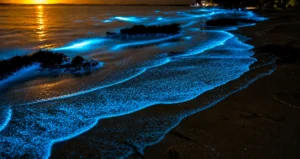
While highly dependent on environmental conditions, the phenomenon offers one of Kerala’s lesser-known natural experiences when visible.
Kadamakudy Islands
A short drive from Kochi leads to the quieter island landscapes of Kadamakudy, where narrow roads, fishing villages, and expansive backwater views create one of the region’s most peaceful rural environments.
Early mornings in Kadamakudy are especially atmospheric, with mist rising across the water and fishermen beginning their daily routines along the islands.
Cheriyakadavu Beach
Further south toward Chellanam, Cheriyakadavu Beach offers a calmer and less commercial coastal atmosphere shaped by open shoreline views, fishing activity, and quieter seaside landscapes.
These nearby destinations and hidden landscapes allow travellers to combine Kerala’s coastal heritage, backwater ecosystems, village life, and slower environmental experiences within a single journey around Kumbalangi.
Best Time to Visit Kumbalangi
The best period to visit Kumbalangi is generally between October and March, when temperatures remain more comfortable and the backwater environment becomes especially pleasant for canoe rides and village exploration.
During this season:
- humidity is lower,
- skies remain clearer,
- and mornings are often cooler and more atmospheric.
The monsoon season between June and September also transforms the landscape into a lush green environment, although heavier rainfall may affect outdoor activities and canal movement.
Travellers focused on photography and slower environmental experiences often prefer the post-monsoon period when the vegetation appears especially vibrant.
How to Include Kumbalangi in a Kerala Itinerary
Kumbalangi works best as a slow-paced extension to a broader Kerala itinerary rather than a standalone destination. Many travellers combine their stay here with the colonial charm of Fort Kochi, the iconic houseboat experiences of Alleppey, the serene lakefront landscapes of Kumarakom, the mist-covered hills of Munnar, or the wildlife and spice plantations of Thekkady and Periyar Tiger Reserve regions. Together, these destinations create a well-rounded Kerala journey that blends backwaters, culture, nature, and village life at a more relaxed pace.
Travellers continuing toward Kerala’s highlands can also explore our detailed Munnar travel guide covering scenic mountain routes, tea plantations, waterfalls, and slower Western Ghats experiences.
Because the village is located close to Kochi International Airport and Fort Kochi, it can be experienced comfortably as:
- a day visit,
- an overnight stay,
- or part of a slower coastal Kerala route.
For travellers seeking a quieter introduction to Kerala’s waterways before moving toward the larger backwater regions, Kumbalangi offers a more grounded and intimate starting point.
Closing
Kumbalangi reveals a quieter side of Kerala’s backwaters where village life, fishing culture, mangrove ecosystems, and slower travel experiences remain closely connected to the landscape itself.
Rather than focusing on large-scale tourism or fast-paced sightseeing, the village invites travellers to experience Kerala gradually through its waterways, local communities, and environmental rhythms.
For those looking beyond the more commercial backwater routes, Kumbalangi offers one of the most authentic and immersive village experiences near Kochi.
Related Blogs
Thanjavur Beyond Brihadeeswara Temple: Exploring the Cultural Heart of the Cauvery Delta
More Than a Temple City For many travellers, Thanjavur begins and ends with Brihadeeswara Temple. The soaring vimana, vast courtyards,…
Read More ›
Kanchipuram: Sacred Architecture and Living Traditions
More Than the City of a Thousand Temples Kanchipuram is often introduced as the “City of a Thousand Temples.” While…
Read More ›