
South India for the Culturally Serious Traveller – Where to Begin
Who this guide is for
There is a certain kind of traveller for whom the usual India journey feels incomplete. You may have seen Rajasthan’s forts, walked through the Taj Mahal at sunrise, or even spent time in Kerala and returned with the sense that something deeper remains. This guide is written for that traveller.
South India cultural travel is not an alternative circuit or a quieter extension of the north. For many, it is the more appropriate starting point, especially for those interested not in monuments alone, but in how culture continues to function in everyday life.
A culturally serious traveller is not looking to collect destinations. The interest lies elsewhere: why a temple exists in a particular form, how a landscape shapes a way of living, how trade routes leave traces that endure for centuries. It is an interest in systems rather than sights.
South India rewards this kind of attention precisely because it does not separate past from present. Cultural forms here are not preserved, they are practiced. What appears ancient is often simply continuous.
Why South India holds more cultural depth than its reputation suggests
Most travel narratives around India are shaped by the gravitational pull of the north. The Mughal monuments, Rajasthan’s desert kingdoms, and the Golden Triangle form a compelling and visually immediate introduction. But they represent only one layer of a much older and more complex civilisational structure.
At Lux Crafter, we believe that true depth is only found through India, Interpreted–a lens that moves beyond the visual surface to reveal the “living logic” of a region.
For the repeat India traveller, South India cultural travel reveals something different, not just in content, but in continuity.
South India for repeat travellers offers a glimpse into the Dravidian kingdoms such as the Cholas, Pallavas, and Pandyas, which developed systems that were not repeatedly interrupted by large-scale political or cultural resets. Instead, they evolved in place.
This continuity is visible in ways that are easy to overlook without context. Temple towns in Tamil Nadu are not organised randomly; they are structured along sacred geographies, often aligned with river systems such as the Cauvery.
Ritual calendars still govern the rhythm of daily life in many of these towns. Craft traditions such as bronze casting, textile weaving and classical performance are not revived practices but inherited ones.
Equally important is recognising that South India is not a unified destination. It is a peninsula of distinct cultural territories.
Tamil Nadu, Kerala, Karnataka, and Goa each developed different relationships between landscape, trade, religion, and political power.
A serious cultural tour South India does not attempt to assemble highlights across all four. It chooses one or two and allows the internal logic of that region to become visible.
The four cultural territories: what each one offers
Tamil Nadu – Temple civilisations and continuity
A Tamil Nadu cultural journey is best understood not through individual sites but through systems. The Dravidian temple is not primarily a monument; it is a functioning cosmological structure.
Its architecture encodes philosophical ideas, while its rituals maintain a rhythm that has continued for centuries.
In the Cauvery delta, towns such as Kumbakonam, Darasuram, and Thanjavur form dense networks of temples connected historically through patronage, pilgrimage routes, and royal Chola influence.
The Brihadeeswarar Temple in Thanjavur is often celebrated for its monumental scale, while the Airavatesvara Temple at Darasuram demonstrates the extraordinary refinement of later Chola craftsmanship through its intricate stone carvings, musical steps, sculpted pillars, and remarkable architectural detail. Together, these temples reveal different dimensions of Chola artistic and religious achievement.
The Chola bronzes, frequently displayed in museums elsewhere, remain part of living temple traditions across the region. During processions, they move through streets designed around ritual movement and community participation.
Bharatanatyam, now performed on global stages, originated within these sacred environments as a form of embodied devotion. In Tamil Nadu, the past has not been separated from the present; it has been carried forward through living rituals, artistic traditions, and active temple culture.
To understand how these interconnected temple networks are actually experienced on the ground, explore the Chola temple circuit in Tamil Nadu and what it takes to do it properly
Kerala – Water-shaped civilisations
Kerala cultural heritage travel begins with understanding how geography structures culture. A narrow strip between the Western Ghats and the Arabian Sea, Kerala developed as a region defined by water routes such as backwaters, rivers, and coastal trade.
This geography enabled sustained interaction with traders from Arabia, China, and later Europe. These exchanges did not overwrite local culture; they layered onto it.
In Fort Kochi, one can see this in the built environment such as synagogues, churches, and mosques within close proximity, each tied to historical communities that still exist.
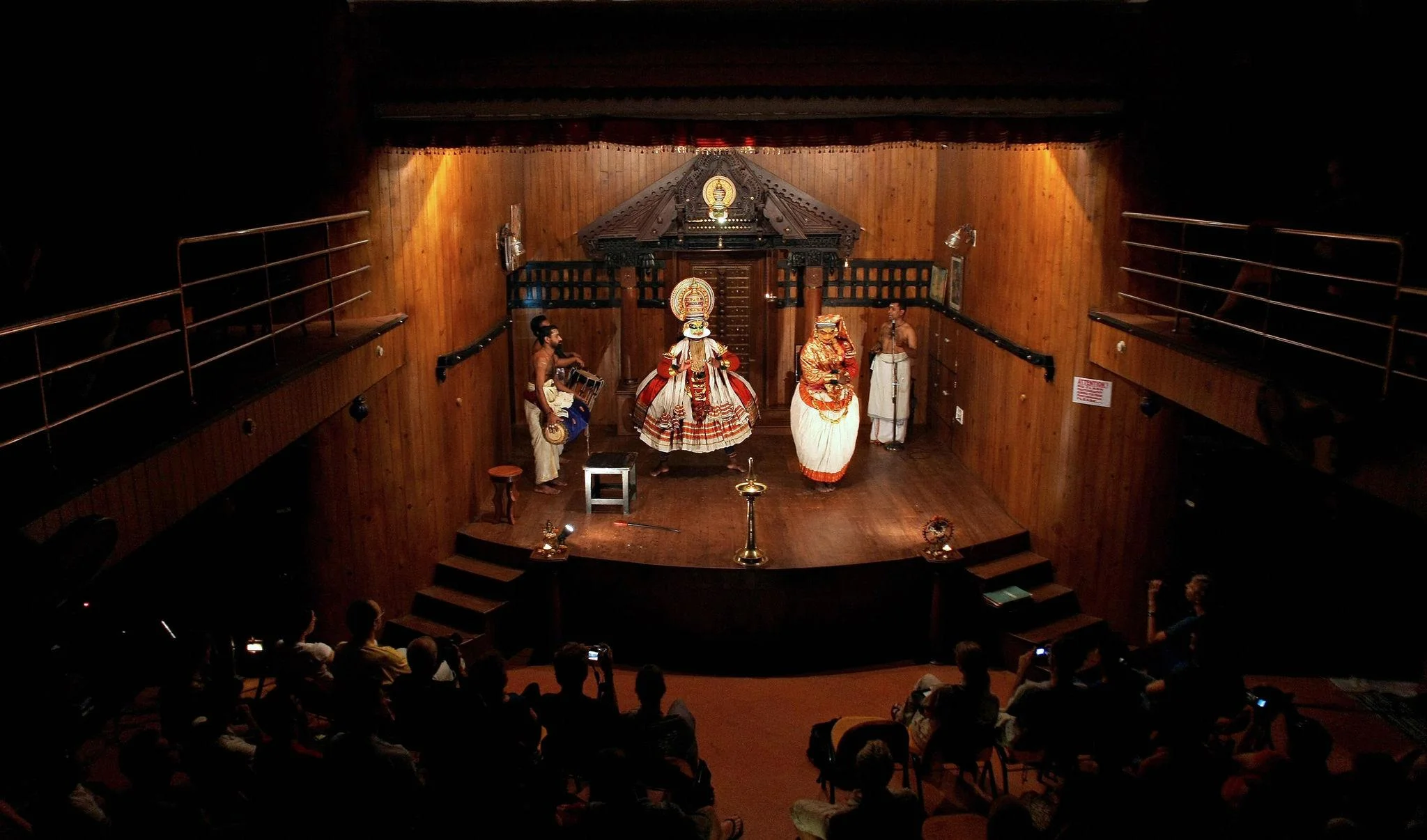
In northern Kerala, Mappila music reflects centuries of contact between Arab traders and local populations. In central Kerala, temple arts such as Koodiyattam and Kathakali are performed within highly structured traditions that require years of training.
Ayurveda, often encountered today as a wellness offering, originated here as a codified medical system transmitted through families and institutions.
The backwaters, often reduced to a visual experience, are in fact a living transport network that continues to support local economies. Kerala reveals itself most clearly when seen not as a destination, but as an interconnected system shaped by water.
Karnataka – Imperial landscapes and quiet depth
Karnataka history travel requires a completely different pace. It does not present itself immediately, and much of its significance lies beneath the surface.
Hampi, the former capital of the Vijayanagara Empire, is one of the largest archaeological landscapes in the world. Spread across a vast terrain of granite formations, it represents a civilisation that once functioned as a major centre of power, trade, and culture in medieval India. Its scale is difficult to grasp without time.
Elsewhere, the Hoysala temples at Belur and Halebidu offer a contrasting experience. Their surfaces are covered in detailed carvings that reward close observation rather than distant viewing. These are not monumental in scale, but in intricacy.
In the Western Ghats, regions such as Coorg introduce another dimension such as coffee estates, forest landscapes, and a slower rhythm of life. Karnataka is a place where different layers-imperial, artistic, ecological-coexist without being packaged for easy consumption. It rewards travellers who are willing to move without constant guidance.
Goa – Maritime exchange and layered identity
Goa is often approached through a narrow lens. For a culturally serious traveller, it offers insight into how sustained cultural exchange shapes identity over time.
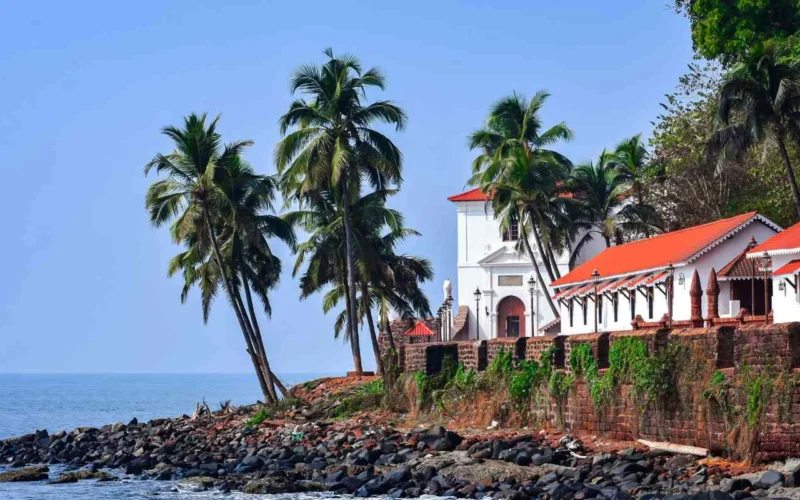
Four centuries of Portuguese presence left visible and invisible traces. In Old Goa, churches built in the sixteenth century continue to function as active religious centres. The architecture reflects European influence, but its usage is entirely local.
Goan music traditions such as mando, dulpod, and forms influenced by fado emerged from this cultural intersection. Cuisine, language, and social structures all carry elements of this layered history.
Beyond its immediate geography, Goa connects to the broader Konkan coast, a region historically linked through maritime trade routes.
This coastal network played a role in connecting South India’s spice trade with inland markets. Understanding Goa in this context shifts it from a destination to a node within a larger system of exchange.
For a closer look at how this coastal legacy translates into contemporary spaces, explore why Goa’s maritime estates make the right backdrop for a private event.
Where to begin: the entry point question
The most common mistake in South India travel is to treat the region as a checklist. Kerala, Tamil Nadu, and Karnataka combined into a short itinerary may appear efficient, but it fragments the experience.
A more effective approach is to commit to one region and allow it to unfold. Two weeks in Tamil Nadu, moving through temple towns and returning to key sites at different times of day, allows patterns to emerge. Similarly, a focused journey through Kerala, beginning in Kochi and extending into the backwaters and northern coast creates a sense of continuity.
The starting point is not geography, but intent. What kind of cultural engagement are you seeking? Direct participation-learning, observing rituals, engaging with practitioners or contextual understanding through guided interpretation?
In practice, this often means allowing for repetition rather than constant movement. Returning to the same temple at different times of day, or spending multiple days within a single region, changes the nature of what is experienced. Patterns begin to emerge such as ritual rhythms, local interactions and shifts in atmosphere, that are not visible in a linear itinerary. South India, more than most regions, reveals itself through familiarity rather than novelty.
This distinction shapes everything that follows. A well-designed journey does not begin with destinations; it begins with this question. This is the framework through which Lux Crafter approaches bespoke journeys through South India.
Closing
South India has often been framed in travel narratives as a quieter, softer alternative to the north. That framing does not hold under closer attention; the region is not quieter, but rather more continuous and, in many ways, more culturally complex.
For the traveller willing to engage with that complexity, South India offers a civilizational depth that does not resolve in a single visit. The quality of the experience depends entirely on where you begin, the pacing of your movement, and how deeply you are able to access the living systems that lie beneath the surface. The right entry point and expert interpretation make the difference between a mere impression and a profound understanding.
If you are planning a South India private tour and want it designed from the ground up rather than assembled from a template, see how Lux Crafter designs bespoke journeys through South India
Related Blogs
Why Goa’s Maritime Estates Make the Right Backdrop for a Private Event
A private event in Goa is often reduced to a familiar format, music by the shore, a sunset gathering, and…
Read More ›
South India as an Incentive Destination: The Case Beyond the Obvious Choices
The Incentive Paradox The most effective incentives are not defined by where one stays, but by what one begins to…
Read More ›