
Why Goa’s Maritime Estates Make the Right Backdrop for a Private Event
A private event in Goa is often reduced to a familiar format, music by the shore, a sunset gathering, and a sequence of activities loosely tied together by time. The coastline becomes a backdrop, interchangeable with any other destination that offers sand and sea. But this interpretation overlooks the deeper structure of the region.
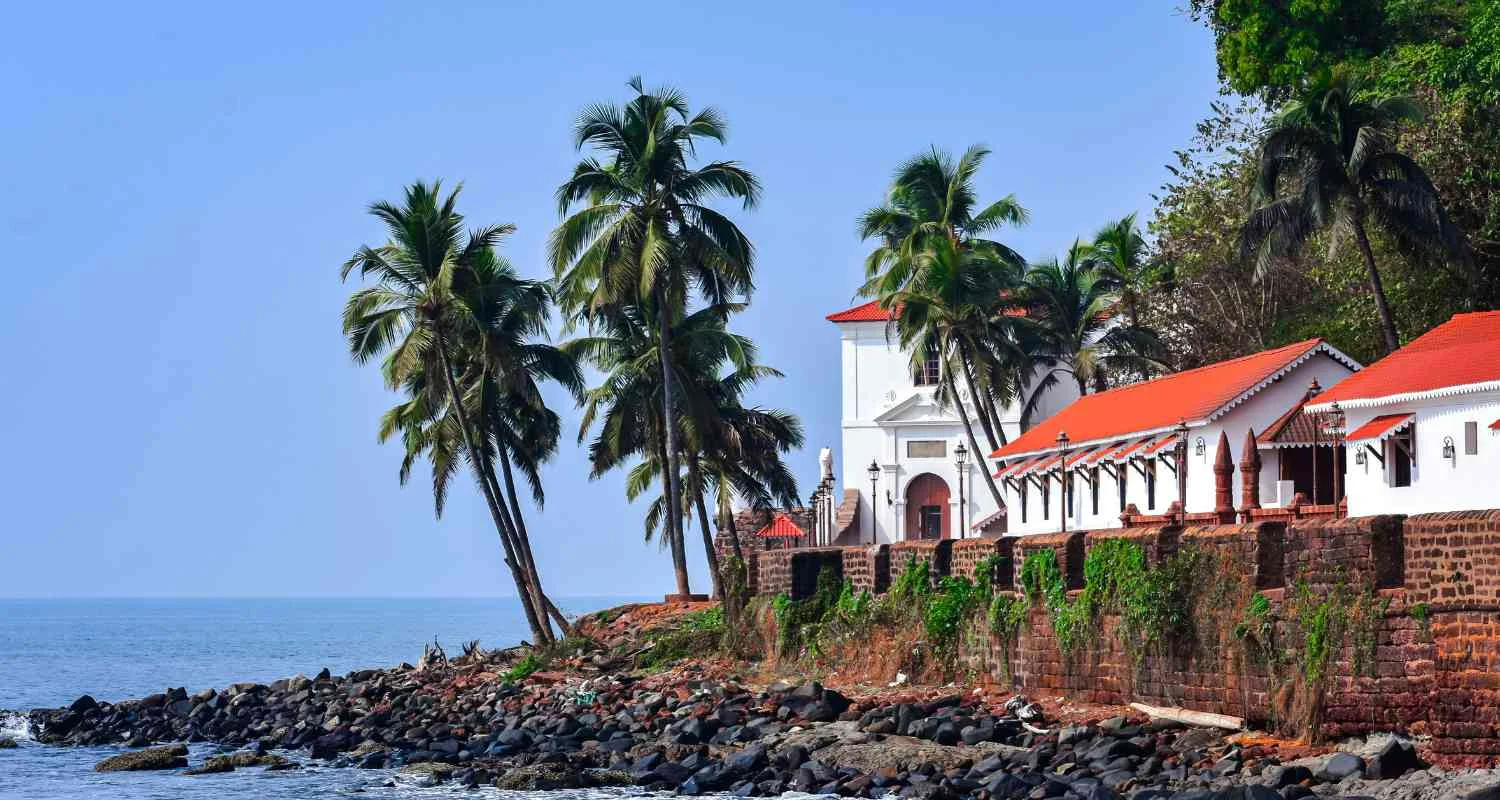
The idea of Goa maritime estates private events begins from a different premise. It starts with the understanding that Goa’s coastline was never incidental. It was designed, defended, and navigated with precision over centuries. The estates that stand along this edge are not passive settings; they are continuations of a maritime system that once connected trade, culture, and movement across the Arabian Sea.
To approach an event within this framework is to shift from surface to structure. The focus moves away from assembling moments toward working with a place that already carries meaning. What appears as a quiet coastal estate today was once part of a larger network, ports, forts, navigation points, and settlements that defined Goa’s identity.
Hosting an event here is not about adding significance. It is about recognizing what already exists.
The Architectural Root
The architectural language of Goa’s coastline is inseparable from its maritime function. Structures were not built for visual appeal but for purpose, defence, observation, storage, and habitation within a coastal climate.
Fort Aguada, constructed in 1612, remains one of the clearest expressions of this intent. Positioned strategically to guard against Dutch and Maratha incursions, it served as both a defensive stronghold and a navigational reference. Its freshwater spring was essential for replenishing passing ships, while its lighthouse acted as a visual guide along the Arabian Sea.
This relationship between structure and sea continues to influence the spatial logic of Goa’s estates. Elevated positions overlooking the water are not aesthetic choices; they provide vantage points that were once critical for surveillance and orientation. Thick laterite walls regulate internal temperature, while narrow openings control light and airflow in a humid coastal environment.
Within many private estates, this logic is preserved and extended. Corridors are designed to frame long perspectives, drawing the eye outward toward the horizon. Courtyards create transitional zones between interior and exterior, allowing movement to unfold gradually rather than abruptly.
The influence of Indo-Portuguese architecture is evident in these details. Tiled roofs arranged with geometric precision, arched verandas that soften the transition between built and open space, and façades that balance proportion and colour all contribute to a cohesive spatial experience. These elements are not decorative, they are responses to climate, material availability, and cultural exchange.
Modern interpretations, including works inspired by architects like Charles Correa, do not replicate these forms directly. Instead, they reinterpret them, retaining the principles of openness, layering, and orientation while adapting to contemporary use. The result is a set of spaces that feel both rooted and current.
When a private event takes place within such an environment, the architecture shapes interaction. Movement slows, attention shifts, and the space itself begins to guide how people gather and engage.
The Narrative of the Goan Coastline
Goa’s coastline is not a single visual experience but a sequence of transitions. Each segment of the landscape contributes to a broader narrative that connects inland settlements to the open sea.
In areas such as the Fontainhas, UNESCO recognized historic heritage Latin Quarter, the Indo-Portuguese influence is visible in its most concentrated form. Narrow streets wind through tightly arranged houses, each façade marked by colour, proportion, and detail. Balconies extend outward, creating a dialogue between private and public space. Tiled roofs follow patterns that reflect both aesthetic sensibility and structural necessity.
This environment operates as a living system. It is not preserved in isolation but continues to function as a residential and cultural space. Walking through it is not an act of observation but of participation, an engagement with a form of urban design that has evolved while maintaining continuity.
As the landscape moves toward the coast, the density of built form begins to dissolve. The horizon opens, and the rhythm shifts. The sound of waves introduces a constant, understated presence. Light reflects differently across the water, creating variations that change throughout the day.
This transition from enclosed streets to open coastline is not abrupt. It unfolds gradually, allowing the observer to move between scales, from the intimacy of a narrow lane to the expansiveness of the sea.
For a private event, this layered geography offers more than visual appeal. It provides a structure within which the experience can unfold. The inland segments establish context and grounding, while the coastal edge introduces openness and reflection.
The coastline becomes more than a setting, it becomes a narrative framework.
Beyond its visual rhythm, the Goan coastline operates through a subtle coordination of elements that are often overlooked. The position of structures in relation to prevailing winds, the orientation of openings toward shifting light, and the gradual transition between built and open environments create a continuity that is both functional and experiential.
In spaces shaped by Indo-Portuguese architecture, such as the settlements, this continuity is evident in how streets narrow and expand, how balconies project outward to capture airflow, and how materials respond to humidity and salt exposure. These are not isolated design decisions, they form a system that allows the environment to remain active within the architecture.
As one moves closer to the coast, this system becomes more expansive. The horizon begins to influence perception, creating a sense of scale that is difficult to replicate in enclosed settings. The coastline does not impose itself; it reveals itself gradually, allowing the observer to adjust to its presence.
For a private event, this layered progression becomes a structural advantage. It allows the experience to unfold in phases, where each spatial transition introduces a new dimension rather than repeating the same visual language.
Access Beyond the Beach
A surface-level engagement with Goa often remains confined to the shoreline. However, the region’s maritime identity extends far beyond what is immediately visible. In many cases, access is treated as logistics. However, when aligned with the coastline’s historical routes, it becomes part of the experience itself rather than a transition between points.
Access plays a defining role in shaping how an event is experienced. Approaching a coastal estate by land offers one perspective; approaching it by water offers another entirely. Private yachting and sailing experiences allow movement along routes that mirror historical navigation paths. The coastline is no longer observed from a fixed point but understood as a continuous system.
From the water, estates reveal their orientation and scale. Structures appear as part of a larger composition, integrated with the shoreline rather than isolated from it. This perspective alters perception, grounding the experience in the logic of maritime movement.
On land, Goa maritime heritage properties provide environments shaped by material continuity. Stone, wood, and metal elements carry signs of use and time. Maritime artefacts, anchors, navigational tools, and structural remnants, are not additions but integral components of these spaces.
These details introduce a tactile dimension. The experience becomes anchored in physical reality rather than abstraction. Guests are not simply present within a space; they engage with it through texture, proportion, and material presence.
Movement can extend further through curated transitions into heritage districts and cultural zones. These are not structured tours but carefully considered progressions between spaces that reveal different aspects of Goa’s identity.
Each layer of access adds depth. The event evolves from a single location into a sequence of interconnected experiences.
Why This Requires Design, Not Assembly
The distinction between assembling an event and designing one lies in intent. Assembly focuses on coordination, ensuring that each element occurs at the right time. Design focuses on alignment, ensuring that each element belongs to the place in which it occurs.
Goa’s maritime estates cannot be approached as neutral venues. Their significance lies in the relationships they embody, between land and sea, structure and climate, history and present use. To work within this context requires more than logistical planning.
An assembled itinerary may ensure efficiency. Guests arrive, activities proceed, and the event concludes without disruption. However, the experience remains external to the setting. The environment functions as a backdrop rather than a participant.
A designed experience operates differently. It begins with the space itself, its orientation, its materiality and its relationship to the coastline. Each subsequent element is introduced in response to this foundation.
The result is not a sequence of activities but a coherent progression. Interactions occur within a framework that has already been established by the environment. The need for external stimulation diminishes, as the space itself provides continuity and context.
This approach does not rely on scale or complexity. It relies on precision, on understanding how each component contributes to the overall experience.
Closing
To host an event within Goa’s maritime estates is to engage with a coastline shaped by centuries of navigation, defence, and cultural exchange. It begins with a gathering, but gradually reveals a deeper connection to the sea, to architecture, and to the systems that have defined this region over time.
What remains is not simply the memory of an event, but an awareness of place, one that extends beyond the moment and continues to resonate long after the experience concludes.
The difference is often subtle at first, but it defines how the experience is remembered, whether as a well-executed gathering, or as something that carried a sense of place long after it ended.
Such experiences are rarely incidental. They are shaped through a considered understanding of geography, architecture, and cultural context—an approach that continues to inform how bespoke journeys across India are conceived and experienced.
Related Blogs
South India as an Incentive Destination: The Case Beyond the Obvious Choices
The Incentive Paradox The most effective incentives are not defined by where one stays, but by what one begins to…
Read More ›
Beyond Performance: Designing a Classical Arts Itinerary Through Tamil Nadu
The Static vs. The Living A dancer’s gesture does not begin on stage. It begins in stone. Most itineraries approach…
Read More ›