
Kerala Temple Elephants: Ritual, Heritage & Changing Conversations
Elephants Within Kerala’s Sacred Festival Landscapes
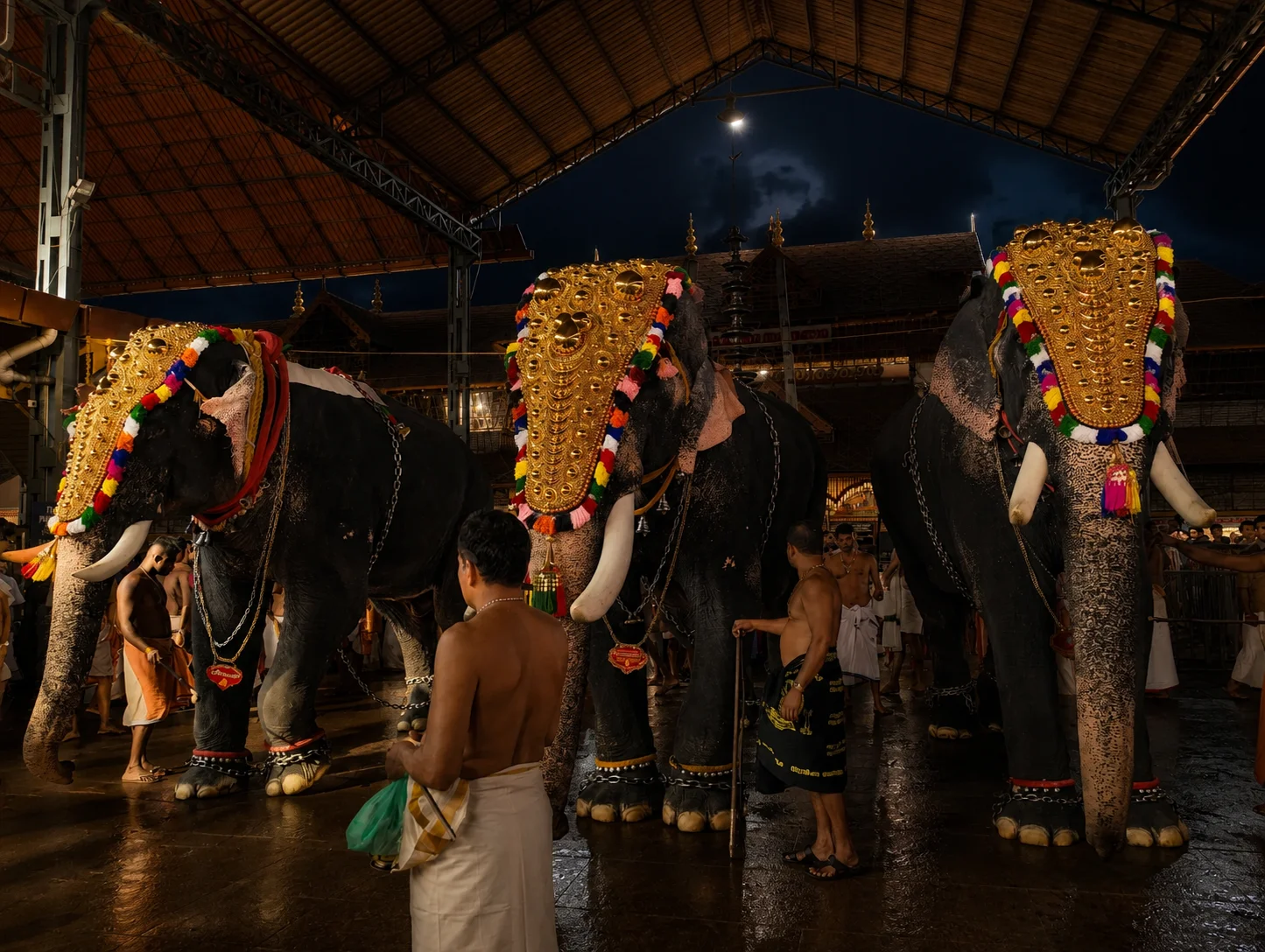
As percussion rhythms intensify beneath temple illumination and ceremonial processions begin moving through crowded courtyards, elephants emerge as one of the most visually recognisable elements within Kerala’s ritual festival landscapes.
For generations, temple festivals across Kerala have brought together sound, movement, devotion, craftsmanship, procession, and community participation into deeply layered cultural environments where elephants became closely associated with ceremonial presence and sacred atmosphere.
Yet beyond their visual prominence, Kerala’s temple elephants also exist within increasingly complex modern conversations surrounding welfare, ethics, preservation, and the future of living cultural traditions in a rapidly changing world.
Understanding their place within Kerala’s festival culture therefore requires moving beyond spectacle alone toward the deeper ritual, historical, and social ecosystems in which these traditions continue existing today.
Kerala’s Temple Festivals as Living Ritual Landscapes
Temple festivals in Kerala are rarely experienced as isolated religious events alone. They function instead as living ritual landscapes where percussion, movement, procession, devotion, craftsmanship, and collective participation merge into immersive cultural environments that continue shaping social life across the state.
As festival days approach, temple surroundings gradually begin transforming. Percussion rehearsals echo through village roads, ceremonial structures are assembled within temple courtyards, artisans prepare decorative elements, and communities gather around rituals that often continue traditions preserved across generations.
Unlike entertainment events built around spectatorship alone, Kerala’s temple festivals remain deeply participatory. Families, musicians, artisans, temple authorities, devotees, and performers all contribute to creating ceremonial atmospheres that unfold slowly across days and nights.
Within these ritual environments, elephants became closely associated with ceremonial movement and visual rhythm. Their presence historically evolved alongside processions, percussion orchestras, and temple rituals, eventually becoming one of the defining visual elements of many festivals across central Kerala.
Yet elephants represent only one component within a much larger ceremonial ecosystem. Temple festivals in Kerala are equally shaped by sacred percussion traditions, oil-lamp illumination, processional choreography, ritual performance arts, seasonal cycles, and community continuity that together create the emotional atmosphere for which these celebrations are known.
Through ritual landscapes shaped by sound, movement, procession, and collective participation, Kerala continues preserving some of South India’s most immersive ceremonial traditions.
How Elephants Became Part of Kerala’s Ceremonial Traditions
The relationship between elephants and Kerala’s temple festivals evolved gradually over centuries rather than emerging as part of a single fixed religious structure.
Historically, elephants in India held associations with royalty, prestige, warfare, labour, and ceremonial grandeur.
Ancient rulers and regional kingdoms often maintained elephants as symbols of authority and power, while temples occasionally used them for transportation and practical purposes connected to temple administration.
However, the large-scale ceremonial role associated with Kerala’s modern temple festivals appears to have evolved more prominently between the eighteenth and nineteenth centuries.
Over time, elephants became increasingly integrated into processional traditions, temple ceremonies, and ritual movement within festival environments.
One of the most important ritual contexts associated with temple elephants in Kerala is the seeveli procession.
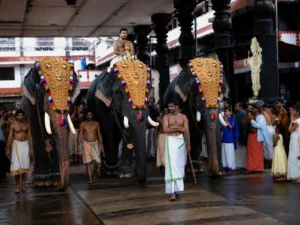
During this daily temple ritual, the deity is ceremonially carried around the temple precincts while offerings are symbolically made to surrounding natural and spiritual forces.
Traditionally, the deity may be placed upon a vahana or ceremonial carrier, which historically could include human carriers, animals, palanquins, or chariots.
In Kerala, elephants gradually became associated with this role because of their visual presence, height, and ceremonial grandeur.
Positioning the deity atop an elephant elevated visibility during processions while also intensifying the visual rhythm of temple movement through illuminated courtyards and crowded ritual spaces.
Over generations, these ceremonial associations deepened. Elephants eventually became embedded within the visual identity of many temple festivals, especially in central Kerala where processional traditions grew increasingly elaborate.
The relationship between elephants and festivals therefore emerged not simply through symbolism alone, but through evolving ritual aesthetics shaped by movement, atmosphere, and collective cultural memory.
Percussion, Procession & Festival Atmosphere
To understand the role of elephants within Kerala’s festivals, it is equally important to understand the larger ceremonial atmosphere surrounding them.
Kerala’s temple festivals are deeply multisensory experiences. Percussion rhythms build gradually through temple grounds, orchestras intensify across processions, lamps illuminate courtyards beneath night skies, and ceremonial movement unfolds through highly coordinated visual and musical traditions.
As decorated elephants align before temple entrances or move slowly through processional routes, sacred percussion becomes central to shaping the emotional energy of the festival itself.
Traditional orchestras such as Panchavadyam and Chenda Melam remain among the most powerful components of Kerala’s festival environments.
Rather than functioning merely as background music, percussion often creates the ceremonial pulse around which processions, ritual movement, and collective anticipation evolve.
Rhythms intensify gradually, drawing large crowds into shared moments of emotional build-up where sound, movement, and visual atmosphere begin functioning together as a unified ritual experience.
Alongside percussion, ceremonial ornamentation contributes to the distinctive visual identity of Kerala’s temple processions.
Decorated elephants are traditionally adorned with nettipattam head ornaments, silk parasols, peacock feather fans, and ceremonial embellishments created by artisans whose craftsmanship remains closely connected to festival culture itself.
The visual rhythm of aligned elephants, changing parasols, illuminated temple grounds, and synchronized percussion orchestras creates an atmosphere that feels immersive rather than merely performative.
Particularly during evening processions, Kerala’s festival landscapes transform dramatically beneath oil-lamp illumination, smoke, percussion echoes, and dense crowds gathered around temple courtyards.
The experience becomes less about observing a single event and more about entering a ceremonial environment shaped collectively through ritual movement, sound, atmosphere, and continuity.
Thrissur Pooram & Kerala’s Ceremonial Spectacle
Among Kerala’s many temple festivals, Thrissur Pooram remains the most internationally recognised expression of ceremonial elephant processions and sacred festival atmosphere.
Held annually around the Vadakkumnathan Temple in Thrissur, the festival brings together elaborate percussion ensembles, ceremonial processions, visual choreography, fireworks, and highly structured ritual exchanges that unfold across enormous crowds.
At the centre of the festival’s visual identity stands the famous Kudamattam ceremony.
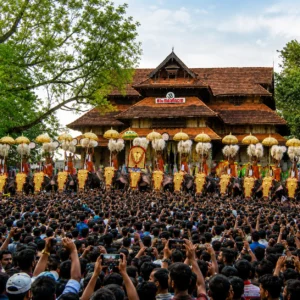
During this ritual exchange, rows of elaborately decorated elephants from participating temples stand aligned face-to-face while colourful parasols are rhythmically changed in rapid succession above them.
Below the umbrellas, percussion orchestras intensify gradually, building emotional energy through highly coordinated rhythmic progression that transforms the atmosphere surrounding the temple grounds.
The visual impact of aligned elephants beneath ceremonial parasols, illuminated temple surroundings, peacock feather fans, percussion crescendos, and dense crowds creates one of Kerala’s most recognisable ritual landscapes.
Yet beyond its visual grandeur, Thrissur Pooram also reflects the deeper ceremonial structure underlying Kerala’s festival culture.
The festival is not experienced merely as entertainment. It functions as a living continuation of ritual choreography, community participation, percussion traditions, and ceremonial movement preserved across generations.
Beyond Temples: Shared Festival Traditions Across Communities
Kerala’s festival traditions have historically evolved within a broader atmosphere of cultural interaction and shared ceremonial influence across communities.
Over time, elements associated with temple festivals such as percussion orchestras, elephant processions, ceremonial umbrellas, and illuminated processional movement also became visible within certain church and mosque festivals in parts of Kerala.
Particularly across central Kerala, some Christian and Muslim communities incorporated regional ceremonial aesthetics into annual celebrations, reflecting the long-standing coexistence and cultural exchange that shaped public ritual traditions across the state.
As a result, elephants in Kerala eventually became associated not only with temple festivals alone, but more broadly with regional ceremonial culture and public festival atmospheres.
This layered continuity further distinguishes Kerala’s festivals from simplified tourism narratives that attempt to separate ritual traditions into isolated categories.
Welfare, Ethics & Changing Conversations
While elephants continue holding a visible place within Kerala’s ceremonial culture, conversations surrounding welfare, ethics, captivity, and responsibility have also become increasingly prominent in recent decades.
Modern discussions surrounding temple elephants today exist within a far more complex environment shaped by changing public awareness, conservation concerns, veterinary science, legal regulations, tourism pressures, and evolving ethical expectations.
Animal welfare organisations, conservation advocates, veterinarians, festival observers, and sections of the public have increasingly raised concerns regarding issues such as transportation stress, overwork during festival seasons, chaining practices, limited movement, and the broader realities associated with captivity.
The growing visibility of these discussions has also reshaped how both local and international audiences engage with Kerala’s festival traditions.
At the same time, many temple authorities, festival organisers, and elephant caretakers continue emphasising the historical relationship between elephants and Kerala’s ceremonial culture while also attempting to improve care standards and management practices.
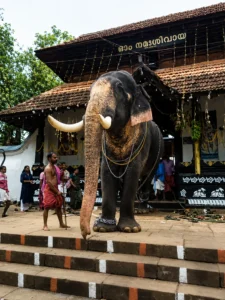
Traditional elephant care systems in Kerala historically included specialised mahouts, Ayurvedic treatment methods, seasonal rest periods, bathing routines, feeding systems, and long-term human-animal relationships that formed part of older temple and household structures.
However, modern commercial pressures, increased festival demand, reduced availability of captive elephants, and changing economic realities have significantly altered these systems.
The transportation of elephants across long distances during peak festival seasons has become one of the major concerns raised within welfare discussions.
Similarly, the physical and psychological stress associated with large crowds, noise intensity, heat exposure, and extended ceremonial schedules continues generating public debate.
As a result, Kerala’s relationship with temple elephants today increasingly exists within a space where cultural continuity and ethical reflection intersect simultaneously.
Rather than approaching the issue through simplistic binaries alone, many contemporary conversations within Kerala now focus on questions surrounding responsible preservation, welfare reform, regulatory enforcement, and the evolving future of living ritual traditions.
Kerala’s Festival Traditions in Transition
Like all living cultural systems, Kerala’s festival traditions continue evolving over time.
Ritual practices that appear ancient and unchanging today were themselves shaped gradually across centuries through regional adaptation, royal patronage, changing temple institutions, local customs, and shifting social realities.
The ceremonial role of elephants within Kerala’s festivals similarly evolved through historical continuity rather than existing as a fixed or timeless practice.
Today, changing ethical expectations, increasing global visibility, conservation awareness, and modern public discourse continue influencing how these traditions are interpreted, preserved, and discussed.
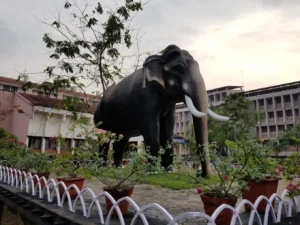
For many communities across Kerala, temple festivals remain deeply emotional and culturally important environments connected to memory, devotion, identity, rhythm, and seasonal continuity.
At the same time, younger generations, welfare advocates, cultural observers, and festival organisers are increasingly engaging with questions surrounding responsibility, sustainability, and the future direction of ceremonial traditions.
Understanding Kerala’s temple elephants therefore requires recognising both the cultural significance they continue holding within ceremonial memory and the evolving modern conversations shaping their future.
One of the most vivid examples of these ceremonial traditions can be experienced during Thrissur Pooram, where percussion orchestras, temple processions, parasol exchanges, and elephant-led rituals come together within Kerala’s largest temple festival.
Beyond Spectacle: Understanding Kerala’s Living Ritual Traditions
Elephants remain deeply associated with Kerala’s ceremonial memory because they exist within larger ritual environments shaped by percussion, processions, craftsmanship, devotion, illumination, and collective cultural continuity.
Yet Kerala’s relationship with temple elephants today also reflects broader modern conversations surrounding ethics, responsibility, preservation, and the future of living traditions within changing social realities.
Understanding these ceremonial landscapes therefore requires moving beyond spectacle alone.
Beneath percussion rhythms, illuminated temple courtyards, and ceremonial processions, Kerala’s festival traditions continue revealing cultural environments shaped not only by visual grandeur, but by memory, ritual movement, evolving public conversations, and centuries of collective participation that continue giving these festivals meaning today.
Related Blogs
Thanjavur Beyond Brihadeeswara Temple: Exploring the Cultural Heart of the Cauvery Delta
More Than a Temple City For many travellers, Thanjavur begins and ends with Brihadeeswara Temple. The soaring vimana, vast courtyards,…
Read More ›
Kanchipuram: Sacred Architecture and Living Traditions
More Than the City of a Thousand Temples Kanchipuram is often introduced as the “City of a Thousand Temples.” While…
Read More ›