
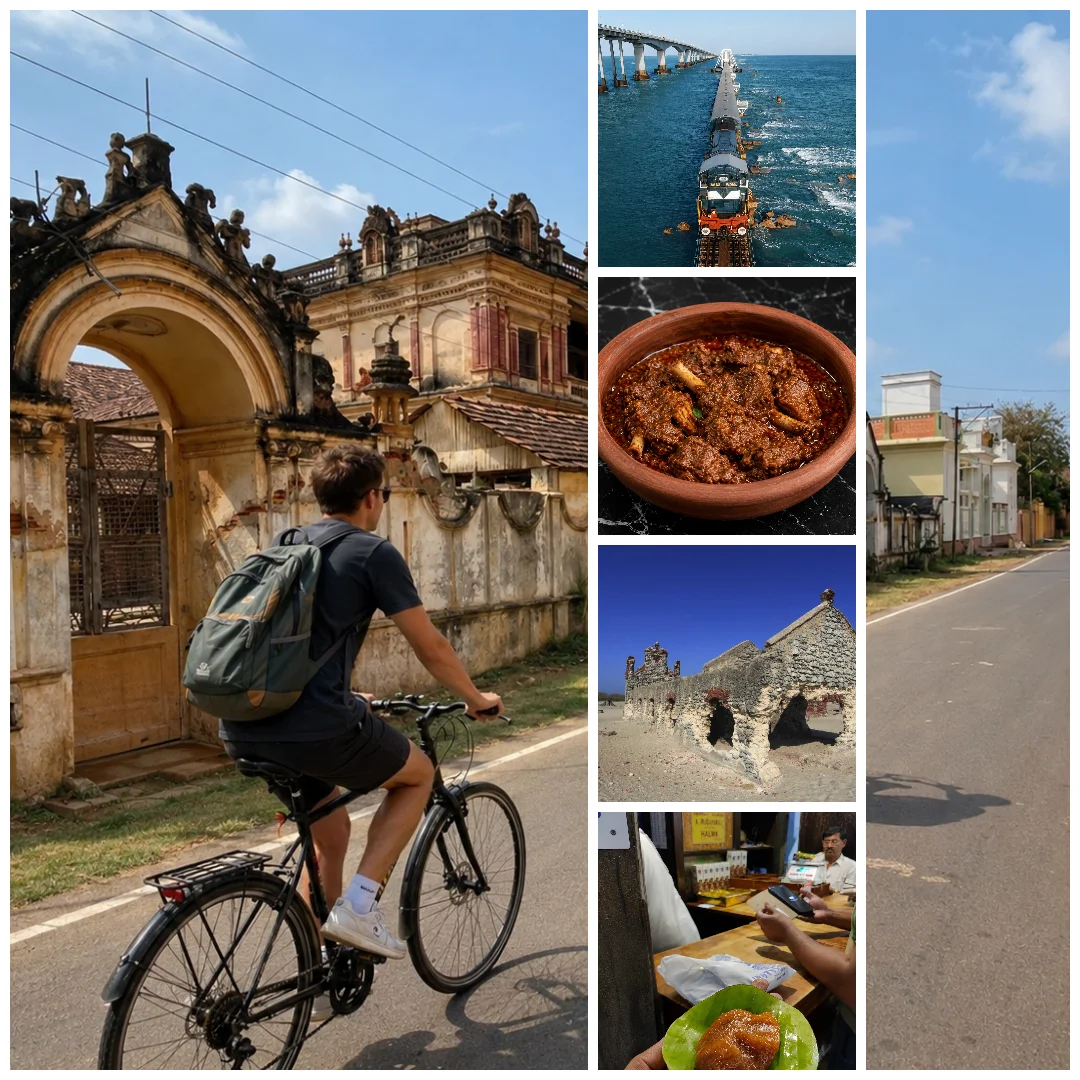
From Madurai to Kanyakumari: Cultural Journeys Across Southern Tamil Nadu
Where Southern Tamil Nadu Slowly Changes Its Rhythm
Southern Tamil Nadu unfolds gradually through landscapes, flavours, coastlines, and cultural rhythms that shift from one region to another. The journey southward moves through temple cities filled with ritual movement, heritage towns shaped by merchant history, island roads surrounded by the sea, quiet fishing villages, red sand landscapes, and finally toward the meeting point of oceans at the southern edge of India.
Unlike destinations experienced through a single monument or attraction, Southern Tamil Nadu reveals itself through continuity. Temple bells echo through crowded streets in Madurai while spice-heavy kitchens define the heritage homes of Chettinad. Further south, sea winds begin replacing inland heat as the roads approach Rameswaram and Dhanushkodi, where island landscapes and abandoned coastlines reshape the atmosphere entirely.
Beyond the better-known pilgrimage routes, quieter landscapes such as the fishing settlements of Vembar and the red dunes of Theri Kaadu introduce a different side of the region altogether, one shaped by dry winds, palm traditions, salt air, and slower coastal life.
Travelling from Madurai to Kanyakumari is not simply a movement across destinations. It is a gradual transition through changing food cultures, architectures, climates, coastlines, and everyday traditions that continue defining the identity of Southern Tamil Nadu even today.
Madurai:Temple Streets, Night Food & Cultural Energy
Few cities in South India carry the same intensity as Madurai. The city feels constantly alive through temple movement, roadside tea stalls, flower markets, traffic-filled streets, and crowded eateries that continue operating long after midnight.
At the centre of the city rises Meenakshi Amman Temple, whose towering gopurams continue shaping both the skyline and the rhythm of everyday life around it. Streets surrounding the temple remain filled with jasmine sellers, brass shops, fruit vendors, pilgrims, and small restaurants where conversations, trade, and ritual all unfold simultaneously beneath the heat of the southern sun.
Madurai changes further after sunset. Tea stalls become crowded while food streets begin filling with locals gathering around roadside kitchens serving kari dosa, bun parotta, mutton chukka, and chilled glasses of jigarthanda beneath brightly lit signboards and drifting smoke from iron griddles. The city’s food culture feels deeply tied to movement itself, energetic, immediate, and unmistakably local.
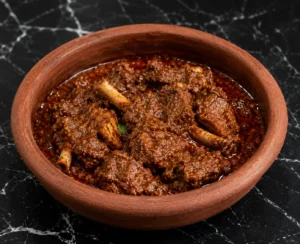
Even beyond its temple heritage, Madurai continues functioning as one of Southern Tamil Nadu’s strongest cultural anchors where spirituality, commerce, cuisine, and urban life remain inseparable from one another.
Chettinad:Mansions, Courtyards & Slow Cultural Landscapes
Leaving Madurai behind, the atmosphere gradually begins to slow across the heritage region of Chettinad. Long village roads lined with old mansions, carved wooden doors, quiet courtyards, and fading pastel walls create a landscape entirely different from the density of Madurai’s temple streets.
The region’s architectural identity remains closely tied to the mercantile history of the Nattukottai Chettiars, whose trading networks once stretched across Southeast Asia. Their wealth shaped the grand mansions of towns such as Karaikudi, where Italian marble, Burmese teak, Belgian mirrors, Athangudi tiles, and traditional Tamil courtyard layouts continue surviving within enormous heritage homes.
Unlike faster urban destinations, Chettinad reveals itself slowly through detail. Sunlight falls across patterned floors while long verandas remain silent beneath ceiling fans and fading photographs. Many of the region’s older homes continue carrying traces of another era shaped by trade, craftsmanship, hospitality, and extended family life.
Cuisine remains equally central to the cultural atmosphere of Chettinad. Pepper-heavy gravies, slow-cooked meat dishes, kuzhi paniyaram, murukku and elaborate traditional meals continue reflecting the region’s culinary identity, where spice, technique, and heritage remain deeply connected.
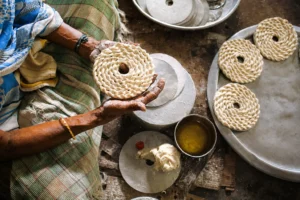
The slower rhythm of Chettinad creates an important transition within the journey southward. From here, the landscapes begin moving steadily toward the coast.
Rameswaram & Dhanushkodi:Island Roads, Temple Corridors & Coastal Silence
The approach toward Rameswaram begins changing the emotional atmosphere of the journey almost immediately. Inland roads slowly give way to open skies, salt-heavy winds, fishing settlements, and shallow turquoise waters stretching toward the horizon.
Crossing Pamban Bridge remains one of the most memorable travel experiences in Southern Tamil Nadu. As the mainland disappears behind the bridge, the landscape transforms into an island world shaped almost entirely by the sea.
At the spiritual centre of the island stands Ramanathaswamy Temple, whose monumental stone corridors remain among the most remarkable temple spaces in India. Pilgrims move continuously through the temple while rituals, chants, and the scent of incense merge into the surrounding coastal atmosphere.
Beyond the temple streets, Rameswaram also carries a quieter coastal identity shaped by fishing communities and seafood traditions. Small restaurants continue serving meen kuzhambu, nethili fry, prawn curry, and crab masala beside tea stalls and roadside kitchens scattered across the island.
Further ahead lies Dhanushkodi, where the road narrows between stretches of ocean on both sides before reaching one of Tamil Nadu’s most haunting landscapes. Abandoned ruins, shifting sands, broken churches, and endless coastal winds continue shaping the identity of the former town destroyed during the cyclone of 1964.
At Arichal Munai, where sea and sky seem to merge endlessly at the edge of the island, the atmosphere becomes quieter than anywhere else along the journey. The landscape feels less like a destination and more like the gradual disappearance of land itself.
Vembar:Quiet Fishing Villages Along the Southern Coast
Far from crowded tourist routes, Vembar introduces a quieter side of Southern Tamil Nadu shaped by fishing life, sea breeze, and slower coastal rhythms.
The village atmosphere here feels noticeably different from larger coastal towns. Fishing boats remain anchored beside narrow shorelines while nets dry beneath the sun and small roadside tea stalls overlook the sea. Mornings begin early as fishermen prepare their boats before sunrise while the coastline remains calm beneath soft light and drifting salt air.
Unlike commercial beach destinations, Vembar feels deeply local. The pace of life follows the rhythm of tides, weather, and fishing activity rather than tourism movement. Coastal stays in the region offer a slower and more reflective atmosphere where the sea becomes part of everyday life rather than a backdrop alone.

Food in Vembar remains closely tied to the surrounding waters. Fresh fish fry, karuvadu preparations, seafood gravies, and prawn dishes continue shaping local kitchens while palm jaggery snacks and simpler village-style meals remain common across the region.
For travellers moving southward through Tamil Nadu, Vembar creates an important pause between larger cultural destinations and the more dramatic landscapes that follow further along the coast.
Theri Kaadu:Southern Tamil Nadu’s Red Sand Landscapes
Among the most unexpected landscapes in Southern Tamil Nadu are the red dunes of Theri Kaadu. Unlike the coastal roads and temple cities surrounding them, these wind-shaped red sand landscapes feel visually distinct from almost anywhere else in the region.
The terrain stretches through dry open spaces shaped by ancient geological movement, scattered palm vegetation, and strong seasonal winds. During sunrise and evening, the red earth reflects changing shades of orange and deep rust beneath wide open skies, creating a landscape that feels both minimal and cinematic.
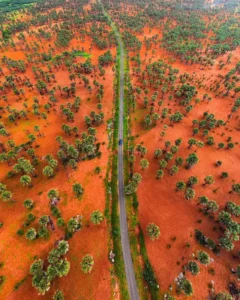
Life around Theri Kaadu continues carrying strong connections to dryland traditions and palm-based cultures. Karupatti(Palm jaggery) sweets, panangkilangu (Palmyra Sprout), millet-based foods, and kambu koozh (Fermented Pearl millet beverage) remain closely tied to the food traditions of the surrounding villages, where survival and cuisine have long adapted to the harsher climatic conditions of the region.
The visual contrast between Theri Kaadu (Red sand desert) and the coastal landscapes experienced earlier in the journey reveals how geographically diverse Southern Tamil Nadu truly is. Within a relatively short distance, the region transitions from temple cities and island coastlines to dry red dunes and palm landscapes shaped by entirely different environmental rhythms.
Thoothukudi & Tirunelveli:Port Towns, River Traditions & Southern Tamil Food Culture
Further south, Thoothukudi introduces another layer of Southern Tamil Nadu shaped by maritime trade, fishing harbours, salt pans, and coastal movement that has connected the region to the sea for centuries. The atmosphere here feels brighter, windier, and more commercially active compared to the quieter inland districts further north.
Fishing boats line the harbour while seafood markets, roadside tea stalls, and salt-heavy air continue defining everyday life across the port city. The surrounding coastline carries a strong working rhythm shaped by trade, fishing communities, and ocean-facing settlements that remain deeply connected to Tamil Nadu’s maritime identity.
Nearby, Tiruchendur Murugan Temple further strengthens the region’s connection between spirituality and the sea, where temple towers rise almost directly beside the coastline beneath constant ocean winds and drifting salt air.
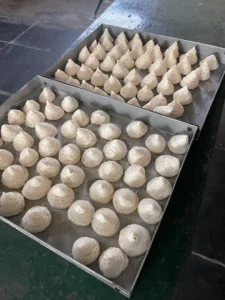
Thoothukudi’s culinary identity reflects this coastal atmosphere through seafood meals, salted fish preparations, roadside parotta stalls, and its well-known macaroons, which continue carrying traces of the town’s historic trading influences.
Moving inland from the coast, the landscapes surrounding Tirunelveli gradually shift into river-fed plains, agricultural settlements, temple streets, and older urban traditions shaped by the waters of the Tamirabarani basin.
At the centre of the city stands Nellaiappar Temple, where towering temple structures and old streets continue shaping everyday life much like the historic temple cities further north. Markets, traditional shops, and roadside eateries remain deeply integrated into the slower rhythm of the city.
Tirunelveli’s culinary identity remains equally iconic through its famous halwa, still sold through long-standing sweet shops whose recipes continue attracting travellers across generations. Beyond sweets, coconut-rich meals, sodhi kuzhambu, and traditional Tamil dishes remain closely tied to the agricultural landscapes surrounding the Tamirabarani river system.
Kanyakumari:Where Southern Tamil Nadu Meets the Ocean
The journey eventually arrives at Kanyakumari, where land gradually narrows toward the meeting point of the Arabian Sea, Bay of Bengal, and Indian Ocean.
Unlike the denser cultural atmosphere of Madurai or the quieter island landscapes of Rameswaram, Kanyakumari feels expansive. The coastline opens widely toward the horizon while sunrise and sunset continue drawing travellers toward the oceanfront every day beneath changing colours of sea and sky.
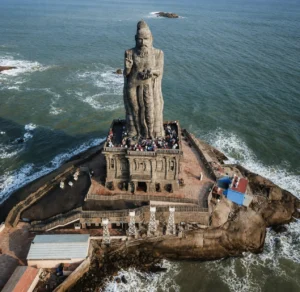
Offshore, Vivekananda Rock Memorial and the towering Thiruvalluvar Statue rise dramatically against the ocean, reinforcing the region’s spiritual and cultural identity alongside its striking coastal geography. Nearby temples, markets, fishing communities, and seaside walkways continue blending pilgrimage movement with everyday coastal life.
Beyond the shoreline, places such as Suchindram Thanumalayan Temple reveal another layer of the region’s architectural heritage through intricately carved halls and its well-known musical stone pillars, where individual pillars produce distinct musical notes when gently tapped, reflecting the craftsmanship traditions deeply rooted across Southern Tamil Nadu.
Further inland, Thirparappu Falls introduces a greener landscape shaped by flowing water, rocky cascades, coconut groves, and quieter village surroundings that contrast beautifully with the dramatic coastal atmosphere nearer to the sea.
Cuisine in Kanyakumari reflects both Tamil and Kerala influences through coconut-rich seafood gravies, tapioca with fish curry, banana chips, nendran chips, jackfruit chips, and coastal breakfast dishes served across the region. The food here feels lighter, more coconut-driven, and deeply connected to the coastal and agricultural landscapes surrounding the southern tip of the state.
As the final stretch of the journey, Kanyakumari feels emotionally different from the destinations experienced earlier along the route. The atmosphere becomes quieter and more reflective as sea winds, open horizons, and shifting light gradually replace the movement and density of inland Tamil Nadu.
Landscapes, Food & Memory Across Southern Tamil Nadu
What makes Southern Tamil Nadu particularly memorable is not a single monument or destination, but the way landscapes, cuisine, and cultural traditions continue changing gradually across the region.
Temple streets in Madurai carry entirely different rhythms from the silent courtyards of Chettinad mansions. Island roads in Rameswaram feel distant from the dry red landscapes of Theri Kaadu, while the fishing coastlines of Vembar and Thoothukudi reveal another layer of Tamil Nadu shaped by the sea.
Food traditions evolve alongside these landscapes. Spice-heavy Chettinad kitchens, seafood meals near Rameswaram, palm-based foods around Theri Kaadu, Tirunelveli halwa shops, and coconut-rich coastal cuisine near Kanyakumari all reflect how deeply geography continues shaping everyday life across Southern Tamil Nadu.
The journey from Madurai to Kanyakumari therefore becomes more than movement between destinations. It becomes an experience of continuity, where culture, coastline, architecture, cuisine, and memory remain interconnected across changing landscapes.
These gradual transitions across Southern Tamil Nadu also reflect the broader experiential diversity of South India, where temple landscapes, plantation regions, rainforest corridors, sacred coastlines, and slower cultural rhythms remain deeply interconnected across the southern peninsula.
Some Journeys Reveal a Region Slowly
Southern Tamil Nadu reveals itself gradually through temple bells drifting across old streets, tea stalls crowded beneath glowing lights, seafood kitchens near the coast, fishing villages facing the sea, red dunes shaped by wind, and roads that continue moving steadily toward the southern edge of the country.
The journey from Madurai to Kanyakumari is not defined by speed or checklist tourism. Instead, it unfolds through atmosphere, conversations, food, changing landscapes, and the quiet transitions between inland cities, heritage towns, coastal villages, and island roads.
Some destinations are remembered for monuments alone. Southern Tamil Nadu stays memorable because every part of the journey, from temple corridors and heritage mansions to oceanfront horizons and roadside kitchens, feels connected to a larger cultural landscape shaped slowly across centuries.
By the time the road finally reaches the oceanfront of Kanyakumari, the journey no longer feels like a collection of destinations, but a continuous passage through one of India’s richest and most deeply layered cultural regions.
Related Blogs
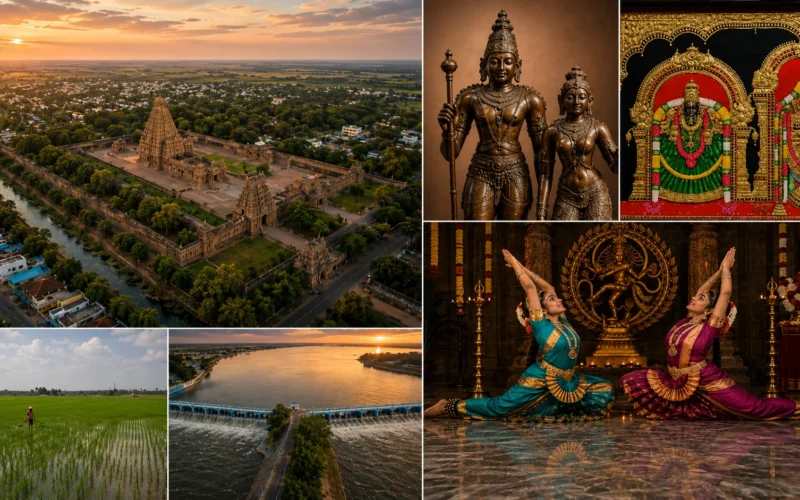
Thanjavur Beyond Brihadeeswara Temple: Exploring the Cultural Heart of the Cauvery Delta
More Than a Temple City For many travellers, Thanjavur begins and ends with Brihadeeswara Temple. The soaring vimana, vast courtyards,…
Read More ›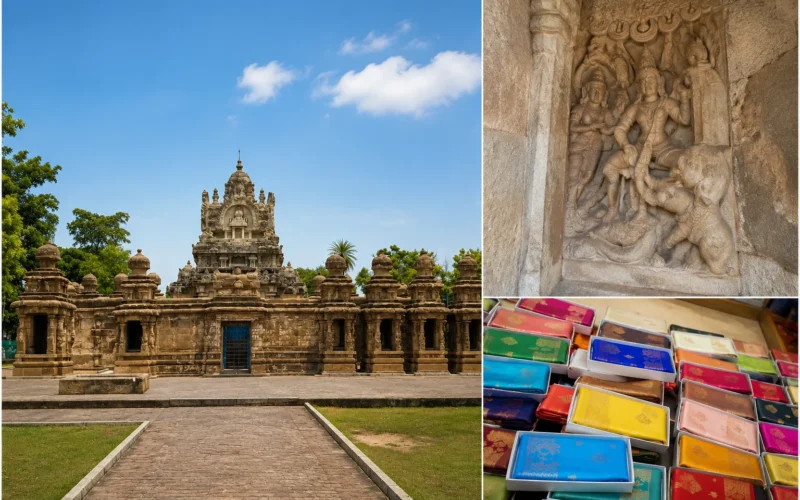
Kanchipuram: Sacred Architecture and Living Traditions
More Than the City of a Thousand Temples Kanchipuram is often introduced as the “City of a Thousand Temples.” While…
Read More ›