
Dhanushkodi & Rameswaram: Coastal Journeys Through Tamil Nadu’s Sacred Island
Where Tamil Nadu Slowly Meets the Sea
Journeys toward Rameswaram unfold differently from most destinations in Tamil Nadu. Temple towns, inland highways, crowded markets, and heritage landscapes gradually give way to salt air, fishing villages, shallow blue waters, and long stretches of island roads moving toward the southern edge of the country.
For many travellers, the route itself becomes part of the experience. Travelling south through Tamil Nadu often carries visitors across some of the region’s most culturally layered landscapes, from the monumental temple heritage of Thanjavur and the courtyard mansions of Chettinad to the food streets and spiritual rhythms of Madurai before eventually opening into the quieter coastal atmosphere of Rameswaram and Dhanushkodi.
Unlike destinations defined by a single monument or experience, Rameswaram exists through layers of movement, memory, spirituality, and geography. Temple corridors, seafood markets, island communities, abandoned coastlines, and windswept roads all shape the atmosphere of the region in different ways.
Further beyond the temple town lies Dhanushkodi, a fragile and haunting stretch of coastline where abandoned ruins, shifting sands, and endless ocean horizons create one of Tamil Nadu’s most atmospheric landscapes.
Together, Rameswaram and Dhanushkodi reveal a quieter and deeply emotional side of Tamil Nadu where spirituality, coastal life, history, and isolation continue existing side by side beneath open skies and constant ocean winds.
Crossing the Pamban Bridge Into Island Tamil Nadu
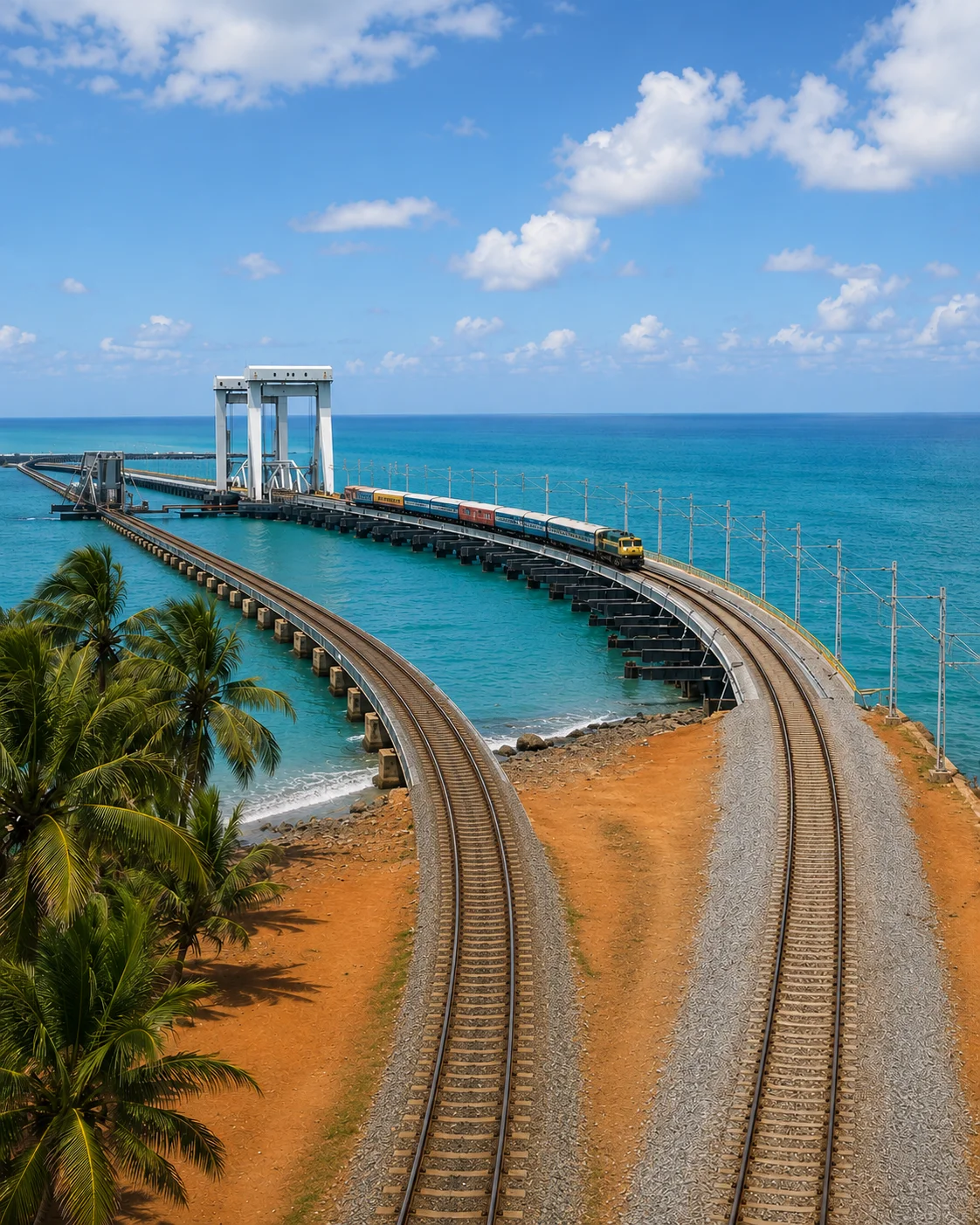
Few arrivals in South India feel as dramatic as crossing Pamban Bridge toward Rameswaram Island.
As the mainland slowly disappears behind the vehicle or train, the landscape begins opening into turquoise water, anchored fishing boats, salt-heavy air, and uninterrupted coastal horizons. The bridge itself feels less like a transport route and more like a transition between two emotional landscapes, one grounded in mainland Tamil Nadu and the other shaped almost entirely by the sea.
Originally constructed in the early twentieth century, the historic rail bridge connecting Pamban Island to the mainland remains one of India’s most iconic coastal engineering landmarks. Nearby, the modern road bridge continues carrying travellers toward the island while offering panoramic views across the shallow waters of the Palk Strait.
Early mornings bring softer light reflecting across calm waters while fishing boats begin moving toward open sea. By evening, the bridge and surrounding coastline shift into warmer tones as sea winds intensify and the island atmosphere becomes even more pronounced.
The geography surrounding Pamban immediately distinguishes Rameswaram from inland Tamil Nadu. Coconut trees become sparse, fishing nets hang beside smaller settlements, and the pace of movement gradually slows beneath the influence of the sea.
For travellers arriving after experiencing the dense temple streets of Madurai or the heritage landscapes of Chettinad, the approach toward Rameswaram feels like entering an entirely different rhythm shaped by openness, distance, and coastal silence.
The Spiritual Rhythm of Rameswaram
At the centre of Rameswaram stands Ramanathaswamy Temple, one of the most significant spiritual landmarks in Hindu tradition and among the most architecturally remarkable temple complexes in India.
Yet the spiritual atmosphere of Rameswaram extends far beyond the temple structure itself. It exists within surrounding streets, flower markets, temple tanks, barefoot pilgrims, brass lamps, and the steady rhythm of devotional life unfolding throughout the town each day.
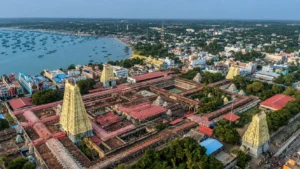
The temple’s monumental corridors remain among its most visually striking features. Long stone passageways lined with repetitive pillars create an overwhelming sense of scale and perspective despite the constant movement of visitors passing through them. Built and expanded across centuries by multiple South Indian dynasties, the temple continues architectural traditions deeply connected to Tamil Nadu’s sacred geography.
Travellers moving through Tamil Nadu often encounter echoes of these cultural traditions elsewhere, from the Chola grandeur of Thanjavur to the temple-centred urban life of Madurai. Yet Rameswaram carries a noticeably different atmosphere shaped by its island geography and coastal setting.
Around the temple, daily life unfolds through ritual and routine. Flower sellers arrange jasmine garlands beside temple entrances while pilgrims move toward sacred water tanks carrying offerings beneath the heat of the coastal sun. Tea stalls, religious shops, and roadside vendors blend naturally into the spiritual movement surrounding the temple complex.
Along the nearby coastline lies Agnitheertham, where pilgrims gather beside the sea before or after visiting the temple. The beach remains closely tied to the spiritual identity of Rameswaram, particularly during sunrise when soft light spreads across the shoreline while rituals quietly unfold beside the water.
Further away from the busier sections of town, places such as Villoondi Theertham offer a quieter coastal atmosphere where mythology, sea breeze, and open landscapes merge into a slower and more reflective experience.
Unlike many temple destinations that feel heavily shaped by tourism, Rameswaram continues functioning first as a living spiritual town where ritual and everyday life remain deeply interconnected.
Seafood, Tea Shops & Coastal Tamil Food Culture
Food in Rameswaram reflects the island’s geography as much as its cultural identity. Unlike the spice-heavy inland cuisines associated with Chettinad or the late-night street food atmosphere of Madurai, the culinary rhythm of Rameswaram feels simpler, more coastal, and closely connected to fishing communities that shape everyday life across the island.
Early mornings near the coast begin with fishing boats returning toward shore while seafood markets gradually come alive with fresh catches unloaded directly from the sea. Fish stalls, drying nets, and the smell of salt air become part of the sensory atmosphere surrounding many parts of the island.
Small local eateries continue serving seafood meals built around Tamil coastal cooking traditions rather than elaborate presentation. Meen kuzhambu, fried fish, crab masala, prawn curries, and nethili (Anchovies) fry frequently appear across roadside restaurants and family-run kitchens where recipes remain closely tied to local tastes and routines.

Unlike highly commercial seafood destinations, dining in Rameswaram often feels functional and deeply local. Banana leaf meals arrive beside steel tumblers of water while fish gravies, rice, and fried seafood dishes dominate many lunch tables near the coast.
Tea shops remain equally central to the island’s social atmosphere. Drivers, fishermen, pilgrims, and travellers gather around smaller roadside stalls throughout the day while tea continues pouring between steel tumblers beside boiling kettles and drifting sea air.
Travellers moving through southern Tamil Nadu often experience a broader culinary transition across the region itself, from the spice-rich kitchens of Chettinad to the energetic night food culture of Madurai before eventually arriving at the seafood-driven coastal simplicity of Rameswaram.
The Road to Dhanushkodi
The journey from Rameswaram toward Dhanushkodi remains one of the most visually striking coastal drives in South India.
As the road gradually narrows beyond the town, the surrounding landscape transforms into long stretches of open sand, shallow blue water, scattered fishing settlements, and uninterrupted ocean views extending across both sides of the route. The farther the journey progresses, the quieter the atmosphere becomes.
Unlike conventional coastal highways lined with resorts or commercial development, the road toward Dhanushkodi often feels isolated and elemental. Strong sea winds move constantly across the landscape while shifting sands and salt-heavy air create an atmosphere shaped more by nature than urban movement.
Fishing boats appear anchored beside narrow coastal settlements while abandoned railway remains and weather-worn structures occasionally emerge from the surrounding sand, hinting at the region’s layered past beneath the open sky.
One of the most powerful points along this journey is Arichal Munai, located near the edge of the island where the Bay of Bengal and Indian Ocean converge. Endless water horizons, strong winds, and the absence of dense urban movement create a sense of isolation rarely experienced elsewhere in Tamil Nadu.
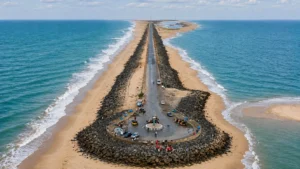
During sunrise, soft light spreads slowly across the ocean while fishermen begin preparing their boats near the shoreline. By evening, the landscape shifts into warmer tones as the road gradually empties beneath fading light and increasing sea winds.
For many travellers, the road to Dhanushkodi becomes far more memorable than the destination alone, a journey defined by coastline, movement, silence, and the emotional feeling of travelling toward the edge of land itself.
Dhanushkodi:Tamil Nadu’s Forgotten Coastal Frontier
Few places in India carry the same atmosphere as Dhanushkodi.
Once a functioning coastal town connected by railway and fishing trade, the region was almost entirely destroyed during the devastating cyclone of 1964. What remains today are fragments of abandoned churches, broken railway structures, collapsed buildings, and scattered ruins gradually being reclaimed by wind, sand, and sea.
Yet Dhanushkodi does not feel abandoned in a theatrical sense. Instead, the landscape carries a quieter stillness shaped by erosion, memory, and isolation.
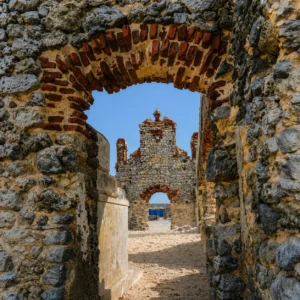
The remains of the old church standing against endless coastal winds have gradually become one of the region’s most photographed landmarks, though the surrounding atmosphere remains far more powerful than the structure alone. Open skies, shifting sands, shallow blue waters, and the absence of dense urban movement create a landscape that feels emotionally distant from most modern destinations.
Mythology also remains deeply intertwined with the identity of Dhanushkodi and nearby coastal areas. Many traditions associate the region with the Ramayana and the legendary Ram Setu, believed by devotees to connect India and Sri Lanka across the shallow waters of the Palk Strait.
What makes Dhanushkodi particularly compelling, however, is not mythology or ruins alone, but the emotional atmosphere created by the landscape itself. Endless stretches of sea and sand create a feeling of openness and fragility rarely experienced elsewhere in Tamil Nadu.
Unlike destinations built around entertainment or commercial tourism, Dhanushkodi feels raw, exposed, and deeply tied to the forces of nature that continue shaping it every day.
Sunrise, Silence & the Edge of the Island
Early mornings in Rameswaram and Dhanushkodi reveal a quieter side of the island long before roads begin filling with visitors and pilgrims.
As the first light slowly rises across the coastline, fishing boats begin moving toward open waters while sea breeze travels across otherwise silent roads and empty stretches of sand. The atmosphere during these hours feels remarkably still, shaped more by waves and distant temple bells than human activity.
Near the shoreline, fishermen untangle nets beside anchored boats while tea stalls gradually reopen beneath pale morning light. The island’s slower rhythms become more visible during these quieter hours when movement remains minimal and the surrounding landscapes feel almost untouched.
Viewpoints such as Gandamadana Parvatham offer panoramic perspectives across the island where temple towers, coastal settlements, shallow blue waters, and distant stretches of coastline gradually emerge beneath the morning sky.
Unlike faster urban destinations, Rameswaram rewards slower observation. The island’s atmosphere reveals itself through changing light, sea winds, temple movement, roadside conversations, and long stretches of open coastal silence rather than through constant activity alone.
Abdul Kalam, Memory & Modern Rameswaram
Alongside its spiritual identity and coastal landscapes, Rameswaram also carries a quieter connection to one of modern India’s most respected figures, Dr. A.P.J. Abdul Kalam.
Born in Rameswaram and deeply associated with the town throughout his life, Kalam remains an important part of the island’s contemporary identity. His legacy adds another dimension to Rameswaram beyond pilgrimage and mythology, one connected to education, science, simplicity, and national memory.
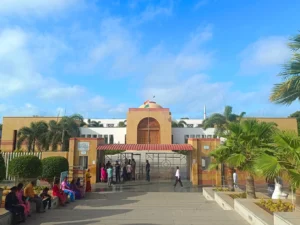
Located near the coast, Kalam National Memorial was established as a tribute to the former President and scientist who rose from the island town to become one of India’s most admired public figures.
For many visitors, the memorial introduces a different emotional layer to Rameswaram. Amid temple corridors, fishing communities, and coastal roads, Kalam’s story reflects the possibility of intellectual and personal journeys emerging from even the most geographically isolated landscapes.
The presence of the memorial also highlights how Rameswaram continues evolving beyond its older religious identity alone. The town today exists simultaneously as a sacred pilgrimage centre, a coastal island community, and the birthplace of one of modern India’s most influential scientific minds.
Hidden Sacred Landscapes Beyond Rameswaram
While most visitors focus primarily on Rameswaram and Dhanushkodi, the surrounding region also contains quieter sacred landscapes that reveal deeper layers of southern Tamil Nadu’s cultural geography.
Among them, Uthirakosamangai Temple remains one of the region’s most historically significant temple sites. Known for its ancient Shaivite traditions and weathered stone architecture, the temple carries a noticeably calmer atmosphere compared to the larger pilgrimage movement of Rameswaram.
The temple is also associated with remarkable historical details that continue attracting devotees and architecture enthusiasts alike. Within the complex stands an ancient jujube tree believed by local tradition to be over three thousand years old, adding another layer of sacred continuity to the site.
Equally fascinating is the craftsmanship visible within the temple’s lion sculptures, where rounded stone balls remain enclosed inside the mouths of the statues despite being carved from the same block itself without separate attachment. These details continue reflecting the extraordinary precision and artistic sophistication of traditional South Indian temple artisans.
Further along the coastal region lies Thiruppullani, another quieter sacred landscape closely associated with the Ramayana tradition and the coastal spiritual geography of southern Tamil Nadu.
Together, these lesser-known landscapes reveal how spirituality across the region remains deeply connected to geography itself, coastlines, islands, and open landscapes shaping ritual and cultural memory across centuries.
From Thanjavur to Dhanushkodi:Understanding Tamil Nadu Through Its Landscapes
Travelling across Tamil Nadu reveals a state shaped not by a single cultural identity, but by interconnected landscapes gradually evolving from one region to another.
The monumental temple heritage of Thanjavur reflects the grandeur of the Chola period and the relationship between spirituality, craftsmanship, and royal patronage across the Cauvery delta.
Further south, the mansions and culinary traditions of Chettinad introduce another layer of Tamil Nadu shaped by merchant history, courtyard architecture, spice-rich cuisine, and handmade artistic traditions.
Madurai shifts the rhythm once again. Here, Tamil culture feels louder and more immediate through crowded temple streets, jasmine markets, tea stalls, and late-night food culture shaped by movement and everyday urban life.
By the time the journey reaches Rameswaram and Dhanushkodi, Tamil Nadu gradually opens into entirely different emotional landscapes shaped by sea winds, island roads, fishing communities, abandoned coastlines, and spiritual silence.
Experiencing Thanjavur, Chettinad, Madurai, and Rameswaram together allows travellers to understand Tamil Nadu not as isolated tourist destinations, but as a layered cultural landscape where heritage, spirituality, food, coastline, trade, and memory remain interconnected across regions.
Together, these evolving landscapes also reveal how the southern peninsula gradually transitions through temple cities, merchant settlements, sacred coastlines, and slower sea-facing journeys shaped by both geography and cultural continuity.
Some Roads Stay With You Long After the Journey Ends
Rameswaram and Dhanushkodi are not destinations experienced through monuments alone. Their atmosphere emerges gradually through movement, coastline, ritual, silence, and the emotional transition between mainland Tamil Nadu and the open edge of the sea.
The journey lingers through smaller memories, crossing the Pamban Bridge beneath shifting ocean light, walking through the endless corridors of Ramanathaswamy Temple, watching fishing boats return toward shore, hearing temple bells drift across sea breeze, and driving toward Dhanushkodi while the coastline slowly empties into sand and open water.
Together, destinations such as Thanjavur, Chettinad, Madurai, and Rameswaram reveal different layers of Tamil Nadu itself, from temple architecture and culinary traditions to island landscapes, coastal silence, and deeply rooted cultural memory shaped across centuries.
Standing at the edge of Dhanushkodi beneath endless sky and sea, the feeling is less about reaching a tourist destination and more about arriving at a place where history, mythology, nature, and silence continue existing together at the far southern frontier of the country.
Some journeys remain memorable because of what they show. Others stay with travellers because of how they make people feel long after the road ends. Rameswaram and Dhanushkodi belong firmly to the latter.
Related Blogs
Thanjavur Beyond Brihadeeswara Temple: Exploring the Cultural Heart of the Cauvery Delta
More Than a Temple City For many travellers, Thanjavur begins and ends with Brihadeeswara Temple. The soaring vimana, vast courtyards,…
Read More ›
Kanchipuram: Sacred Architecture and Living Traditions
More Than the City of a Thousand Temples Kanchipuram is often introduced as the “City of a Thousand Temples.” While…
Read More ›