
Exploring Chettinad: Heritage Mansions, Cuisine & Culture in Kanadukathan and Beyond
A Slower Side of Tamil Nadu
Chettinad is one of Tamil Nadu’s most distinctive cultural regions, a landscape shaped by grand heritage mansions, artisan traditions, temple towns, and deeply rooted culinary heritage. Spread across quiet villages and historic settlements such as Kanadukathan, the region offers a slower and more immersive travel experience far removed from conventional tourism circuits.
Rather than functioning as a fast-paced sightseeing destination, Chettinad reveals itself gradually through old courtyards, handcrafted Athangudi tiles, traditional kitchens, antique-filled streets, and rural roads that still preserve the rhythm of Tamil heritage and community life.
Unlike more commercial travel hubs, the appeal of Chettinad lies in atmosphere and detail. The region invites travellers to experience Tamil Nadu through architecture, craftsmanship, cuisine, and village life that continue to preserve a quieter cultural identity across its historic settlements.
What is the Chettinad Region?
Located primarily across the Sivaganga and Pudukottai districts of Tamil Nadu, Chettinad is historically associated with the Nattukottai Chettiar community, a mercantile trading group that built extensive business networks across Burma, Ceylon, Singapore, and other parts of Southeast Asia during the 19th and early 20th centuries.
The wealth accumulated through maritime trade transformed the villages of Chettinad into remarkable centres of architecture, craftsmanship, and cultural sophistication. Across the region, merchants constructed elaborate mansions using imported materials such as Burmese teak, Italian marble, Belgian mirrors, and handcrafted European decorative elements blended with traditional Tamil architectural styles.
Today, villages such as Kanadukathan, Athangudi, and Karaikudi continue to preserve traces of this historic prosperity through wide streets, palatial homes, temple complexes, and artisan traditions that still shape everyday life.
Unlike destinations centred around large monuments or crowded tourism zones, Chettinad is best experienced gradually through its villages, homes, and cultural atmosphere.
Kanadukathan: The Architectural Heart of Chettinad
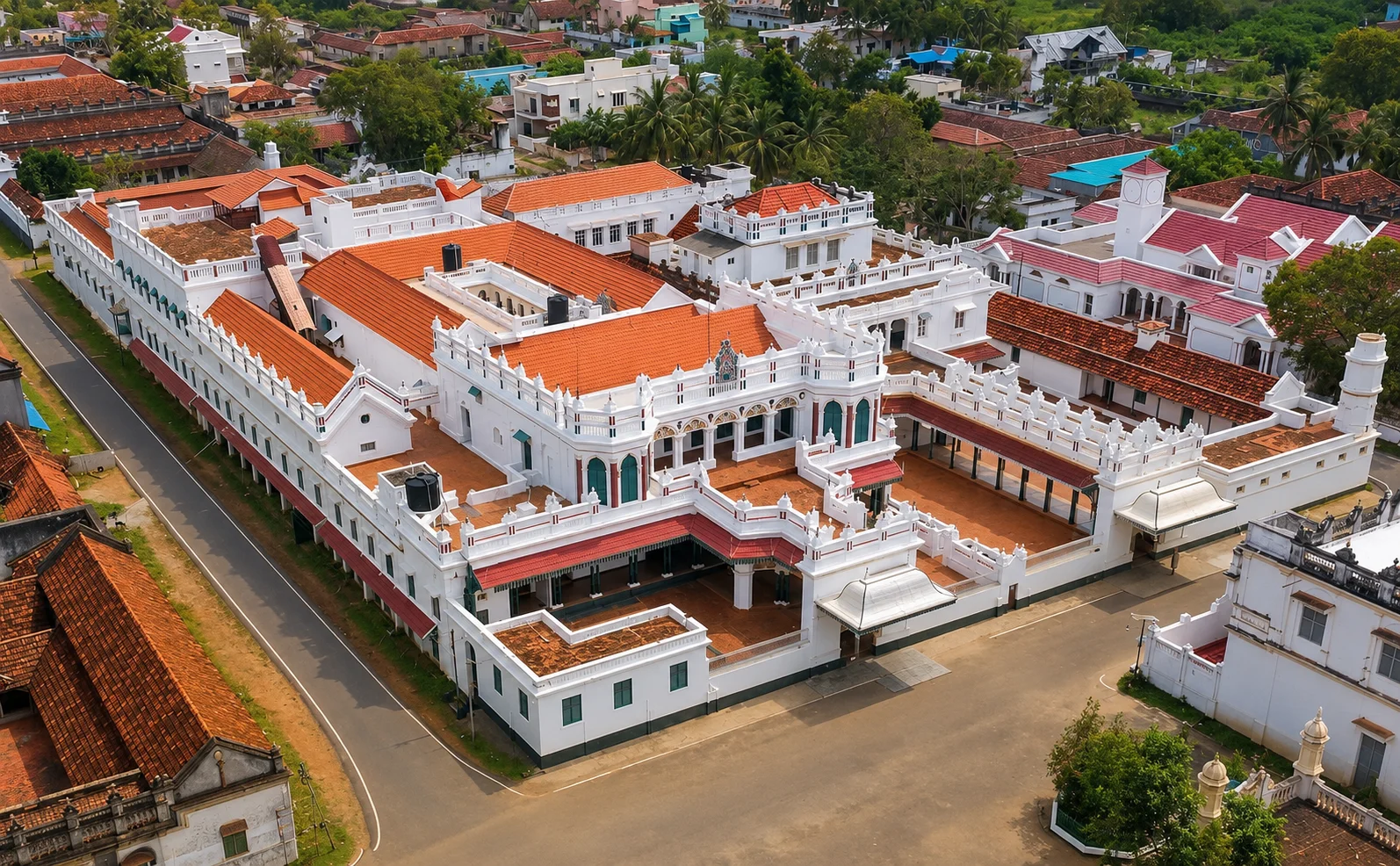
Among the many settlements across the region, Kanadukathan remains one of the most iconic heritage villages in Chettinad. Wide roads lined with ornate mansions, carved wooden entrances, decorative gateways, and symmetrical façades create an atmosphere unlike anywhere else in South India.
Walking through Kanadukathan feels less like entering a conventional village and more like stepping into a preserved architectural landscape shaped by another era. Many of the homes were built during the peak of Chettiar prosperity and designed not only as residences but also as symbols of family legacy and global trading influence.
The mansions combine Tamil courtyard architecture with imported European and Southeast Asian elements. Intricately carved Burma teak pillars, stained glass details, Athangudi tile floors, and expansive open courtyards reflect both local craftsmanship and international influence.
One of the village’s most recognisable landmarks is the Kanadukathan Palace, which continues to represent the grandeur associated with the Chettinad region. Beyond the palace itself, however, the appeal of Kanadukathan lies in its quiet streets, fading façades, antique gateways, and the atmosphere of a once-thriving mercantile world that still lingers across the village.
For photographers, architecture enthusiasts, and slow travellers, Kanadukathan remains one of Tamil Nadu’s most rewarding heritage environments.
The Mansions of Chettinad
The heritage mansions of Chettinad are among the region’s most defining cultural features. Built primarily between the late 19th and early 20th centuries, these homes reflected the prosperity of the Nattukottai Chettiar trading community and their global commercial connections across Asia and Europe.
Many of the mansions were constructed using imported materials brought through overseas trade routes. Burmese teak pillars, Italian marble flooring, Belgian mirrors, chandeliers, stained glass panels, and handcrafted decorative elements became integrated into traditional Tamil residential architecture.
Despite their grand scale, the mansions were also designed around climate and community life. Open courtyards allowed natural ventilation, thick walls reduced interior heat, and long corridors connected ceremonial spaces and family quarters while maintaining privacy.
Beyond their architectural grandeur, these mansions also reflected the social and cultural structure of Chettiar life. Many homes were designed to accommodate large joint families, ceremonial gatherings, business discussions, religious functions, and extended community events within a single household environment. Expansive courtyards, multiple kitchens, reception halls, and interconnected living spaces supported a lifestyle centred around hospitality, trade relationships, family networks, and cultural continuity across generations.
The craftsmanship visible throughout these homes remains extraordinary. Hand-painted tiles, carved wooden ceilings, antique furniture, decorative ironwork, and polished stone surfaces continue to preserve the artistic identity of the region.
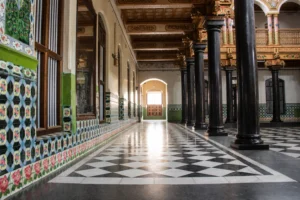
While some mansions remain abandoned due to migration and changing economic conditions, others have been restored into heritage stays and cultural spaces that allow visitors to experience Chettinad’s architectural legacy more intimately.
The homes also reveal a rare cultural fusion where Tamil traditions, colonial influences, Southeast Asian trade connections, and European decorative styles coexist within a distinctly local identity.
Karaikudi & Everyday Life in Chettinad
Karaikudi functions as the cultural and commercial centre of the Chettinad region and serves as the primary base for exploring the surrounding heritage villages.
Compared to the quieter settlements around Kanadukathan and Athangudi, Karaikudi feels more active, with markets, antique shops, local eateries, temple streets, and long-established family businesses shaping the rhythm of everyday life.
The town remains deeply connected to Chettinad’s mercantile history. Older neighbourhoods reveal layers of architectural detail, fading colonial-era façades, traditional homes, and stores selling handcrafted goods, brassware, textiles, and antique wooden furniture.
Karaikudi is also one of the best places to experience Chettinad cuisine more casually through traditional restaurants and family-run kitchens that continue to preserve regional cooking styles.
Rather than functioning as a sightseeing-heavy destination, the town works best as a cultural base from which the wider Chettinad region gradually unfolds.
Athangudi Tiles & Artisan Traditions
Among Chettinad’s most recognisable artistic traditions are the handcrafted Athangudi tiles that continue to define the interiors of many heritage mansions across the region. Named after the village of Athangudi, these tiles are known for their vibrant colours, geometric patterns, floral motifs, and distinctive handcrafted finish.
Unlike factory-produced flooring materials, Athangudi tiles are still made using traditional manual techniques passed down across generations. The process involves coloured cement mixtures, handcrafted moulds, patterned glass plates, and natural drying methods that give each tile a slightly unique texture and appearance.
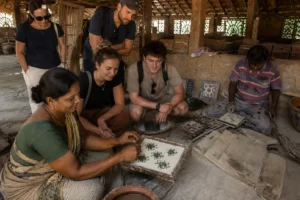
The workshops themselves remain small-scale and family-operated, preserving a slower craft tradition that contrasts sharply with industrial manufacturing. Visiting these workshops allows travellers to observe the tile-making process closely while also understanding the cultural importance of artisanal craftsmanship within Chettinad.
Beyond their decorative value, Athangudi tiles have become symbolic of the region’s architectural identity and heritage preservation efforts.
Chettinad Cuisine Beyond Spice
Chettinad cuisine is often introduced simply as one of India’s spiciest regional food traditions, but its culinary identity is far more layered than heat alone. Rooted in trade history, local ingredients, and elaborate cooking techniques, Chettinad food reflects centuries of cultural exchange and community-based dining traditions.
The cuisine is characterised by freshly ground spice blends, pepper-based seasoning, roasted aromatics, slow-cooked gravies, and carefully balanced flavours rather than excessive spice alone. Ingredients such as black pepper, fennel, curry leaves, tamarind, star anise, and kalpasi (stone flower) contribute to the region’s distinctive flavour profile.
Non-vegetarian dishes such as Chettinad chicken, mutton curries, crab preparations, and kola urundai (Mutton Meat balls) are widely associated with the region, although vegetarian cooking also plays an important role in everyday meals and festive dining traditions.
Breakfast and snack preparations such as kuzhi paniyaram, idiyappam, and rice-based dishes continue to reflect the agricultural and culinary heritage of the region.
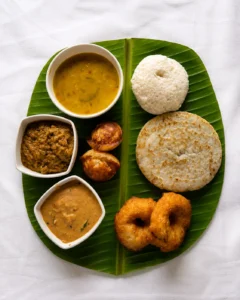
In many heritage homes and restored mansions, dining remains one of the most memorable aspects of visiting Chettinad. Long dining halls, antique interiors, traditional serving styles, and recipes preserved across generations transform food into a deeper cultural experience rather than simply a restaurant meal.
For travellers interested in culinary heritage, Chettinad offers one of South India’s richest and most distinctive food traditions.
Villages & Hidden Corners Around Chettinad
Beyond Karaikudi and Kanadukathan, the wider Chettinad region unfolds through quieter villages, temple settlements, artisan communities, and rural roads that preserve a slower rhythm of life.
Villages such as Athangudi, Pallathur, and nearby rural settlements reveal landscapes shaped by heritage homes, fading façades, old courtyards, and long stretches of tree-lined roads connecting historic communities.
Morning walks and cycling through these villages often reveal temple bells in the distance, women drawing kolam patterns outside old homes, artisans working within small workshops, and village markets beginning their daily routines.
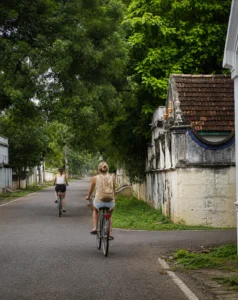
The region is especially rewarding for travellers interested in photography and heritage documentation. Decorative entrances, antique doors, Athangudi tile courtyards, and weathered textures create an environment rich in visual detail and historical atmosphere.
Beyond its heritage mansions and village streets, the Chettinad region also preserves important cultural landmarks such as Pillayarpatti Karpaga Vinayagar Temple, an ancient rock-cut temple known for its stone-carved Vinayagar shrine and quiet spiritual atmosphere.
Surrounded by rural landscapes and traditional settlements, the temple introduces travellers to another layer of Chettinad’s cultural identity shaped by devotion, craftsmanship, and centuries-old Tamil traditions.
Unlike heavily commercial tourism zones, many parts of Chettinad still feel relatively untouched by mass tourism, allowing visitors to experience the region in a quieter and more personal way.
Heritage Stays & Slow Travel Experiences
One of the most distinctive aspects of travelling through Chettinad is the opportunity to stay within restored heritage mansions that continue to preserve the architectural identity and hospitality traditions of the region.
Several former Chettiar residences have been converted into boutique heritage stays where antique furniture, Athangudi tile flooring, traditional courtyards, and long dining halls remain central to the guest experience.
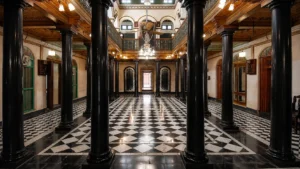
Properties such as The Bangala and other restored heritage homes offer a slower and more immersive style of accommodation shaped by regional cuisine, architecture, and personalised hospitality.
Rather than functioning as conventional resort destinations, these stays allow travellers to experience Chettinad through its homes, food traditions, and cultural atmosphere.
Best Time to Visit Chettinad
The most comfortable period to explore Chettinad is generally between October and February, when temperatures remain milder and more suitable for walking through villages, heritage streets, and open courtyards.
The softer winter light also enhances the region’s architectural atmosphere, making this period especially rewarding for photography and slower exploration.
Summers between March and June can become extremely hot across interior Tamil Nadu, often limiting daytime outdoor activity.
How to Include Chettinad in a South India Journey
Chettinad works best as part of a broader South India journey rather than as a rushed standalone stop. The region naturally complements cultural and heritage-focused itineraries across Tamil Nadu and Kerala.
Many travellers combine Chettinad with destinations such as Madurai, Thanjavur, Rameswaram, or Pondicherry. Others continue toward Kochi, Kerala’s backwaters, or the mist-covered hills of Munnar to create a more layered South Indian journey that balances heritage, landscapes, cuisine, and village life.
Unlike destinations built around fast-paced sightseeing, Chettinad rewards travellers who allow time for observation and immersion. The region is particularly suited to architecture enthusiasts, photographers, culinary travellers, and those seeking slower cultural experiences beyond conventional tourism circuits.
Spending at least two to three days in the region allows visitors to experience Chettinad more meaningfully rather than simply passing through its landmarks.
Why Chettinad Feels Different From Other Destinations in Tamil Nadu
Chettinad’s appeal lies not in crowded attractions or large tourism infrastructure, but in atmosphere, craftsmanship, and cultural continuity. The region offers a quieter side of Tamil Nadu where architecture, cuisine, artisan traditions, and village life remain deeply interconnected.
Across settlements such as Kanadukathan and Karaikudi, travellers encounter a landscape shaped by merchant history, handcrafted artistry, traditional kitchens, and generations of cultural preservation.
Rather than encouraging hurried sightseeing, Chettinad invites travellers to slow down, to notice the details of carved doors, handmade tiles, village mornings, and the silence that fills its old mansions and rural roads.
For travellers seeking slower cultural journeys through South India, Chettinad offers a quieter form of immersion shaped by architecture, cuisine, craftsmanship, and slower village rhythms.
Related Blogs

Thanjavur Beyond Brihadeeswara Temple: Exploring the Cultural Heart of the Cauvery Delta
More Than a Temple City For many travellers, Thanjavur begins and ends with Brihadeeswara Temple. The soaring vimana, vast courtyards,…
Read More ›
Kanchipuram: Sacred Architecture and Living Traditions
More Than the City of a Thousand Temples Kanchipuram is often introduced as the “City of a Thousand Temples.” While…
Read More ›