
Attukal Pongala Festival: Kerala’s Sacred Celebration of Faith, Fire, and Womanhood
When the Streets of Thiruvananthapuram Become Sacred Space
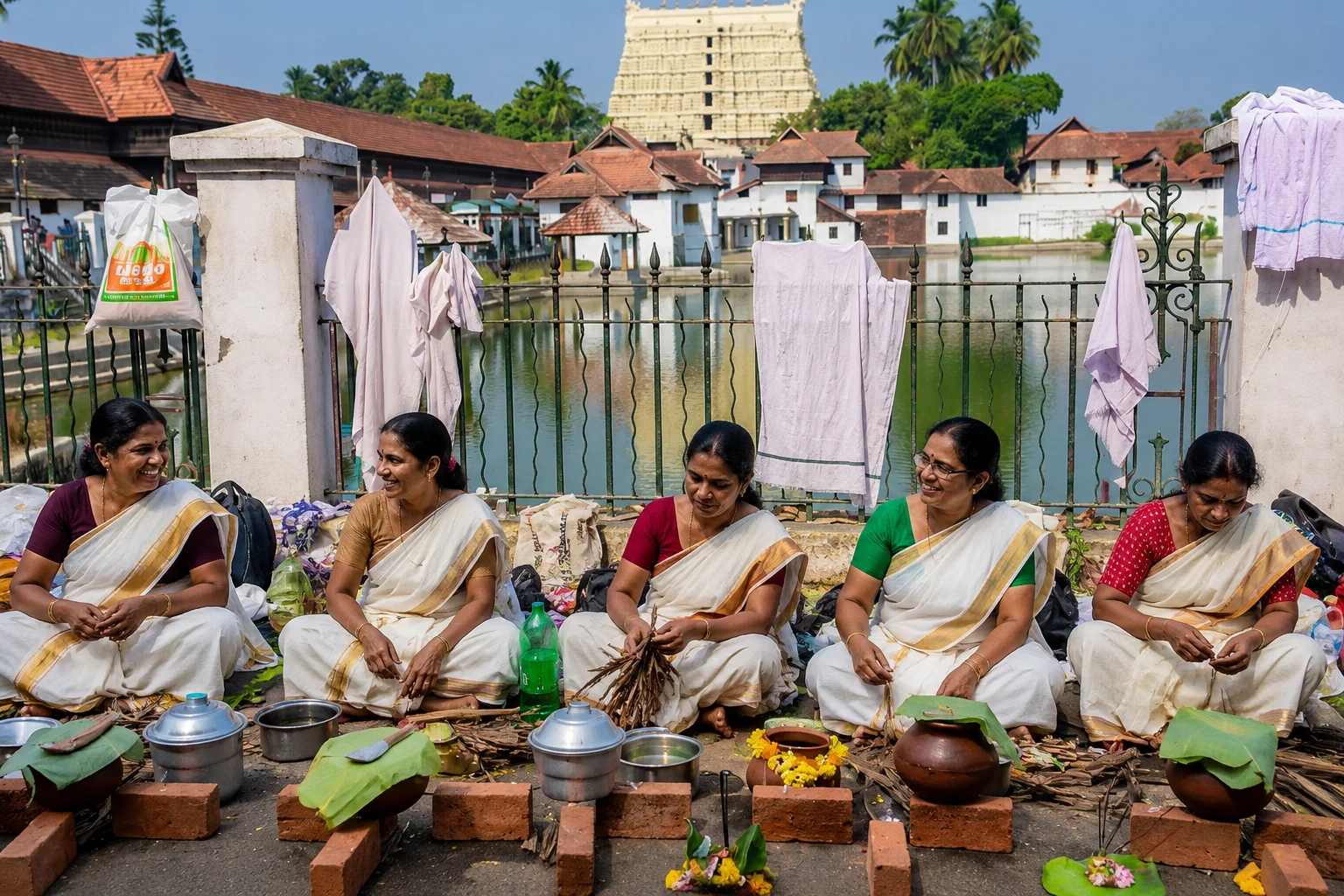
Before sunrise, the streets of Thiruvananthapuram begin to transform. Earthen hearths appear along roadsides, courtyards, temple lanes, and open spaces. Clay pots are carefully arranged over brick stoves while bundles of firewood wait beside them. Women dressed in traditional Kerala attire quietly prepare ingredients of rice, jaggery, coconut, and plantains as devotional chants drift through the air. Slowly, the city turns into a vast sacred kitchen shaped by prayer, ritual, and collective devotion.
This is Attukal Pongala, one of Kerala’s most significant temple festivals and among the world’s largest gatherings of women devotees. Celebrated at the Attukal Bhagavathy Temple in Thiruvananthapuram, the festival is dedicated to Attukal Amma, the presiding goddess worshipped as a powerful manifestation of divine feminine energy.
What makes Attukal Pongala remarkable is not spectacle alone, but the atmosphere of shared faith that fills the city. Women from different regions, backgrounds, and generations gather to prepare ritual offerings in a deeply personal yet collective act of devotion. Smoke rising from thousands of hearths, synchronized prayers, and the rhythmic movement of devotees create an experience that feels both intimate and immense.
More than a temple festival, Attukal Pongala is a living ritual tradition rooted in faith, continuity, and sacred community.
Understanding Attukal Pongala
The word “Pongala” literally means “to boil over,” symbolizing abundance, prosperity, and gratitude. During the festival, women prepare a sweet offering known as Pongala Payasam using rice, jaggery, coconut, ghee, and plantains in earthen pots placed over temporary brick hearths. The ritual offering is dedicated to Attukal Bhagavathy, affectionately worshipped as Attukal Amma.
The festival is entirely centered around feminine devotion. Women gather in massive numbers to participate in the ceremony, carrying ritual ingredients and patiently preparing their hearths long before the auspicious hour arrives. When the temple priests light the main ceremonial fire, the flame is passed from one hearth to another until the entire city glows with ritual fire.
The offering itself is simple, but the act carries deep spiritual meaning. Devotees pray for wellbeing, protection, prosperity, gratitude, and blessings for their families. Many women return year after year, continuing traditions passed down through generations.
Attukal Pongala is not merely observed from a distance. Participation itself becomes the ritual. The preparation of food, the collective atmosphere, and the act of waiting together all form part of the sacred experience that defines the festival.
The Sacred Legacy of Attukal Bhagavathy Temple
Located near the banks of the Killi River in Thiruvananthapuram, the Attukal Bhagavathy Temple occupies a deeply important place in Kerala’s devotional landscape. Revered as the “Sabarimala of Women,” the temple is associated with Goddess Bhagavathy, worshipped as an embodiment of Shakti, or divine feminine power.
Local legends surrounding the temple continue to shape its sacred identity. One widely known narrative speaks of a young girl who appeared before an elderly devotee near the riverbanks. The mysterious child requested assistance in crossing the river and later disappeared near the present temple site, revealing her divine nature. The devotee understood the child to be a manifestation of the goddess herself, leading to the establishment of worship at Attukal.
Over time, the temple evolved into one of Kerala’s most significant centers of feminine devotion. Its architecture, rituals, and annual festivals reflect a blend of spiritual symbolism, oral traditions, and regional cultural practices.
The temple is especially significant for women devotees, many of whom view the goddess as a maternal and protective presence. During Attukal Pongala, this sacred relationship becomes visible across the city as women gather not only in prayer, but also in shared participation and ritual continuity.
The spiritual atmosphere surrounding the temple during the festival extends far beyond its inner sanctum. Entire neighborhoods become part of the sacred geography of Attukal Pongala.
Kannagi, Silappathikaram, and the Spiritual Roots of the Festival
The spiritual roots of Attukal Pongala are closely linked to Kannagi, the legendary heroine of the Tamil epic Silappathikaram. Her story continues to influence ritual traditions and devotional practices associated with the festival.
According to the epic, Kannagi was the wife of Kovalan, who was unjustly executed by the Pandya king of Madurai after being falsely accused of theft. In grief and fury, Kannagi proved her husband’s innocence and cursed the city, causing Madurai to burn. She later journeyed westward toward Kerala, where she eventually attained divine status.
Many devotees believe that Attukal Bhagavathy represents Kannagi in her transformed spiritual form. The rituals and songs associated with the festival continue to preserve this connection through oral storytelling traditions such as Kannaki Charitam, recited during the temple celebrations.
This literary connection gives Attukal Pongala a unique cultural depth. The festival is not only a devotional gathering but also part of a larger continuum of South Indian sacred storytelling, memory, and ritual performance.
Kannagi herself symbolizes justice, endurance, strength, and feminine power. These themes continue to resonate deeply during Attukal Pongala, where women gather in collective devotion shaped by both spirituality and cultural continuity.
The presence of the Kannagi narrative also strengthens the festival’s connection to Kerala’s broader temple traditions, where mythology, oral histories, and ritual practices remain deeply intertwined.
The Ritual of Pongala: Fire, Offering, and Devotion
The central ritual of Attukal Pongala unfolds with remarkable precision and emotional intensity. Long before dawn, women begin occupying designated spaces across Thiruvananthapuram, arranging temporary hearths made from bricks and preparing earthen pots for the offering.
By morning, roads, temple surroundings, courtyards, and public spaces have transformed into a continuous landscape of ritual preparation stretching for several kilometers. Devotees patiently wait for the auspicious moment when the temple’s chief priest lights the sacred flame within the temple precincts.
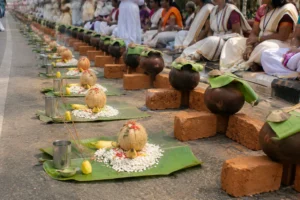
The ceremonial fire is then carried outward from hearth to hearth. Within minutes, thousands of fires begin burning simultaneously across the city. Smoke rises into the sky as women stir sweet rice preparations inside clay pots while chanting prayers and invoking blessings from the goddess.
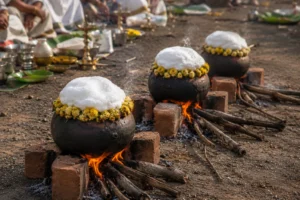
The primary offering, Pongala Payasam, is accompanied by other traditional preparations such as therali appam and mandaputtu. Each offering reflects devotional intention rather than elaborate display. The simplicity of the ingredients contrasts with the immense scale of participation.
The atmosphere during the ritual is deeply immersive. Temple bells echo through crowded streets while the scent of jaggery, coconut, and burning firewood fills the air. Volunteers move through the gathering distributing water and assistance as women continue the preparation in concentrated silence or quiet prayer.
Once the offering is completed, temple priests sprinkle holy water over the gathered devotees and their Pongala pots. In some areas, flowers are showered over the crowd, symbolizing divine blessing and the conclusion of the ritual.
Despite the sheer scale of the gathering, the ritual retains an intimate emotional quality. Every hearth represents a personal prayer, a family tradition, or an offering made in gratitude and hope.
A Festival Shaped by Collective Feminine Devotion
What distinguishes Attukal Pongala from many other temple festivals is its overwhelming atmosphere of collective feminine participation. Women of all ages gather together not as spectators, but as active participants in the ritual itself.
Mothers sit beside daughters and grandmothers. Families travel together from different parts of Kerala and neighboring states. Some women participate annually, while others attend after fulfilling personal vows or prayers associated with the goddess. The ritual becomes both deeply individual and profoundly communal.
The gathering transcends social and economic boundaries. Women from different communities and backgrounds prepare their offerings side by side, united through devotion rather than status. This sense of shared participation is central to the emotional power of the festival.
For many devotees, Attukal Pongala is not simply about receiving blessings. It is also an act of gratitude, remembrance, and spiritual continuity. The preparation of Pongala becomes a form of prayer expressed through patience, discipline, and ritual care.
The festival also reflects broader themes associated with feminine energy and sacred motherhood within Kerala’s spiritual traditions. Attukal Amma is worshipped not only as a goddess of protection, but also as a nurturing divine presence connected to wellbeing, resilience, and prosperity.
This collective dimension gives Attukal Pongala its unique identity. The scale of the gathering is remarkable, but it is the shared atmosphere of faith and solidarity that leaves the deepest impression.
Experiencing Attukal Pongala in Thiruvananthapuram
Experiencing Attukal Pongala during festival days offers a rare glimpse into Kerala’s living ritual culture. The transformation of the city itself becomes one of the most striking aspects of the festival.
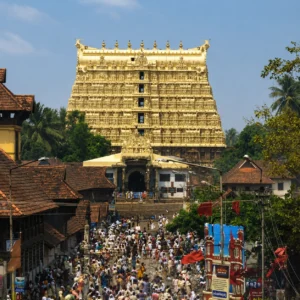
As the ceremony approaches, nearly every available space surrounding the temple fills with temporary hearths. Residential lanes, sidewalks, open grounds, and public roads become extensions of the sacred ritual landscape. The entire environment feels shaped by devotion and preparation.
For visitors, the experience is less about observation and more about understanding the atmosphere of collective participation. Respectful engagement is essential. Modest clothing, awareness of ritual spaces, and sensitivity while photographing devotees are important during the festival.
The early hours of the morning often carry the most powerful atmosphere, when smoke begins rising slowly across the city and thousands of women prepare their offerings in near silence. Later, as the ritual fires spread, the streets fill with heat, movement, chants, and temple sounds.
Unlike highly choreographed cultural performances, Attukal Pongala feels organic and deeply human. Its power lies not in spectacle, but in the quiet intensity of shared devotion unfolding across an entire city.
When to Witness Attukal Pongala
Attukal Pongala is celebrated annually during the Malayalam month of Kumbham, usually falling between February and March. The ten-day festival begins on the Karthika star, while the main Pongala ritual takes place on the Pooram star coinciding with the full moon.
Festival dates vary each year according to the Malayalam calendar and temple customs. Visitors planning to witness the celebrations should refer to official temple announcements closer to the festival period.
The main Pongala day draws the largest gathering and transforms much of Thiruvananthapuram into a sacred ritual space.
A Living Tradition Rooted in Faith and Sacred Community
Attukal Pongala remains one of Kerala’s most powerful expressions of collective devotion and sacred feminine tradition. Beyond its scale and visibility, the festival continues to preserve deeply rooted practices shaped by ritual continuity, oral tradition, and shared faith.
The sight of thousands of women preparing offerings together reflects more than devotion alone. It represents continuity across generations, the preservation of cultural memory, and the enduring spiritual relationship between devotees and Attukal Amma.
In a rapidly changing world, Attukal Pongala continues to transform ordinary urban spaces into places of prayer, solidarity, and sacred participation. The festival is not simply witnessed; it is collectively lived through fire, offering, and faith.
Related Blogs
Thanjavur Beyond Brihadeeswara Temple: Exploring the Cultural Heart of the Cauvery Delta
More Than a Temple City For many travellers, Thanjavur begins and ends with Brihadeeswara Temple. The soaring vimana, vast courtyards,…
Read More ›
Kanchipuram: Sacred Architecture and Living Traditions
More Than the City of a Thousand Temples Kanchipuram is often introduced as the “City of a Thousand Temples.” While…
Read More ›