
Pondicherry Beyond the Postcards: Heritage Streets, Cafés, Slow Living & Coastal Culture
A Different Rhythm on India’s East Coast
Pondicherry feels different from most destinations along India’s eastern coastline. While many coastal towns revolve around crowded beaches and fast-paced tourism, Pondicherry unfolds through quieter details, mustard-coloured colonial streets, sea-facing promenades, Tamil neighbourhoods, old cafés, bougainvillea-covered walls, and a slower rhythm that encourages travellers to linger rather than rush.
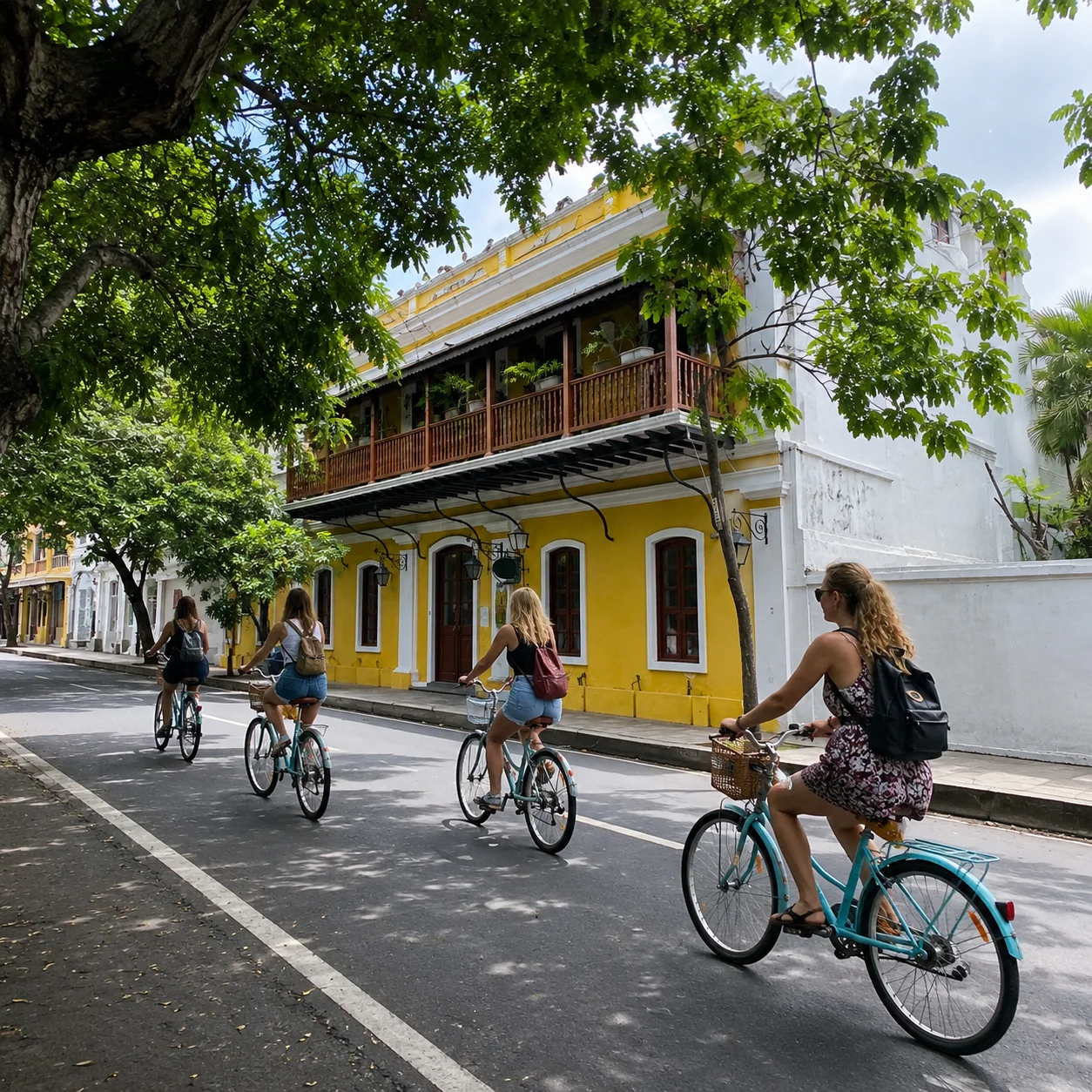
Located along the Bay of Bengal, the former French settlement blends European architectural influence with deeply rooted Tamil culture, creating an atmosphere that feels both familiar and distinct at the same time. Mornings begin with cyclists moving through quiet heritage lanes, cafés opening slowly beside shaded courtyards, and the sound of waves reaching the stone promenade long before the city fully wakes up.
Rather than functioning purely as a sightseeing destination, Pondicherry is best experienced through atmosphere and pace. Some travellers arrive for the architecture and café culture, while others come seeking slower coastal living, wellness experiences, creative spaces, or short cultural escapes from larger Indian cities.
Beyond its postcard imagery, however, Pondicherry reveals layers of heritage, spirituality, local food traditions, artisan culture, and everyday Tamil life that continue to shape the character of the town far beyond its colonial façades.
Walking Through White Town
White Town remains one of the most visually recognisable parts of Pondicherry and continues to shape the town’s identity for many travellers arriving here for the first time. Wide streets lined with colonial villas, pastel façades, arched doorways, bougainvillea-covered walls, and quiet courtyards create an atmosphere that feels noticeably different from the dense urban character of most Indian coastal towns.
Walking through White Town early in the morning is often one of the most rewarding experiences in Pondicherry. The streets remain relatively calm before cafés begin filling with visitors, allowing travellers to notice smaller architectural details, weathered wooden shutters, French-style balconies, heritage churches, shaded alleyways, and old villas that continue to preserve traces of the town’s colonial past.
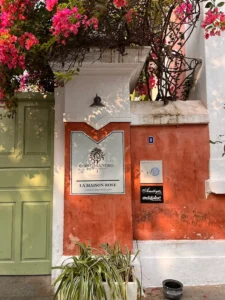
Streets such as Rue La Bourdonnais, Rue Dumas, Rue Suffren and Rue Romain Rolland remain among the most atmospheric parts of White Town, where colonial villas, shaded courtyards, boutique cafés, and bougainvillea-covered walls continue to shape the quieter rhythm of Pondicherry’s heritage quarter.
The district is also home to several boutique cafés, heritage stays, bookstores, art spaces, and design stores that contribute to Pondicherry’s slower and more creative atmosphere.
Unlike destinations centred around fast-moving attractions, White Town encourages a more unhurried style of exploration where walking, cycling, photography, and café-hopping become part of the experience itself.
Despite the visible French architectural influence, White Town still remains closely connected to the rhythms of Tamil Nadu. Temple bells, local bakeries, street vendors, and everyday community life continue to coexist naturally alongside the colonial streetscape, giving the neighbourhood a layered cultural identity rather than a purely European atmosphere.
For photographers, cultural travellers, and those seeking slower urban experiences, White Town remains one of the most distinctive heritage quarters in South India.
The French-Tamil Identity of Pondicherry
One of Pondicherry’s most defining characteristics is the way French colonial influence continues to exist alongside deeply rooted Tamil culture rather than replacing it entirely. The result is a layered cultural identity where European architecture, Tamil traditions, spiritual spaces, cuisine, and everyday local life remain closely intertwined.
French street names, colonial villas, churches, cafés, and old administrative buildings still shape much of the visual identity of central Pondicherry, particularly around White Town. At the same time, Tamil remains the dominant language of everyday life, local markets continue to function with their own rhythms, and temple culture remains deeply woven into the social fabric of the town.
This coexistence is especially visible through Pondicherry’s food culture, architecture, and neighbourhood patterns. Traditional Tamil homes stand beside colonial-era buildings, while local eateries serving dosa, seafood curries, and filter coffee operate alongside French-inspired cafés and bakeries.
Rather than feeling like a preserved colonial enclave, Pondicherry functions more as a living cultural blend shaped by centuries of interaction between local Tamil communities and French influence. This layered identity gives the town a character that feels distinct not only from other destinations in Tamil Nadu, but also from many former colonial settlements elsewhere in India.
For travellers interested in architecture, cultural history, and slower urban exploration, Pondicherry offers an experience shaped less by monuments and more by atmosphere, coexistence, and everyday detail.
Slow Mornings, Cafés & Coastal Walks
Pondicherry is often best appreciated during its quieter hours — early mornings along the promenade, slow breakfasts inside shaded courtyards, or afternoons spent wandering through cafés, bookstores, and sea-facing streets without a fixed itinerary.
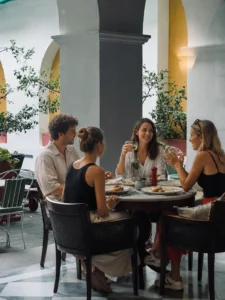
The town’s café culture has become one of its defining experiences, particularly around White Town where restored colonial buildings now house artisan bakeries, minimalist cafés, and small creative spaces. Unlike the faster café environments of larger cities, many of these places encourage slower routines built around conversation, reading, remote work, and unhurried meals.
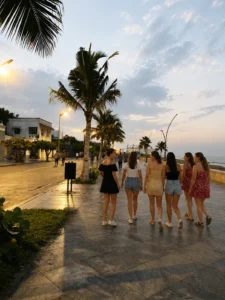
Mornings in Pondicherry typically unfold around the Rock Beach promenade, where joggers, cyclists, yoga practitioners, and photographers gather before the town gradually becomes busier later in the day. The sound of waves against the stone embankment, filtered sunlight across heritage streets, and cafés opening beside quiet courtyards all contribute to the town’s distinctive coastal rhythm.
As evening approaches, Pondicherry shifts once again. Sea-facing walkways begin filling with visitors, cafés become livelier, and the cooler coastal breeze changes the atmosphere of the town entirely. Rather than revolving around nightlife in the conventional sense, Pondicherry’s appeal lies in its mood, relaxed, walkable, and intentionally unhurried.
For many travellers, these slower routines and everyday moments become far more memorable than traditional sightseeing itself.
Beyond White Town: Markets, Local Food & Everyday Pondicherry
While White Town shapes much of Pondicherry’s visual identity, the everyday character of the town unfolds far beyond its colonial façades and heritage cafés. Local Tamil neighbourhoods, busy markets, temple streets, bakeries, roadside eateries, and residential communities reveal a more grounded side of Pondicherry that remains deeply connected to the rhythms of Tamil Nadu.
Morning markets overflow with flowers, seafood, spices, vegetables, and street-side conversations, while small bakeries continue to preserve traces of Franco-Tamil culinary influence through breads, pastries, and locally adapted café culture.
Food becomes one of the most immersive ways to experience Pondicherry beyond its postcard imagery. Traditional dosa shops, seafood restaurants, Tamil-style meals served on banana leaves, and old neighbourhood cafés exist naturally alongside French-inspired dining spaces, creating a culinary landscape shaped by both local and colonial influences.
For a slower French-style breakfast, Bread & Chocolate remains one of the town’s most popular café spaces, known for artisan breads, pastries, smoothie bowls, and its relaxed garden setting. Travellers looking for a more traditional South Indian breakfast experience often head toward Indian Coffee House, where dosa, vada, and filter coffee continue to preserve an old-style dining rhythm familiar across Tamil Nadu.
Lunch in Pondicherry can range from courtyard café dining to deeply regional Tamil flavours. Coromandel Cafe offers one of the town’s most visually refined dining environments with continental and fusion cuisine, while Kaarai is widely appreciated for Chettinad-inspired flavours, seafood preparations, and traditional Tamil meals.
Desserts and café culture remain closely woven into Pondicherry’s identity. Baker Street continues to be a well-known stop for pastries and Franco-Tamil bakery culture, while GMT Gelateria has become popular for artisanal gelato and quieter evening walks through White Town.
As the day slows toward sunset, Le Cafe along Rock Beach becomes one of the town’s most atmospheric spaces for tea, coffee, and light snacks overlooking the Bay of Bengal. Le Petit Four offers a quieter alternative for pastries and slower afternoon breaks within the heritage quarter.
Dinner in Pondicherry unfolds at a gentler pace, with courtyard restaurants and heritage dining spaces gradually filling as the town cools after sunset. Restaurants such as Villa Shanti and Surguru offer contrasting dining experiences ranging from refined heritage ambience to comforting South Indian vegetarian cuisine rooted in local flavours.
Together, these layers of café culture, Tamil food traditions, colonial influences, and everyday street life give Pondicherry much of its depth beyond the postcard image of White Town alone.
Auroville & the Search for Slower Living
Located a short drive from central Pondicherry, Auroville offers a very different atmosphere from the colonial streets and coastal cafés of the town itself. Founded as an experimental international township centred around human unity, sustainability, and conscious living, Auroville has gradually become associated with wellness, alternative lifestyles, craft traditions, yoga, and slower forms of travel.
Rather than functioning as a conventional tourist attraction, Auroville is best approached as a space for observation and experience. Tree-lined roads, minimalist architecture, meditation spaces, organic cafés, artisan workshops, and sustainable design studios shape much of the environment here.
Many travellers visit Auroville to explore:
- wellness retreats,
- yoga spaces,
- handmade craft centres,
- pottery studios,
- conscious cafés,
- and quieter natural surroundings beyond Pondicherry’s urban core.
The township also attracts artists, designers, remote workers, and long-stay visitors looking for slower and more intentional ways of living and travelling. Cycling through Auroville’s shaded roads or spending time in its cafés and community spaces often feels markedly different from the coastal energy of Pondicherry itself.
While Auroville may not appeal to every traveller in the same way, it introduces an additional dimension to the Pondicherry experience, one shaped by sustainability, reflection, creativity, and alternative approaches to community living.
Experiences Worth Taking Time For
Pondicherry rewards travellers who move slowly through its streets and neighbourhoods rather than trying to cover the town through a rushed checklist of attractions. Many of the most memorable experiences here emerge through atmosphere, routine, and smaller moments woven into everyday life.
Cycling through White Town during the early morning hours remains one of the most immersive ways to experience the quieter side of Pondicherry’s heritage streets. The slower pace allows travellers to notice architectural details, cafés opening for the day, sea breeze moving through narrow lanes, and local life gradually unfolding across the town.
Café-hopping has also become part of the Pondicherry experience itself, particularly for travellers interested in slower mornings, creative spaces, and coastal urban culture. Beyond cafés, visitors can explore pottery workshops, artisan studios, heritage walks, photography trails, and Tamil cooking experiences that offer deeper cultural interaction beyond conventional sightseeing.
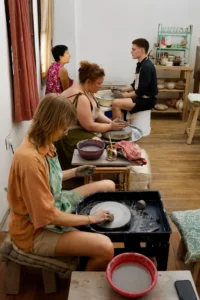
The coastal promenade, nearby fishing villages, local markets, and quieter inland streets all reveal different layers of the town’s identity depending on the time of day and pace of exploration.
For many travellers, Pondicherry becomes less about ticking off attractions and more about experiencing a softer rhythm of travel shaped by architecture, food, conversation, creativity, and the atmosphere of the town itself.
Where Pondicherry Fits Within a South India Journey
Pondicherry works especially well as part of a broader South India journey rather than as a rushed weekend stop alone. Its slower pace, walkable heritage districts, café culture, and coastal atmosphere create a natural contrast to many of the larger cities and temple-focused destinations across Tamil Nadu.
Many travellers combine Pondicherry with nearby destinations such as Mahabalipuram, known for its UNESCO-listed stone temples and coastal heritage, or continue further south toward culturally rich regions such as Chettinad, Madurai, and Thanjavur where architecture, cuisine, spirituality, and artisan traditions continue to shape everyday life.
For travellers arriving from Chennai, Pondicherry also fits naturally into slower coastal road journeys along the East Coast Road, where beach towns, fishing villages, cafés, and heritage sites gradually replace the density of the city landscape.
Because of its more relaxed atmosphere, Pondicherry often works best as a pause within a larger itinerary, a destination where travellers can slow down between more intensive cultural or landscape-focused experiences elsewhere in South India.
For international visitors especially, the town offers an accessible introduction to:
- Tamil culture,
- coastal heritage,
- slower travel,
- café culture,
- and South India’s layered historical identity
without the overwhelming pace often associated with larger Indian urban centres.
Best Time to Visit Pondicherry
The most comfortable period to explore Pondicherry is generally between October and March, when temperatures remain relatively milder and more suitable for walking through White Town, visiting cafés, and spending time along the promenade and surrounding coastal areas.
The winter months also bring softer daylight and less humidity, making the town particularly enjoyable for photography, cycling, and slower outdoor exploration. Early mornings and evenings remain especially pleasant during this period, with sea breeze helping moderate the coastal climate.
The monsoon season introduces a quieter atmosphere to Pondicherry, with rain-washed streets, softer skies, and fewer visitors creating a different mood across the town’s heritage neighbourhoods and cafés.
Summers between April and June can become considerably hot and humid, especially during afternoon hours, although some travellers still prefer this period for quieter stays and slower travel experiences away from peak-season crowds.
Pondicherry Is Best Experienced Slowly
Pondicherry’s appeal lies less in major attractions and more in atmosphere, rhythm, and the way the town encourages travellers to slow down. Beyond its postcard imagery of colonial façades and seaside cafés, the destination reveals layers of Tamil culture, local life, coastal routines, creative spaces, and quieter experiences that gradually shape its identity.
The town is best experienced through unhurried mornings, walks beneath bougainvillea-covered streets, conversations inside old cafés, time spent along the promenade, and moments that unfold naturally rather than through tightly planned sightseeing schedules.
Whether exploring White Town, moving through local neighbourhoods, visiting Auroville, or simply watching the coastline during sunrise, Pondicherry creates a style of travel centred around pace and immersion rather than constant movement.
For travellers seeking cultural depth, slower coastal experiences, heritage architecture, and a softer rhythm of South India, Pondicherry remains one of the region’s most distinctive and rewarding destinations.
Related Blogs
Thanjavur Beyond Brihadeeswara Temple: Exploring the Cultural Heart of the Cauvery Delta
More Than a Temple City For many travellers, Thanjavur begins and ends with Brihadeeswara Temple. The soaring vimana, vast courtyards,…
Read More ›
Kanchipuram: Sacred Architecture and Living Traditions
More Than the City of a Thousand Temples Kanchipuram is often introduced as the “City of a Thousand Temples.” While…
Read More ›