
Nasya Therapy in Kerala Ayurveda: Traditional Nasal Detox for Mental Clarity & Wellness
Ayurveda has long approached health through the balance of body, mind, breath, and environment rather than focusing only on symptoms. Within this traditional system of healing, Panchakarma therapies are considered important cleansing and restorative procedures designed to support the body’s natural balance.
Among these classical therapies, Nasya occupies a unique place because it focuses specifically on the head, nasal passages, and upper respiratory channels. In Ayurveda, the nose is traditionally described as the “gateway to the head,” which is why Nasya therapy is closely associated with sinus health, respiratory balance, mental clarity, and overall wellbeing.
Today, Nasya therapy continues being practised across Kerala Ayurveda centres and wellness retreats, where medicated herbal oils are administered through the nasal passages under professional supervision. While rooted in ancient Ayurvedic principles, Nasya remains widely sought today by individuals looking for holistic approaches to stress, congestion, fatigue, and respiratory discomfort.
What Is Nasya Therapy?
Nasya therapy is a traditional Ayurvedic treatment that involves the administration of medicated oils, herbal extracts, or therapeutic preparations through the nasal passages. It is considered one of the classical Panchakarma therapies described in Ayurvedic texts.
Unlike therapies that focus primarily on digestion or full-body detoxification, Nasya concentrates on the upper part of the body, particularly the nose, sinuses, throat, neck, head and sensory organs.
Ayurveda traditionally associates Nasya with cleansing and balancing the channels above the shoulders, especially where Kapha accumulation and Vata imbalance may affect breathing, clarity, and comfort.
The therapy is commonly performed as:
- a standalone Ayurvedic treatment,
- or as part of a broader Panchakarma program in Kerala wellness retreats.
Why Is the Nose Important in Ayurveda?
Ayurveda considers the nasal passages deeply connected with the head and sensory system. Traditional Ayurvedic philosophy views the nose not only as an organ of breathing, but also as an important pathway influencing respiration, mental clarity, voice, sleep, emotional balance and sensory perception.
Because of this understanding, Nasya therapy is traditionally used to support the healthy functioning of the upper respiratory tract and surrounding regions.
In many Kerala Ayurveda traditions, Nasya is recommended seasonally or during periods of increased congestion, dryness, stress, or environmental imbalance.
Nasya Therapy as Part of Panchakarma
Panchakarma refers to Ayurveda’s classical purification system consisting of five major therapeutic procedures traditionally aimed at cleansing and balancing the body.
These therapies include Vamana, Virechana, Nasya, Basti and Raktamokshana.
Among them, Nasya specifically addresses the head and upper respiratory region. In modern Ayurveda practice, Nasya may be performed independently for targeted wellness support or integrated within larger Panchakarma programs.
Many Kerala Ayurveda retreats include Nasya as part of detox programs, stress management therapies, respiratory wellness treatments or seasonal Ayurvedic rejuvenation plans.
Traditional Ayurvedic Principles Behind Nasya
Ayurveda explains health through the balance of three doshas:
- Vata,
- Pitta,
- and Kapha.
Nasya therapy is traditionally associated with balancing Kapha and Vata doshas within the upper channels of the body.
Kapha imbalance in Ayurveda is often associated with heaviness, mucus accumulation, sinus congestion, sluggishness and blocked channels.
Vata imbalance may traditionally relate to dryness, headaches, nervous tension, disturbed sleep and mental restlessness.
Through the careful administration of herbal oils and preparations, Nasya aims to support the cleansing, lubrication, and balancing of these upper pathways.
How Nasya Therapy Works
Nasya therapy is usually performed in a calm and controlled Ayurvedic treatment environment under trained supervision.
Preparation Before Nasya
Before the therapy begins, the individual may receive gentle facial massage, neck and shoulder relaxation or mild herbal steam.
This preparation stage helps relax the upper channels and supports the body before oil administration.
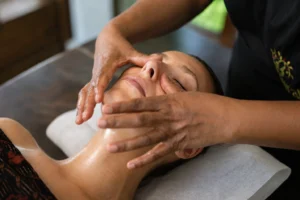
Warm herbal oils are commonly used depending on body constitution, Ayurvedic assessment, season and treatment goals.
Administration of Herbal Oils
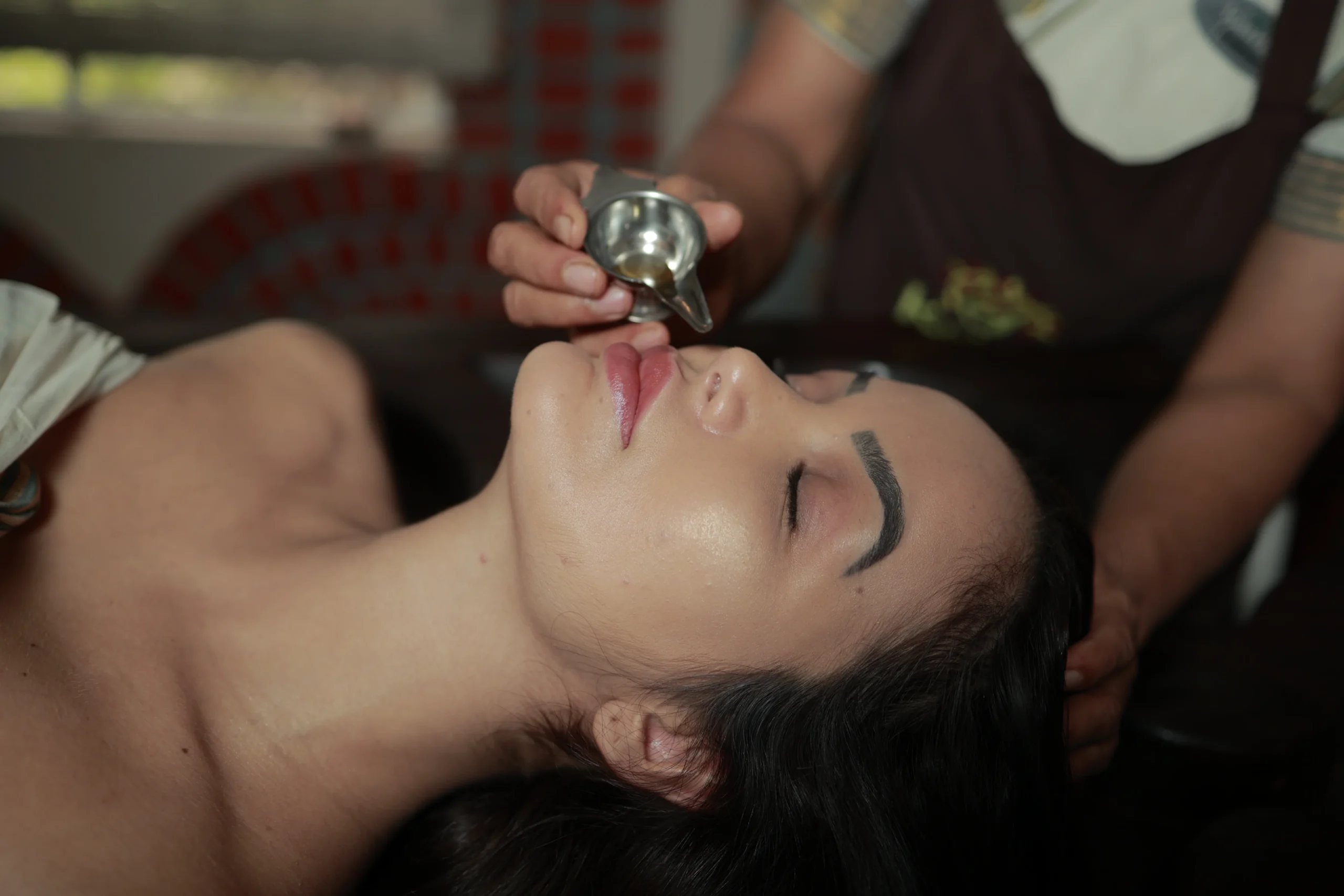
During the procedure, the individual lies comfortably with the head slightly tilted backward while medicated herbal oil is carefully administered into the nostrils.
The oils are gently inhaled and allowed to move through the nasal passages. Ayurvedic practitioners may then massage the face and sinus areas lightly to support distribution.
The process is usually brief but performed carefully and methodically.
Post-Therapy Cleansing
Following Nasya:
- excess mucus may be expelled,
- the throat may be cleared,
- and warm water or herbal support may be provided.
Individuals are often advised to:
- avoid cold exposure,
- rest briefly,
- and follow dietary or lifestyle recommendations after the session.
Types of Nasya Therapy in Ayurveda
Ayurveda describes several forms of Nasya depending on therapeutic goals, body constitution, and the condition being addressed.
Pratimarsha Nasya
A gentle daily form of Nasya involving very small quantities of medicated oil administered regularly as part of routine wellness practices. Traditionally, it is associated with supporting nasal lubrication, mental clarity, relaxation, and overall balance within everyday Ayurvedic self-care routines.
Marsha Nasya
A more intensive therapeutic form administered in larger quantities under the supervision of qualified Ayurvedic practitioners. Marsha Nasya is typically incorporated into structured treatment programmes where deeper therapeutic intervention and personalised clinical assessment are required.
Shodhana Nasya
A cleansing-oriented form of Nasya traditionally associated with removing excess Kapha accumulation from the head and sinus region. It is often included within broader Panchakarma-based detoxification approaches focused on purification and clearing.
Brimhana Nasya
A nourishing and restorative approach traditionally used in conditions associated with dryness, weakness, depletion, or Vata imbalance. Medicated oils and herbal preparations are selected to support lubrication, grounding, and replenishment within Ayurvedic therapeutic philosophy.
Navana Nasya
One of the more commonly practised therapeutic forms, Navana Nasya combines herbal oils or medicated preparations in carefully measured quantities based on the individual’s constitution and treatment objectives. It may be incorporated into personalised wellness and Panchakarma programmes under physician guidance.
Dhooma Nasya
Traditionally associated with medicated herbal smoke inhalation, this specialised form of Nasya is described in classical Ayurvedic texts as part of cleansing and balancing practices related to the head and respiratory pathways. It is performed selectively and only under trained supervision.
Common Reasons People Choose Nasya Therapy
Today, Nasya therapy is commonly sought within Ayurveda wellness programs for several reasons.
Sinus Congestion & Nasal Blockage
Nasya is traditionally associated with supporting clearer nasal passages and reducing feelings of heaviness around the sinuses.
Head & Neck Comfort
Ayurvedic practitioners may recommend Nasya for individuals experiencing tension around the forehead, temples, neck and upper facial region.
Stress & Mental Fatigue
The calming nature of the therapy environment combined with herbal oils and massage often contributes to a sense of relaxation and mental clarity.
Respiratory Wellness
Nasya is traditionally associated with maintaining upper respiratory balance, particularly during seasonal changes.
Sleep & Relaxation
Some Ayurvedic traditions associate Nasya with supporting calmer sleep and reduced mental restlessness.
What Happens During a Nasya Session?
A typical Nasya session in a Kerala Ayurveda centre may include:
- Initial consultation
- Facial or head massage
- Mild steam therapy
- Herbal oil administration
- Rest and post-treatment care
The full session may take approximately 30–45 minutes depending on the therapy plan.
Many individuals describe the experience as warming, clearing, calming and deeply relaxing.
Benefits Traditionally Associated with Nasya Therapy
Ayurveda traditionally associates Nasya with:
- clearer breathing,
- sinus comfort,
- relaxation,
- improved mental clarity,
- support for upper respiratory wellness,
- and balancing of the head region.
However, outcomes vary between individuals, and therapies should always be performed under qualified supervision.
Nasya should not be viewed as a replacement for medical diagnosis or emergency respiratory care.
Who Should Avoid Nasya Therapy?
Nasya may not be suitable in certain situations without professional medical guidance.
Ayurvedic practitioners may avoid or modify Nasya during:
- fever,
- acute infections,
- severe respiratory distress,
- pregnancy,
- immediately after meals,
- or significant physical exhaustion.
Consultation with a qualified Ayurvedic physician remains important before beginning therapy.
Nasya Therapy in Kerala Ayurveda Retreats
Kerala remains one of India’s most recognised destinations for traditional Ayurveda therapies and Panchakarma treatments.
Many Kerala Ayurveda retreats integrate Nasya into:
- detox programs,
- respiratory wellness treatments,
- stress management plans,
- and seasonal rejuvenation therapies.
The therapy is often performed in peaceful treatment environments featuring:
- herbal preparations,
- traditional wooden therapy tables,
- medicated oils,
- and personalised Ayurvedic assessment.
For many travellers, Nasya becomes part of a broader wellness journey focused on slowing down, restoring balance, and reconnecting with traditional healing practices.
Frequently Asked Questions About Nasya Therapy
Is Nasya therapy painful?
Nasya is generally gentle when performed correctly. Some individuals may experience temporary drainage or mild discomfort as the nasal passages clear.
How long does a Nasya session take?
Most sessions take approximately 30–45 minutes including preparation and aftercare.
Is Nasya part of Panchakarma?
Yes. Nasya is traditionally recognised as one of Ayurveda’s classical Panchakarma therapies.
Can Nasya be done daily?
Certain mild forms such as Pratimarsha Nasya may traditionally be practised regularly, but therapeutic Nasya should only be performed under professional supervision.
What oils are used in Nasya?
Ayurvedic practitioners use different medicated oils depending on constitution, symptoms, season and treatment goals.
Closing
Nasya therapy remains one of Ayurveda’s most distinctive approaches to upper respiratory and head-region wellness. Rooted in classical Panchakarma traditions, the therapy continues attracting interest today through its combination of herbal preparations, cleansing principles, and calming therapeutic experience.
Whether integrated into a Kerala Ayurveda retreat or performed as part of a broader Panchakarma program, Nasya reflects Ayurveda’s holistic understanding of breathing, balance, and wellbeing.
As with all Ayurvedic therapies, professional consultation and authentic clinical supervision remain essential for safe and appropriate treatment.
Related Blogs
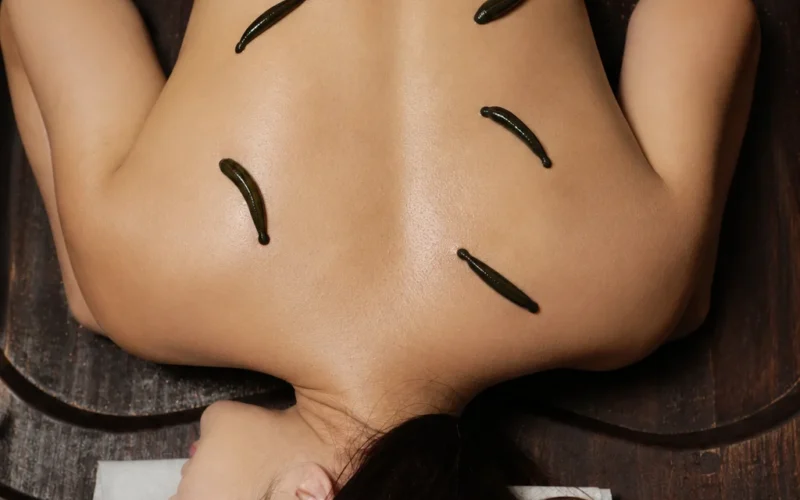
Rakta Mokshana (Raktamokshana) Ayurveda’s Forgotten Fifth Therapy
Understanding Rakta Mokshana: Ayurveda’s Forgotten Fifth Panchakarma Therapy When people think of Panchakarma, they often associate it with therapies such…
Read More ›
Ayurveda and Sleep: Can Kerala Ayurveda Help You Sleep Better?
Why Sleep Has Become a Modern Health Challenge Sleep should be one of the most natural functions of the human…
Read More ›