
Rakta Mokshana (Raktamokshana) Ayurveda’s Forgotten Fifth Therapy
Understanding Rakta Mokshana: Ayurveda’s Forgotten Fifth Panchakarma Therapy
When people think of Panchakarma, they often associate it with therapies such as Vamana, Virechana, Basti, and Nasya. These purification procedures have gained global recognition for their role in traditional Ayurvedic wellness programmes, particularly in Kerala.
Yet, among the five classical Panchakarma therapies described in Ayurveda, one remains relatively unknown outside traditional Ayurvedic practice, Rakta Mokshana, also known as Raktamokshana.
Derived from the Sanskrit words Rakta (blood) and Mokshana (release or liberation), Rakta Mokshana is a specialised Ayurvedic purification therapy traditionally performed under carefully prescribed circumstances.
Unlike modern detox trends, which often promise universal benefits, Raktamokshana is deeply rooted in Ayurveda’s personalised approach to healthcare.
It is recommended only after a comprehensive assessment by a qualified Ayurvedic physician, making it one of the most specialised procedures within the Panchakarma system.
Today, many wellness travellers visit Kerala seeking authentic Panchakarma experiences. While therapies such as Abhyanga, Shirodhara, and Virechana are commonly offered, understanding Raktamokshana provides valuable insight into the depth, sophistication, and medical philosophy that have shaped Ayurveda for thousands of years.
More than a therapeutic procedure, Rakta Mokshana reflects Ayurveda’s holistic understanding of balance, diagnosis, and individualised care. It also highlights Kerala’s enduring role in preserving one of the world’s oldest continuously practised systems of traditional medicine.
What is Rakta Mokshana?
Rakta Mokshana, commonly referred to as Raktamokshana, is one of the five classical purification procedures described in Ayurveda. Traditionally translated as “bloodletting therapy,” it represents a specialised therapeutic intervention intended to address specific imbalances involving Rakta Dhatu (blood tissue) according to classical Ayurvedic principles.
In Ayurveda, health is viewed as a dynamic state of harmony between the body’s three doshas, Vata, Pitta, and Kapha, along with healthy tissues (Dhatus), efficient digestion (Agni), proper elimination, and mental wellbeing.
When these elements remain balanced, the body is believed to function optimally. Conversely, disturbances in this equilibrium may contribute to various forms of imbalance.

Among the body’s seven primary tissues, Rakta Dhatu occupies a particularly significant position. Classical Ayurvedic texts describe it as essential for nourishment, vitality, complexion, and the maintenance of physiological functions.
Ayurveda further explains that disturbances involving Pitta Dosha, digestion, environmental influences, dietary habits, or lifestyle factors may affect the quality and balance of Rakta Dhatu.
Within this traditional framework, Rakta Mokshana was developed as a purification therapy intended to help restore balance when a qualified Ayurvedic physician determines it to be appropriate.
Unlike general wellness treatments, it is not considered a routine therapy but a specialised procedure performed only after careful clinical evaluation.
This personalised approach distinguishes Raktamokshana therapy from many contemporary detox programmes. Rather than applying identical treatments to everyone, Ayurveda emphasises that each individual possesses a unique constitution (Prakriti), requiring therapies that are tailored to their specific health profile and therapeutic needs.
The Ayurvedic Understanding of Blood and Balance
To appreciate the significance of Rakta Mokshana, it is important to understand how Ayurveda views blood within the broader context of human health.
Unlike modern medicine, which primarily describes blood in terms of physiology and biochemistry, Ayurveda considers Rakta Dhatu to be one of the body’s fundamental tissues responsible for sustaining life, vitality, nourishment, and healthy complexion.
Classical Ayurvedic literature describes a close relationship between Rakta Dhatu and Pitta Dosha. Pitta governs transformation, metabolism, digestion, and heat within the body.
When Pitta becomes aggravated due to inappropriate diet, environmental conditions, stress, or lifestyle factors, Ayurvedic philosophy suggests that it may influence the quality and balance of Rakta Dhatu.
Another important Ayurvedic concept is Ama, often described as incompletely processed metabolic by-products resulting from impaired digestion.
According to traditional Ayurvedic understanding, the accumulation of Ama may interfere with normal physiological functioning and contribute to systemic imbalance.
Rather than focusing solely on symptoms, Ayurveda seeks to identify the underlying causes of imbalance. Treatment therefore extends beyond a single procedure and may include dietary modifications, herbal preparations, lifestyle adjustments, cleansing therapies, and ongoing clinical guidance.
Within this holistic framework, Rakta Mokshana represents one of several purification therapies described in classical Ayurvedic literature.
It is not intended as an isolated intervention but forms part of a broader therapeutic strategy designed to restore harmony among the doshas, tissues, and physiological processes.
Understanding this philosophy helps explain why authentic Ayurveda continues to emphasise comprehensive consultation and personalised treatment planning rather than standardised wellness packages.
Why is Rakta Mokshana Considered the Fifth Panchakarma Therapy?
The term Panchakarma literally means “five actions” or “five purification procedures.” These therapies form one of Ayurveda’s most comprehensive approaches to cleansing and restoring balance within the body.
The five classical Panchakarma therapies described in traditional Ayurvedic texts are:
- Vamana (therapeutic emesis)
- Virechana (therapeutic purgation)
- Basti (medicated enema therapy)
- Nasya (nasal administration of medicated oils or herbal preparations)
- Rakta Mokshana (Raktamokshana) (therapeutic bloodletting)
While the first four therapies are widely recognised in modern Panchakarma programmes, Rakta Mokshana occupies a more specialised position within Ayurvedic practice.
Classical physicians traditionally recommended it only in carefully selected situations after detailed clinical evaluation, which explains why it is encountered less frequently in contemporary wellness settings.
The inclusion of Rakta Mokshana within Panchakarma demonstrates the sophistication of Ayurvedic medicine. Rather than offering a single universal method of purification, Ayurveda developed multiple therapeutic approaches that could be selected according to an individual’s constitution, dosha balance, strength, age, digestive capacity, and specific health requirements.
This highly individualised approach remains one of Ayurveda’s defining characteristics. Even today, authentic Panchakarma programmes in Kerala continue to emphasise professional assessment before recommending any purification therapy.
For wellness travellers, understanding the role of Panchakarma Raktamokshana provides a deeper appreciation of Ayurveda’s clinical philosophy and its commitment to personalised care rather than one-size-fits-all treatment protocols.
Historical Origins of Rakta Mokshana
The origins of Rakta Mokshana can be traced back thousands of years to the foundational texts of Ayurveda, particularly the Sushruta Samhita, one of the world’s earliest and most influential medical treatises.
Attributed to the ancient physician Sushruta, the text contains remarkably detailed discussions on anatomy, surgery, wound management, and specialised therapeutic procedures.
Among its many contributions are extensive descriptions of Raktamokshana, illustrating how ancient Ayurvedic physicians developed systematic approaches to diagnosis and treatment long before the emergence of many modern medical systems.
The Sushruta Samhita outlines different methods of therapeutic bloodletting and provides guidance regarding their selection based on the patient’s constitution, clinical presentation, and therapeutic objectives.
These descriptions demonstrate the depth of observation and procedural knowledge that characterised classical Indian medicine.
Beyond its therapeutic significance, Rakta Mokshana represents an important part of India’s medical heritage. It reflects centuries of scholarly research, clinical practice, and philosophical inquiry that have shaped Ayurveda into one of the world’s oldest continuously practised systems of traditional medicine.
Today, these teachings continue to be preserved through Ayurvedic universities, experienced practitioners, and traditional medical lineages, particularly in Kerala, where classical Ayurvedic knowledge has been carefully maintained across generations.
Traditional Methods of Rakta Mokshana
Classical Ayurvedic literature describes several methods through which Rakta Mokshana could be performed. The choice of technique depended on the individual’s constitution, the nature of the imbalance, the affected area, and the clinical judgement of the Ayurvedic physician.
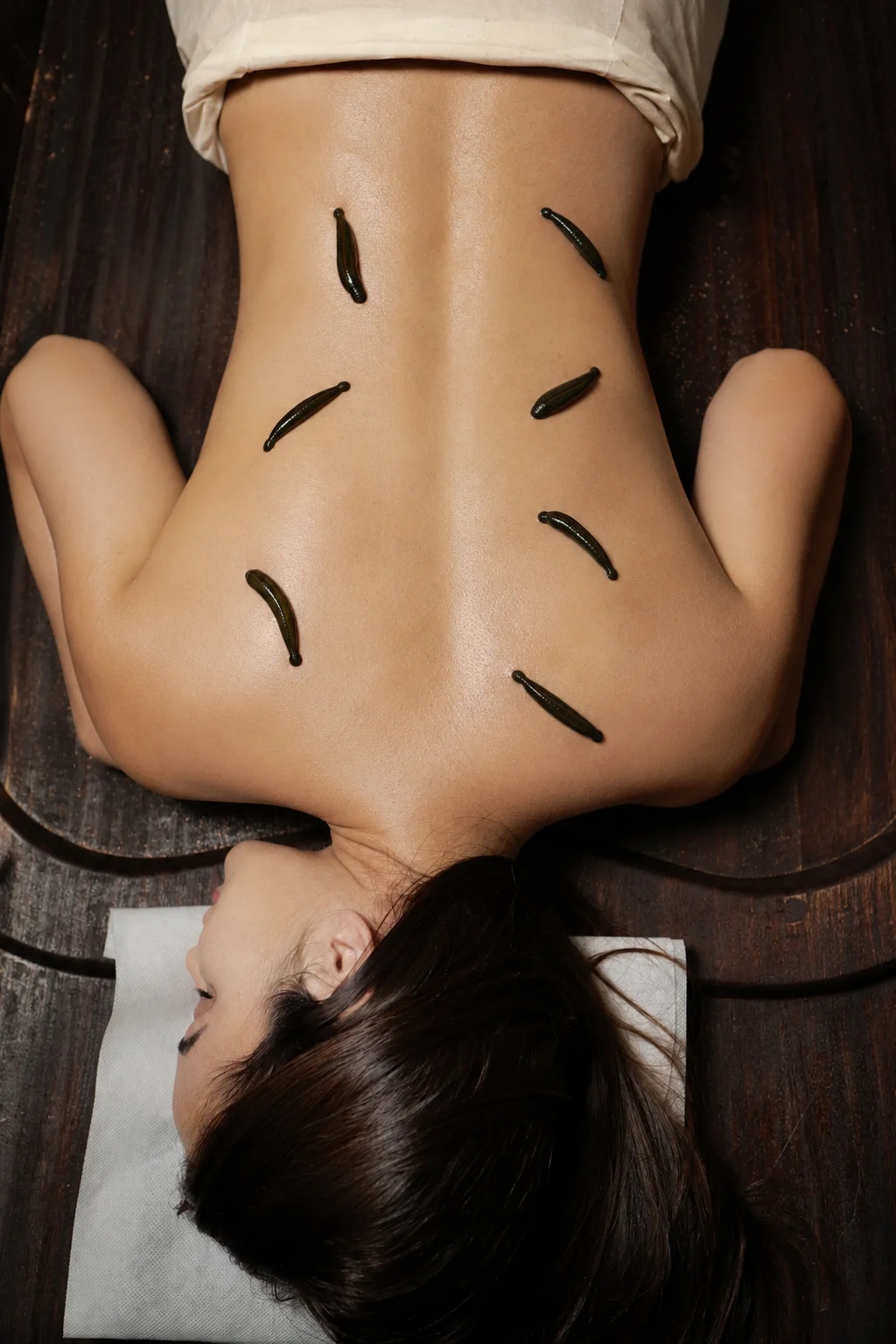
These procedures were never considered routine but were selected only after a thorough assessment.Among the most recognised forms of Raktamokshana therapy is Jalaukavacharana, commonly known as medicinal leech therapy.
This technique uses specially selected medicinal leeches and is regarded in Ayurveda as a comparatively gentle method of bloodletting. Because of its precision and controlled nature, it has remained one of the most widely recognised traditional approaches and continues to be practised in selected Ayurvedic centres under professional supervision.
Another method described in classical texts is Siravyadha, a carefully controlled venesection technique performed under specific therapeutic conditions.
Historical Ayurvedic literature also mentions Shringa, which utilised specially designed suction instruments, and Alabu, a vacuum-based technique that traditionally employed hollow gourds. These methods illustrate the remarkable diversity of therapeutic approaches that existed within classical Ayurveda.
Although modern Ayurvedic practice has evolved within contemporary healthcare standards, these traditional techniques remain important for understanding the historical foundations of Rakta Mokshana and the sophisticated clinical thinking that characterised ancient Ayurvedic medicine.
Benefits of Rakta Mokshana According to Ayurveda
In classical Ayurvedic literature, Rakta Mokshana is regarded as a specialised purification therapy intended to support the restoration of balance when disturbances involving Rakta Dhatu and Pitta Dosha are identified by a qualified Ayurvedic physician.
Rather than functioning as an independent treatment, Raktamokshana is traditionally incorporated into a comprehensive therapeutic plan that may include herbal medicines, dietary recommendations, lifestyle modifications, and other Panchakarma procedures based on the individual’s constitution and clinical needs.
Ayurvedic texts traditionally describe Rakta Mokshana as supporting the body’s natural purification processes and restoring harmony among the doshas.
However, the therapy is not considered appropriate for everyone, and its application depends entirely on professional evaluation rather than patient preference.
From an Ayurvedic perspective, the true value of Raktamokshana therapy lies not only in the procedure itself but also in the personalised diagnostic process that precedes it.
This emphasis on individualised care distinguishes Ayurveda from many modern wellness trends that promote standardised detox programmes.
It is important to recognise that contemporary scientific research into various Ayurvedic therapies continues to evolve.
Individuals considering Rakta Mokshana should always seek guidance from qualified Ayurvedic physicians who can determine whether the therapy is appropriate for their specific circumstances.
Determining Suitability for Rakta Mokshana
One of Ayurveda’s defining principles is that no two individuals are exactly alike. Every person possesses a unique constitutional makeup, known as Prakriti, which influences physical characteristics, digestion, metabolism, mental tendencies, and responses to treatment.
For this reason, authentic Ayurveda places great emphasis on comprehensive consultation before recommending any Panchakarma therapy.
Before considering Rakta Mokshana, an Ayurvedic physician traditionally evaluates several factors, including the individual’s dosha balance, digestive strength (Agni), lifestyle, dietary habits, age, seasonal influences, overall health, and therapeutic objectives.
This assessment helps determine whether the therapy is appropriate and whether other Panchakarma procedures may be more suitable.
Because Raktamokshana is regarded as a specialised procedure, classical Ayurvedic texts repeatedly emphasise careful patient selection and professional judgement. Not every Panchakarma programme includes Rakta Mokshana, nor is it considered a routine wellness treatment.
This personalised approach reflects one of Ayurveda’s greatest strengths. Rather than applying identical therapies to every individual, authentic Ayurvedic practice focuses on understanding each person’s unique needs before developing a carefully tailored treatment plan.
For wellness travellers visiting Kerala, this highlights an important distinction between authentic Ayurveda and commercial wellness experiences.
Reputable Ayurvedic centres prioritise detailed consultation and professional evaluation before recommending specialised therapies, ensuring that treatment remains aligned with both traditional principles and responsible clinical practice.
Rakta Mokshana in Contemporary Ayurvedic Practice
Today, Rakta Mokshana continues to occupy a specialised place within authentic Ayurvedic medicine. While the therapy remains rooted in classical Ayurvedic principles, its application has evolved alongside modern professional standards, hygiene protocols, and regulatory requirements.
Consequently, not every Ayurvedic centre offers Raktamokshana therapy, and those that do generally perform it only after comprehensive consultation with qualified Ayurvedic physicians.

Modern Ayurvedic practice continues to emphasise personalised care, clinical responsibility, and patient safety. Rather than recommending identical treatments for every visitor, experienced practitioners carefully assess each individual’s health profile before selecting appropriate therapies.
For international wellness travellers, this reinforces an important principle of authentic Ayurveda: treatment plans are designed around the individual rather than around predetermined packages or popular wellness trends.
Kerala’s Role in Preserving Classical Ayurvedic Therapies
For centuries, Kerala has been recognised as one of the world’s foremost centres of Ayurvedic medicine. The state’s tropical climate, abundant medicinal plants, scholarly traditions, and generations of experienced practitioners have helped preserve many classical Ayurvedic therapies that continue to attract wellness travellers from around the world.
Over time, Kerala became a centre where ancient Ayurvedic texts were studied, therapeutic procedures refined, and clinical knowledge passed from one generation to the next.
Many Panchakarma practices recognised internationally today owe their continued preservation to Kerala’s long-standing Ayurvedic heritage.
The continued practice of therapies such as Rakta Mokshana reflects the state’s commitment to maintaining Ayurveda as a living medical tradition rather than merely a historical system of healing.
Beyond individual treatments, authentic Kerala Ayurveda encompasses personalised diagnosis, herbal medicine, therapeutic nutrition, preventive healthcare, yoga, lifestyle guidance, and holistic wellbeing.
This integrated approach has helped establish Kerala as one of the world’s leading destinations for traditional Ayurvedic wellness.
For travellers seeking authentic experiences, learning about Raktamokshana provides a deeper appreciation of Kerala’s extraordinary contribution to preserving one of humanity’s oldest systems of holistic healthcare.
Frequently Asked Questions
Is Rakta Mokshana one of the five Panchakarma therapies?
Yes. Classical Ayurvedic literature describes Rakta Mokshana as one of the five traditional Panchakarma purification procedures, alongside Vamana, Virechana, Basti, and Nasya.
Is medicinal leech therapy the same as Rakta Mokshana?
Medicinal leech therapy (Jalaukavacharana) is one of the traditional methods used to perform Raktamokshana, but classical Ayurveda also describes other techniques based on the patient’s condition and therapeutic requirements.
Is Rakta Mokshana offered in every Ayurvedic centre?
No. Because it is considered a specialised therapy, many Ayurvedic centres do not routinely offer Rakta Mokshana. Reputable institutions perform it only after detailed consultation and professional assessment.
Why is Kerala considered a leading destination for Ayurveda?
Kerala has preserved Ayurvedic knowledge through centuries of continuous clinical practice, traditional physician families, educational institutions, medicinal plant resources, and authentic Panchakarma centres, making it one of the world’s most respected destinations for Ayurvedic wellness.
Conclusion
Among the many therapies described in classical Ayurveda, Rakta Mokshana remains one of the most specialised and historically significant.
As the fifth Panchakarma therapy, it reflects Ayurveda’s sophisticated understanding of personalised healthcare, careful diagnosis, and holistic wellbeing.
More than a single therapeutic procedure, Raktamokshana represents a broader philosophy that emphasises balance, individual assessment, and the interconnected relationship between the body, mind, and environment.
Its continued preservation within Kerala’s Ayurvedic tradition demonstrates the state’s enduring contribution to one of the world’s oldest continuously practised systems of medicine.
For travellers exploring authentic Ayurvedic wellness in Kerala, understanding Rakta Mokshana offers valuable insight into the depth of Ayurvedic knowledge and the importance of seeking therapies from qualified practitioners who uphold the principles of traditional, personalised care.
Related Blogs
Ayurveda and Sleep: Can Kerala Ayurveda Help You Sleep Better?
Why Sleep Has Become a Modern Health Challenge Sleep should be one of the most natural functions of the human…
Read More ›
Why Kerala Is the Home of Panchakarma: The Story Behind India’s Ayurveda Capital
More Than a Destination for Wellness Every year, travellers from across the world arrive in Kerala seeking Panchakarma. Some come…
Read More ›