
Designing Corporate Retreats Around Place Rather Than Programme
The Agenda Trap
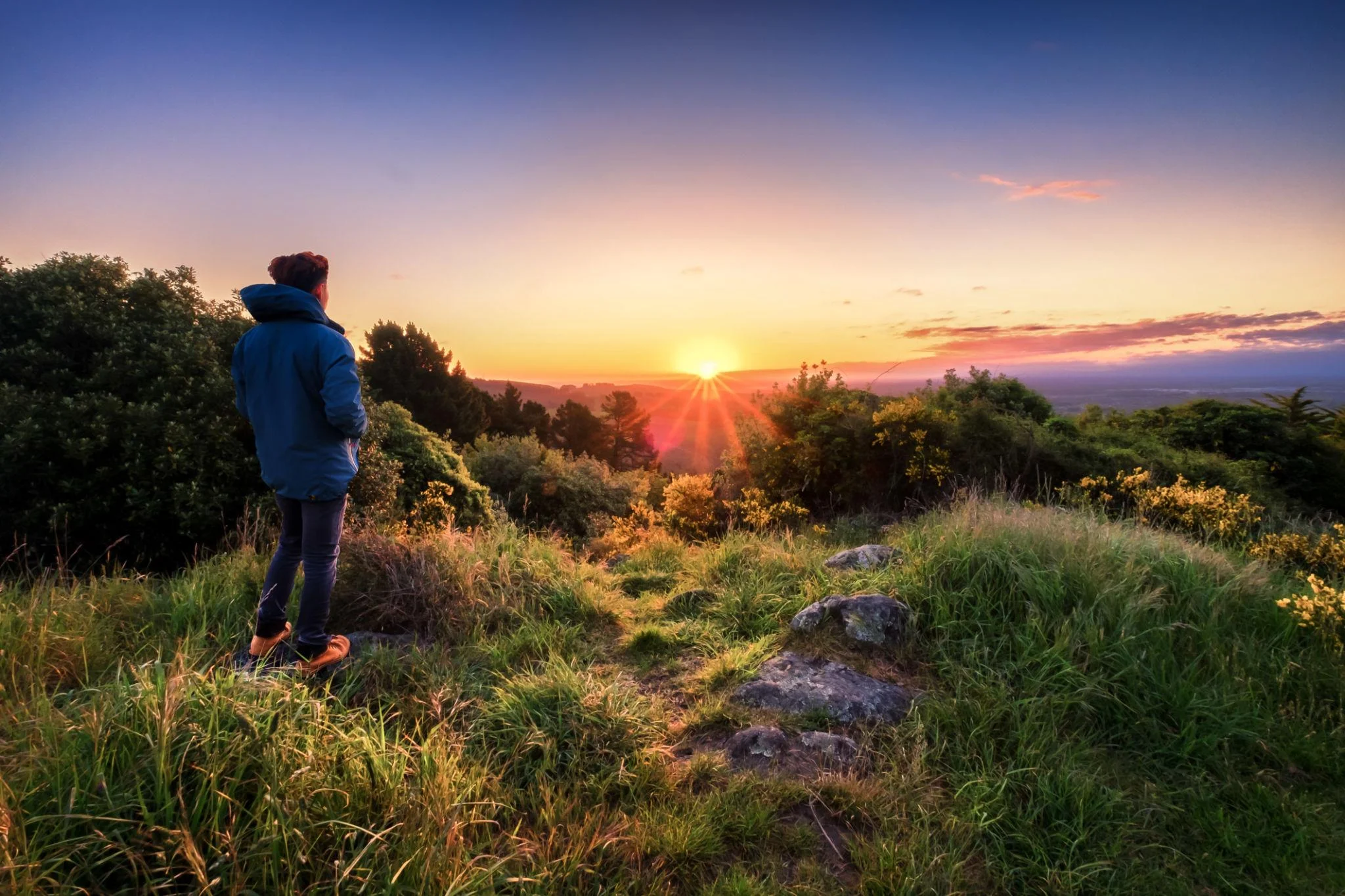
The retreat begins not with a clock, but with a horizon. The first light of dawn stretches across the landscape, softening edges and slowing breath. A faint chill lingers in the air, the kind that makes silence feel sharper, more deliberate.
Stone absorbs sound until pauses carry weight. The rhythm of footsteps on uneven ground reminds the body it has left the office behind. In these moments, the environment does not simply surround, it asserts itself.
Conversations shift before they begin. Hierarchies soften without announcement. What seemed urgent yesterday dissolves into something quieter, more deliberate. This is the essence of place-based corporate retreats.
They begin with a deliberate absence of schedule. Not chaos, but space. Space for the environment to intervene. Space for conversations to unfold without interruption. Space for the mind to recalibrate itself to a different rhythm.
In such settings, the agenda does not disappear, it dissolves into the environment. A team sitting in a glass conference room will default to presentation mode. The same team sitting along a quiet stretch of coastline will begin to speak differently. Not because they were instructed to, but because the environment demanded it.
Most retreats replicate the rhythm of the boardroom in a different geography. Coffee at 8:30. Icebreaker at 9:00. Strategy session at 10:15. The agenda marches on, indifferent to the landscape.
But when design begins with place rather than programme, the retreat becomes something else entirely. It is not a pause in productivity, it is a recalibration of how leaders think, shaped by the frequency of the environment itself.
The Frequency of the Environment
Every place carries a frequency. Not in a symbolic sense, but in a physical, experiential one. The body responds to it immediately. The pace of movement changes. The tone of conversation shifts. Even silence takes on a different quality.
A retreat set in the high Himalayas introduces a very specific condition. The air is thinner. Breathing becomes deliberate. The landscape is expansive to the point of abstraction. There are no visual boundaries, only layers of distance fading into mist.
In such an environment, short-term thinking feels misplaced. Conversations naturally stretch toward long-range vision, structural clarity, and legacy. This is not facilitation. This is geography shaping cognition. Now shift to a retreat in the backwaters of Kerala.
Here, the dominant element is water. Movement is slow, almost meditative. There is no urgency in the way space is experienced. Boats drift rather than move. Sound carries differently, softer and less intrusive. The mind begins to follow this rhythm.
Teams that arrive with unresolved tension often find that conversations begin to settle. Not through intervention, but through environment. The linear thinking of a boardroom gives way to a more fluid, associative pattern. Problems that seemed rigid begin to loosen.
This is the core of destination-led leadership. It is not about selecting a “beautiful” location. It is about understanding how different environments influence different modes of thinking.
A desert strips away distraction. There is nothing to hide behind. The terrain is raw, exposed, and unforgiving. It demands clarity.
A dense forest removes the horizon entirely. Only layers of immediate presence remain. It demands attention.
A coastal edge introduces openness. The horizon returns, and the mind begins to expand outward. It invites release.
Narrative Architecture of the Site
The shift from logistics to design begins with a simple question:
What does this place allow us to become?
This is where executive retreat design moves beyond coordination and into authorship.
Consider the unstructured walk.
Not a curated tour with predefined talking points, but a slow movement through a living system. A trail through a plantation where the ground is uneven, the air carries the scent of earth, and the rhythm of movement is dictated by terrain rather than time.
In such moments, hierarchy dissolves. Titles become irrelevant. The conversation becomes observational rather than performative. A leader noticing the way a centuries-old irrigation channel distributes water across uneven land begins to see resource allocation differently. Not as a spreadsheet, but as a system of balance.
A team moving through a forest begins to understand interdependence, not as a concept, but as a condition. Each element exists because of another. Remove one, and the system shifts.
These are not metaphors imposed by a facilitator. They are insights extracted from the environment itself. Then there is the architecture of silence. Modern workspaces are designed to eliminate silence. Notifications, conversations, movement, everything is optimized for constant engagement. But clarity rarely emerges from constant input.
It requires absence.
Historical structures, remote landscapes, and certain forms of traditional architecture create this absence naturally. A stone courtyard absorbs sound in a way that alters perception. The echo is softer, slower.
The space feels larger than it is. In such environments, people begin to listen more than they speak. Conversations stretch. Pauses become meaningful. It is within these pauses that clarity often emerges.
A retreat designed around place does not fill every moment.It creates the conditions for the right moments to occur.
Access to Local Wisdom
One of the most significant limitations of conventional retreats is the source of insight.
Typically, it is imported. External speakers, structured workshops, predefined frameworks. While valuable, they often operate in abstraction, detached from the environment in which they are delivered.A more grounded approach draws from the place itself.
A conversation with a local conservationist, for instance, introduces a perspective that cannot be replicated in a corporate setting. The discussion is not theoretical. It is rooted in lived experience, managing finite resources, balancing competing needs, sustaining systems over time.
For a leadership team, this mirrors the realities of business more closely than any case study. Similarly, an interaction with a master craftsman, hands steady over years of repetition, shaping material with deliberate precision, introduces a different dimension of thinking.
The emphasis is not on speed, but on precision. Not on scaling quickly, but on building something that endures.The idea of patience, often dismissed in high-growth environments, begins to take on a different meaning.
This is where executive retreat design becomes deeply contextual. The environment provides the stage.
Local practitioners provide the narrative. Together, they create a form of engagement that is both immediate and lasting. These interactions are not scheduled as isolated sessions. They are embedded into the flow of the retreat.
A conversation emerges during a walk. A demonstration unfolds during a shared moment. The boundary between learning and experience dissolves. What remains is not information, but perspective.
The Rhythm of Time and Attention
There is another layer that often goes unnoticed in retreat design: the relationship between time and attention.
In conventional settings, time is segmented. Every hour is assigned. Every session has a beginning, a middle, and an end. Attention is expected to follow this structure, moving in defined intervals, responding to cues, resetting at each break.
But attention does not function this way. It expands and contracts. It deepens gradually. It resists interruption when it begins to find clarity. In environments designed around place, time is treated differently.
A conversation that begins over a morning walk may extend into breakfast without being formally “continued.” A moment of reflection that emerges in silence is not cut short because the next session is due. The day is not divided into rigid blocks, but allowed to flow with the natural progression of thought.
This does not reduce productivity. It refines it. Because the most meaningful insights rarely emerge within the first ten minutes of a discussion. They appear later, after initial responses have settled, after perspectives have been exchanged and after the mind has had time to move beyond the obvious.
When retreats are over-structured, these moments are often lost. When they are designed around place, they are allowed to surface. This is where the true value lies.
Not in the number of sessions completed, but in the depth of attention sustained. A well-designed retreat does not ask, “What did we cover?” It asks, “What did we finally understand?”. In environments shaped through thoughtful executive retreat design, time is treated differently.
Design vs. Logistics
There is a tendency to equate successful retreats with seamless execution. Flights on time. Rooms allocated efficiently. Meals delivered as planned. Schedules adhered to. These are necessary conditions but they are not sufficient.
Logistics ensure that nothing goes wrong. Design ensures that something meaningful happens. A ballroom can be prepared anywhere. The lighting can be perfect. The seating can be aligned. The technology can function without error.
And yet, the outcome may still be negligible. Because insight is not a product of efficiency. It is a product of disruption. When individuals are placed in environments that challenge their default patterns, physically, mentally, and emotionally, new ways of thinking begin to emerge.
This is not something that can be manufactured through programming alone. It requires intentional placement. Travel, in this context, becomes more than movement. It becomes a mechanism for transformation.
Organisations that understand this begin to see retreats differently. Not as periodic events, but as strategic interventions. The focus shifts from what is scheduled to what is experienced.
For those looking to move beyond conventional formats, understanding this distinction is critical. It is the foundation of designing journeys that are not only well-executed, but deeply impactful.
To understand how this translates into practice, explore how Lux Crafter designs bespoke India journeys, where each experience is shaped by intent rather than itinerary.
The Close
A retreat is often positioned as a break. A temporary pause in the rhythm of work. But the most effective place-based corporate retreats are not pauses. They are shifts.
They begin with a departure, not just from location, but from habit. And they end with a return that carries a different way of seeing. The real value is not in the time spent away. It is in what becomes possible once they return to the same work with a different lens.